Hair loss, explained without the sales pitch
- Is this normal?Everyone sheds. How much is ordinary, and what makes it look worse than it is.
- Is it a pattern?Gradual thinning at the hairline, crown or parting, in men and in women.
- Did something set it off?Shedding a few months after an illness, a birth, a shock, a new medicine or a diet change.
- Should I see someone soon?Patches, scarring, pain, or a scalp that is sore, scaly or inflamed.
- What can be done, and what is it like to live with?What each option involves, without rankings or promises, and the practical side of living with it.
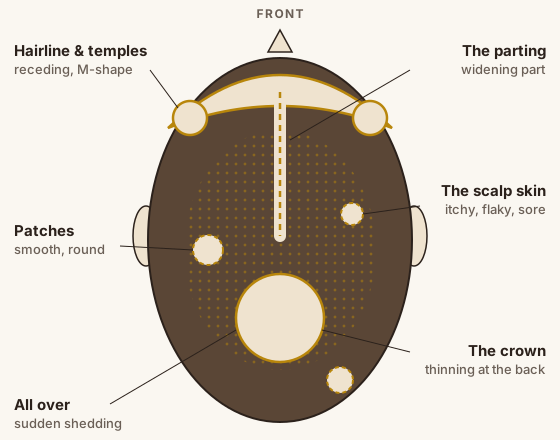
Hair loss is common, it has many different causes, and a great deal of what is written about it online is written by someone with something to sell. Balds is an independent guide to thinning, shedding and balding hair. It explains what conditions like pattern hair loss, alopecia areata and telogen effluvium actually are, why hair sheds suddenly in some people and recedes slowly in others, what the options involve, and what living with hair loss is like.
Our articles are drafted with AI assistance under fixed editorial rules, and every fact is tied to a named source, such as the American Academy of Dermatology, the NHS, MedlinePlus or DermNet. Nobody here is a doctor, we sell nothing, and we don't rank treatments or promise results. When a symptom is a reason to see a doctor rather than read another article, we say so plainly. How we work is on our editorial policy page.
How hair grows, and why some loss is ordinary
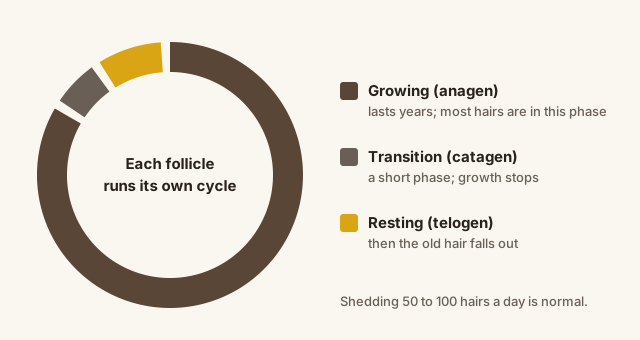
Every hair grows from a follicle that runs its own cycle: a long growing phase, a short transition, and a resting phase that ends when the old hair falls out and a new one starts. 3 Because follicles cycle independently, everyone is shedding some hairs every day. 3 The American Academy of Dermatology and the NHS put normal shedding at 50 to 100 hairs a day. 4 5 Finding them on a pillow or in a drain is not, by itself, a sign of anything.
Three different things get called hair loss, and telling them apart is the first useful step. Shedding is more hairs than usual letting go, often all over the scalp. Thinning is follicles making finer, shorter hairs over time, so the same number of hairs covers less scalp. Breakage is the hair shaft snapping, a problem with the hair rather than the follicle. 4 3 6 Each has different causes and different next steps. Our guide to how much hair loss is normal explains how to tell them apart without counting hairs.
Read next
- How much hair loss a day is normal?Everyone sheds every day. Here is what the main medical sources count as normal, why it can look like more, and the signs that it is something else.
- How often should you wash thinning hair?Washing does not cause hair loss, and skipping washes will not save hair. How often depends on your scalp and hair type, and how you wash matters more.
- Does wearing a hat cause hair loss?An ordinary hat is not on any medical list of hair loss causes. Tight headwear over pulled-back hair is a different story.
Pattern hair loss, in men and in women
The most common cause of hair loss in both sexes is pattern hair loss, known medically as androgenetic alopecia. 7 2 It is inherited. In sensitive follicles, a hormone called DHT shortens the growing phase, so each new hair grows finer and shorter than the last. 8 Several genes are involved, from both parents, which is why the pattern differs even within families. 8
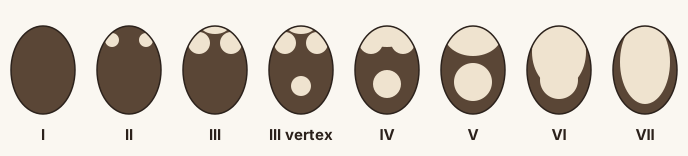
In men it usually starts above both temples and forms an "M" shape, with thinning at the crown. 7 Doctors describe the stages with the Norwood scale. By age 50, more than half of white men have a visible sign, according to the American Academy of Dermatology. 9 It can start in the late teens or early twenties. 9 Our guides cover the temples, the crown and the role of testosterone.
In women it looks different. The hair on top thins and the part widens, while the front hairline usually stays. 7 It is the most common cause of hair loss in women, and it becomes more common after menopause. 10 Our guides explain female pattern hair loss, the widening part and the Ludwig scale.
Read next
- The Norwood scale: the stages of male pattern hair lossWhat each of the seven stages looks like, how male pattern hair loss usually progresses, and what the scale can and can't tell you about your own hair.
- Female pattern hair loss explainedThe most common cause of hair loss in women: what it looks like, how common it is at each age, what causes it, how it is told apart from shedding, and what the options involve.
- Thinning crown: what it can mean and what to doThinning at the back-top of the head is usually pattern hair loss, in men and in women. Sometimes it isn't. How to tell, how to track it, and when to get it checked.
- Widening part: what it means and how to check itA part that looks wider than it used to is the most common early sign of female pattern hair loss. How to check it properly, what else can cause it, and what to do next.
Shedding with a trigger behind it
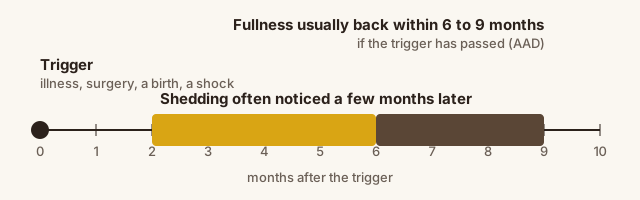
When hair comes out in handfuls, the cause is often something that happened a few months earlier. A high fever, an operation, giving birth, a crash diet or a severe shock can push many growing hairs into the resting phase at once. 4 12 They fall out together later. The medical name is telogen effluvium. 4
The delay is what confuses people. Shedding usually shows two to four months after the trigger, by which time it may be forgotten. 12 The good news is that it usually settles. The American Academy of Dermatology says hair tends to regain its normal fullness within six to nine months, unless the stressor continues. 4 New mothers often shed heavily a few months after the birth, and most are back to normal by the baby's first birthday. 13
Some triggers need a doctor to find and fix. Thyroid problems, low iron and some medicines can all cause shedding. 12 14 15 Never stop a medicine on your own; talk to the prescriber. 16
Read next
- Telogen effluvium: sudden shedding explainedHair coming out in handfuls a few months after an illness, a birth or a shock is usually telogen effluvium. Why it happens, how long it lasts, and what helps.
- Postpartum hair loss: the timeline, month by monthHeavy shedding a few months after giving birth is common and temporary. When it usually starts, when it peaks, when it settles, and what to do in the meantime.
- Thyroid problems and hair lossBoth an underactive and an overactive thyroid can thin the hair. The other symptoms that point to the thyroid, the blood tests that check it, and what to expect after treatment.
- Can diet cause hair loss? Iron, protein, crash diets and supplementsToo little food, too little protein and low iron can all cause shedding. So can too much of some supplements. What the evidence says, and which blood tests help.
Patches, scarring and the scalp itself
Round, smooth bald patches that appear suddenly are the classic sign of alopecia areata, a condition in which the immune system attacks hair follicles. 17 It most often starts in the teens, twenties or thirties, and hair frequently regrows, though new episodes are common. 17 18 A dermatologist can explain the treatments. Our alopecia areata guide covers them.
Scarring hair loss is less common and more urgent. Inflammation destroys the follicle, and lost hair cannot grow back. 19 Warning signs include smooth, shiny bald skin and itching, burning or tenderness where hair is being lost. 19 1 Tight hairstyles worn for years can also end in permanent loss along the hairline. 20 In these cases, early assessment really matters. Our guide to scarring hair loss explains why.
The scalp skin matters too. Flaking and itching are usually dandruff or seborrheic dermatitis, which a medicated shampoo often controls. 21 Scaly bald patches with broken hairs can be scalp ringworm, which needs prescription treatment. 22 23
Read next
- Alopecia areata: patchy hair loss explainedRound, smooth bald patches that appear suddenly are the classic sign of alopecia areata, an autoimmune condition. What causes it, how it behaves, what treatment involves, and how to look after yourself.
- Scarring hair loss: why early assessment mattersSome hair loss destroys the follicle and replaces it with scar tissue. Lost hair then cannot grow back. The warning signs, the main types, and why waiting has a real cost.
- Traction alopecia: hair loss from tight hairstylesStyles that pull, worn often, can thin the hairline and edges. Caught early, it is reversible; left too long, it is permanent. The early signs and the safer ways to wear the styles you like.
- Itchy scalp and hair loss: when to get it checkedAn itchy scalp is usually harmless dandruff. With hair loss, scaling, soreness or bald patches, it can be a sign of something that needs treatment. How to tell the difference.
What can be done, and what living with it is like
The right option depends on the cause, so the first step is a diagnosis. 24 For pattern hair loss, the American Academy of Dermatology names two FDA-approved medicines: topical minoxidil, sold without a prescription, and finasteride, a prescription pill for men. 9 Both take months to judge and only help while they are used. 9 10 Hair transplants move hair from the back and sides to thinning areas. 25 Balds explains what each involves. It doesn't rank them.
Many people choose not to treat at all. Mayo Clinic notes that some people let hair loss run its course untreated and unhidden. 2 Others change their haircut, use fibers or a wig, or shave their heads. 25 Losing your hair and being fine about it is a legitimate outcome. Be wary of products that promise more: the FDA lists "miracle cure" and "guaranteed results" among the signs of health fraud. 26
Read next
- Hair loss treatment options: what each one involvesMedicines, procedures, devices, cosmetic cover and doing nothing, set out side by side: what each involves, how long before you can judge it, and what happens if you stop. No rankings.
- Minoxidil: what it involves and what to ask a doctorThe most widely used hair loss treatment, sold without a prescription. How it is used, how long before you can tell, the side effects, and the questions worth asking first.
- How to spot a hair loss scamHair loss is one of the most heavily marketed health worries. The warning signs in product claims, why "growth shampoos" can't do what their labels imply, and how to check before you spend.
- How to shave your head, and look after the scalp afterFor many people with hair loss, shaving it off is the decision that ends the worry. A dermatologist-informed guide to doing it comfortably, avoiding bumps, and protecting a bare scalp from the sun.
Every guide, by where it happens
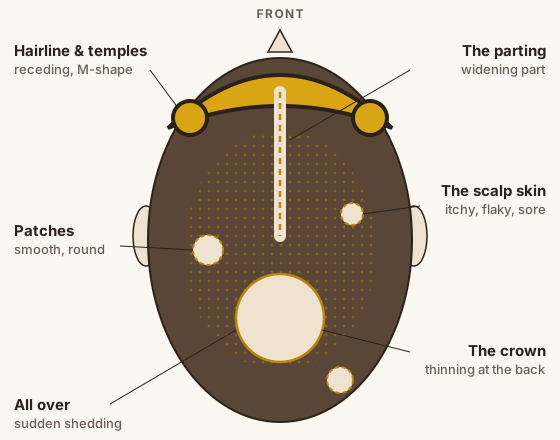
Hairline & temples
receding, an M-shape, a higher forehead
- The Norwood scale: the stages of male pattern hair loss
- Does wearing a hat cause hair loss?
- Hair loss at the temples: what it usually means
- Is my hairline receding? How to tell
- Signs of balding in your 20s
- Traction alopecia: hair loss from tight hairstyles
- Weaves and extensions: how to protect your natural hair
- What is frontal fibrosing alopecia, and why does early treatment matter?
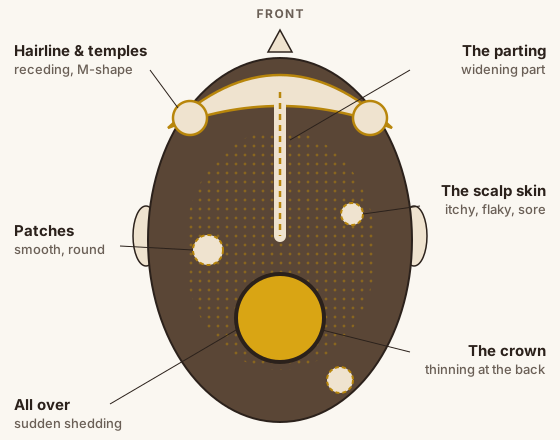
The crown
thinning at the back-top of the head
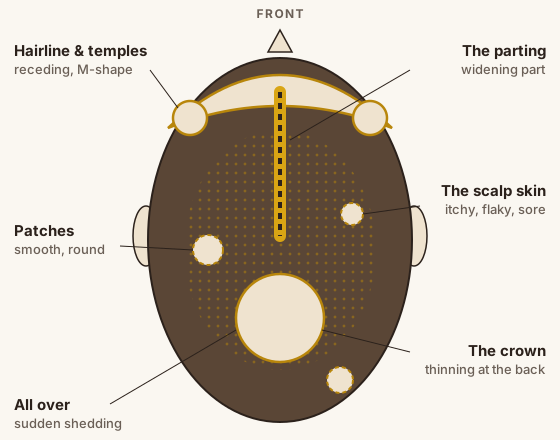
The parting
a part that looks wider than it was
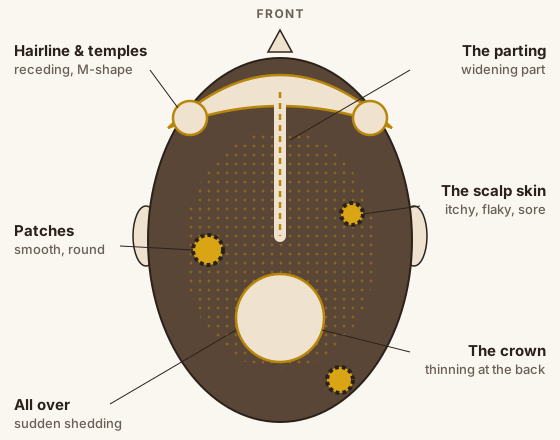
Patches
smooth round patches, or patches from pulling
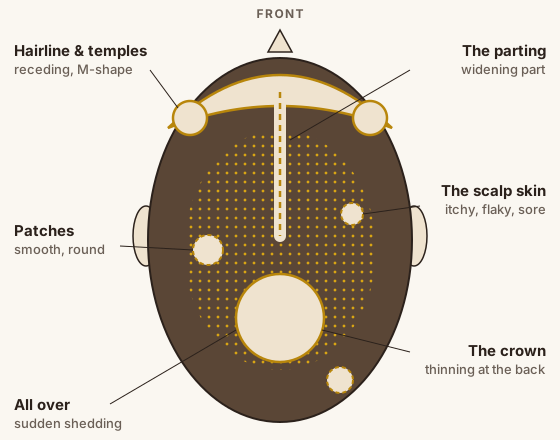
All over
more hair than usual in the brush or drain
- How much hair loss a day is normal?
- Telogen effluvium: sudden shedding explained
- Can diet cause hair loss? Iron, protein, crash diets and supplements
- Does stress cause hair loss?
- Hair loss after an illness or surgery
- Medicines that can cause hair shedding
- Postpartum hair loss: the timeline, month by month
- Thyroid problems and hair loss
Recently published
- Weaves and extensions: how to protect your natural hairWeaves and extensions can strain natural hair. Here is how to prepare, what to ask a stylist, how long to wear them and when to stop.
- What is CCCA? Scarring hair loss that starts at the crownCCCA is a scarring hair loss that often begins in the center of the scalp. The early signs, who it affects, and why early care matters.
- What is frontal fibrosing alopecia, and why does early treatment matter?A thin band of hair loss along the hairline, often with eyebrow loss, can be frontal fibrosing alopecia. Here is why it scars and why early assessment matters.
- Scalp ringworm (tinea capitis): the signs, how it spreads and how it's treatedA contagious fungal scalp infection that most often affects children. How to spot it, how it moves through a home, and why prompt treatment matters for hair.
- Trichotillomania: when hair pulling causes hair lossTrichotillomania is a hair-pulling disorder that can leave patches or uneven thinning. Here is how it shows up, how stress fits in, and what care involves.
- How to style thinning hair, including a receding hairlineCuts, parts, products and cover-ups that make thinning hair look fuller, for women and men, plus the styling habits that make thinning worse.
Every article was rewritten from its sources in October 2026. Original publication dates are kept as they were. All guides →
- American Academy of Dermatology, “Hair loss: Signs and symptoms”. aad.org/public/diseases/hair-loss/insider/begin
- Mayo Clinic, “Hair loss - Symptoms and causes”. mayoclinic.org/diseases-conditions/hair-loss/symptoms-causes/syc-2037292
- DermNet, “Hair loss, balding, hair shedding, alopecia”. dermnetnz.org/topics/hair-loss
- American Academy of Dermatology, “Do you have hair loss or hair shedding?”. aad.org/public/diseases/hair-loss/insider/shedding
- NHS, “Hair loss”. nhs.uk/symptoms/hair-loss/
- American Academy of Dermatology, “How to stop damaging your hair”. aad.org/public/diseases/hair-loss/insider/stop-damage
- MedlinePlus Genetics (NIH), “Androgenetic alopecia: MedlinePlus Genetics”. medlineplus.gov/genetics/condition/androgenetic-alopecia/
- DermNet, “Male pattern hair loss (androgenetic alopecia, balding)”. dermnetnz.org/topics/male-pattern-hair-loss
- American Academy of Dermatology, “What is male pattern hair loss, and can it be treated?”. aad.org/public/diseases/hair-loss/treatment/male-pattern-hair-loss-treat
- American Academy of Dermatology, “Thinning hair and hair loss: Could it be female pattern hair loss?”. aad.org/public/diseases/hair-loss/types/female-pattern
- Cleveland Clinic, “Male Pattern Baldness (Androgenic Alopecia): Stages, Treatment”. my.clevelandclinic.org/health/diseases/24515-male-pattern-baldness-andro
- DermNet, “Telogen effluvium (hair shedding)”. dermnetnz.org/topics/telogen-effluvium
- American Academy of Dermatology, “Hair loss in new moms: Dermatologist tips”. aad.org/public/diseases/hair-loss/insider/new-moms
- NHS, “Iron deficiency anaemia”. nhs.uk/conditions/iron-deficiency-anaemia/
- DermNet, “Alopecia from drugs”. dermnetnz.org/topics/alopecia-from-drugs
- American Academy of Dermatology, “Hair loss: Who gets and causes”. aad.org/public/diseases/hair-loss/causes/18-causes
- NIAMS (NIH), “Alopecia Areata–Hair Loss Symptoms, Types, & Causes”. niams.nih.gov/health-topics/alopecia-areata
- American Academy of Dermatology, “Hair loss types: Alopecia areata overview”. aad.org/public/diseases/hair-loss/types/alopecia
- Cleveland Clinic, “Scarring (Cicatricial) Alopecia: What It Looks Like & Treatment”. my.clevelandclinic.org/health/diseases/24582-scarring-alopecia
- American Academy of Dermatology, “Hairstyles that pull can lead to hair loss”. aad.org/public/diseases/hair-loss/causes/hairstyles
- American Academy of Dermatology, “How to treat dandruff”. aad.org/public/everyday-care/hair-scalp-care/scalp/treat-dandruff
- MedlinePlus (NIH), “Ringworm of the scalp: MedlinePlus Medical Encyclopedia”. medlineplus.gov/ency/article/000878.htm
- NHS, “Ringworm”. nhs.uk/conditions/ringworm/
- American Academy of Dermatology, “Hair loss: Diagnosis and treatment”. aad.org/public/diseases/hair-loss/treatment/diagnosis-treat
- Mayo Clinic, “Hair loss - Diagnosis and treatment”. mayoclinic.org/diseases-conditions/hair-loss/diagnosis-treatment/drc-203
- FDA, “6 Tip-offs to Rip-offs: Don't Fall for Health Fraud Scams”. fda.gov/consumers/consumer-updates/6-tip-offs-rip-offs-dont-fall-health-