Most itchy scalps are dandruff or seborrheic dermatitis, which flake and itch but rarely cause much hair loss. 1 2 Itching with hair loss is different. Scaly bald patches with broken hairs or black dots can be scalp ringworm, which needs prescription treatment. 3 4 Intense itching, burning or tenderness where hair is being lost can point to an infection or a scarring condition. 5 Those need a doctor soon.
An itchy scalp is common and usually not serious. Dry winter air, a new shampoo, sweat under a hat or ordinary dandruff can all make the scalp itch. Hair loss on its own is common too.
When the two come together, it is worth a closer look. Most hair loss doesn't itch. The causes that do are mostly ones that need treatment.
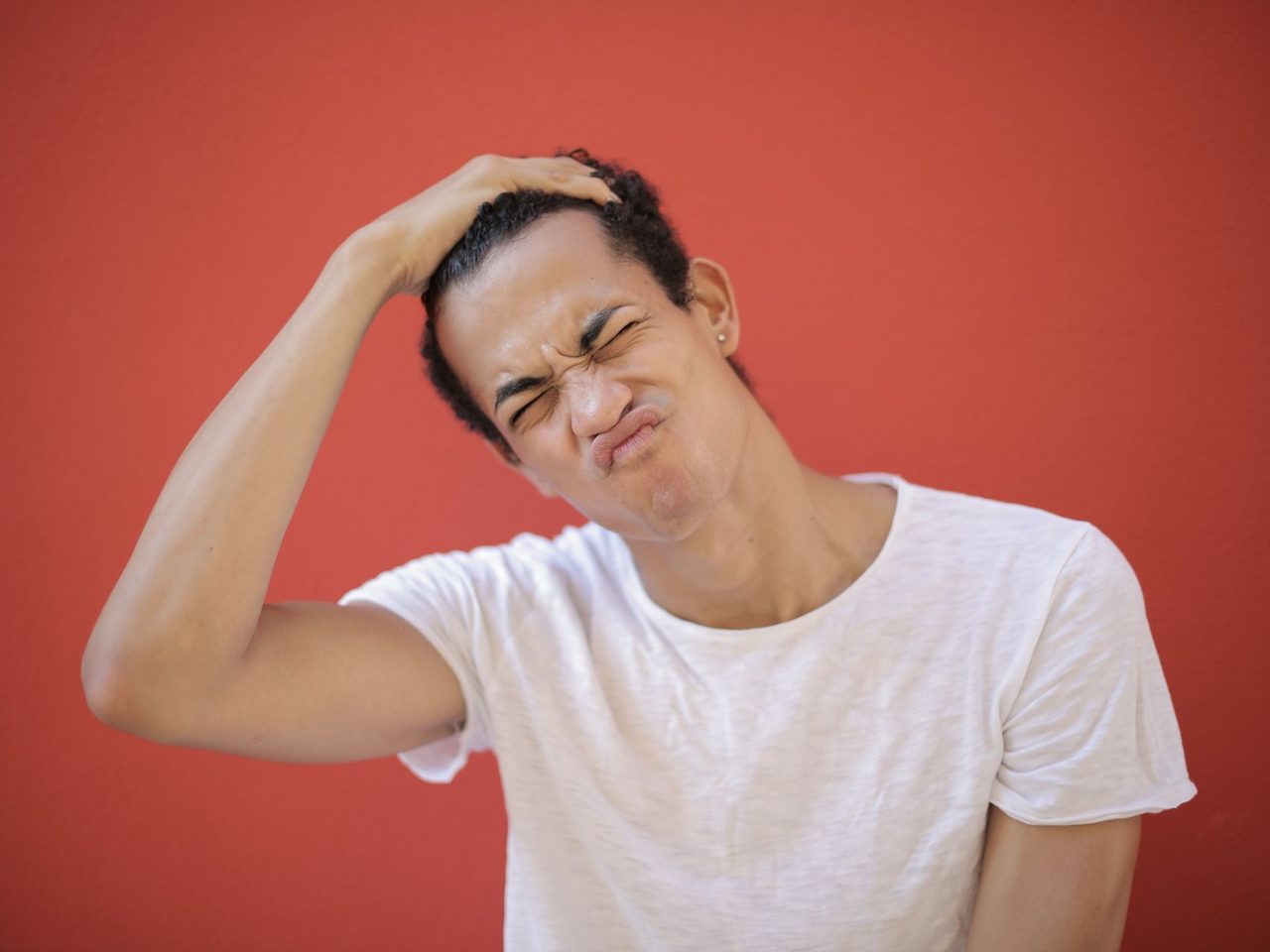
The usual suspects: dandruff and seborrheic dermatitis
The American Academy of Dermatology describes dandruff as small pieces of dry skin flaking off the scalp, sometimes with itching. 1 Mayo Clinic describes seborrheic dermatitis as a common condition that mainly affects the scalp, causing scaly patches, inflamed skin and stubborn dandruff. 2 DermNet says dandruff is a milder, non-inflamed form of the same condition. 6
They don't usually cause much hair loss. DermNet does list seborrheic dermatitis among the severe local skin diseases that can cause reversible patchy thinning. 7 Scratching hard can also break hairs. Our guide to seborrheic dermatitis and shedding covers the link.
The AAD says mild dandruff can usually be treated at home with regular washing and an over-the-counter dandruff shampoo. 1
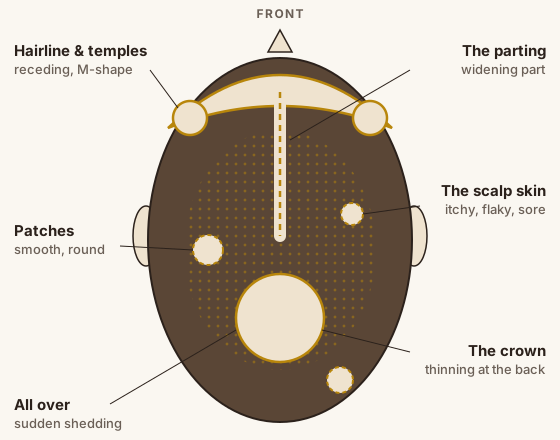
Causes of an itchy scalp with hair loss
| Cause | What it tends to look like |
|---|---|
| Scalp ringworm (tinea capitis) | Round, scaly, red or swollen patches; bald areas with small black dots from broken hairs; sometimes pus-filled sores. 3 The NHS notes it can cause patchy hair loss. 4 |
| Scalp psoriasis | Scaly patches of psoriasis on the scalp, which the AAD says can cause temporary hair loss. 5 |
| Folliculitis decalvans | Redness, swelling and sores that itch and may leak pus. 5 |
| Lichen planopilaris | A scarring condition that can cause scaling, burning and itching; mostly in women over 50. 8 |
| Central centrifugal cicatricial alopecia | Loss at the center of the scalp; many people with it say their scalp burns, stings or itches. 9 |
| Alopecia areata | Round smooth patches; some people feel burning or stinging before the hair falls. 5 |
Head lice cause itching too, but not hair loss as such. The NHS has a separate page on treating them. 10
Scalp ringworm needs prescription treatment
Scalp ringworm is a fungal infection, not a worm. 3 4 MedlinePlus says it most often affects children but can occur at any age, and that it spreads by direct contact or through shared combs, hats, clothing and pets. 3
It matters for hair because MedlinePlus says it may cause permanent hair loss and lasting scars. 3 Creams don't reach deep enough. The NHS says scalp ringworm usually needs prescription antifungal tablets and shampoo. 4 MedlinePlus says the tablets are usually taken for 4 to 8 weeks, and that medicated shampoo can slow the spread but does not cure it. 3
Don't share combs, brushes, hats, towels or pillowcases while it is being treated. 3
If it is a child's scalp
Scalp ringworm is mainly a childhood problem. MedlinePlus says it most often affects children and goes away at puberty. 3 Because it spreads through shared combs, hats and pillows, and from pets, particularly cats, the whole household can be involved. 3 MedlinePlus says other family members and pets should be examined and treated if needed. Other children in the home may use a medicated shampoo 2 to 3 times a week for about 6 weeks. 3 Children with alopecia areata often regrow hair without treatment, so a child with smooth, round patches needs a different plan from one with scaly, broken patches. 11 A doctor can tell them apart quickly.
Warning signs that need a doctor
The AAD lists several symptoms that, together with hair loss, point to something specific. 5
- Intense itching, burning and tenderness where hair is being lost, which may mean an infection. 5
- Scaly bald patches, often with sores or blisters that open and ooze pus, which often mean a fungal infection. 5
- Redness, swelling and sores that itch and leak pus, which can be folliculitis decalvans. 5
MedlinePlus adds pain or itching with hair loss, and a scalp that is red, scaly or otherwise abnormal, to its list of reasons to contact a provider. 12 A low fever or swollen glands in the neck can come with scalp ringworm. 3
What helps in the meantime
- Don't scratch with nails. Scratching breaks hair and can break the skin.
- Choose gentle products. The AAD suggests fragrance-free, alcohol-free products for skin prone to seborrheic dermatitis. 14
- Avoid hot water and harsh chemicals, which the AAD lists among common triggers of flares. 14
- Try a dandruff shampoo if it looks like ordinary flaking, following the label. 1
- See a doctor if it doesn't improve, or straight away if you have patches, sores or pain. 1 5
- American Academy of Dermatology, “How to treat dandruff”. aad.org/public/everyday-care/hair-scalp-care/scalp/treat-dandruff
- Mayo Clinic, “Seborrheic dermatitis - Symptoms and causes”. mayoclinic.org/diseases-conditions/seborrheic-dermatitis/symptoms-causes
- MedlinePlus (NIH), “Ringworm of the scalp: MedlinePlus Medical Encyclopedia”. medlineplus.gov/ency/article/000878.htm
- NHS, “Ringworm”. nhs.uk/conditions/ringworm/
- American Academy of Dermatology, “Hair loss: Signs and symptoms”. aad.org/public/diseases/hair-loss/insider/begin
- DermNet, “Seborrheic dermatitis: Causes and treatment — DermNet”. dermnetnz.org/topics/seborrhoeic-dermatitis
- DermNet, “Hair loss, balding, hair shedding, alopecia”. dermnetnz.org/topics/hair-loss
- Cleveland Clinic, “Scarring (Cicatricial) Alopecia: What It Looks Like & Treatment”. my.clevelandclinic.org/health/diseases/24582-scarring-alopecia
- American Academy of Dermatology, “Hair loss types: Central centrifugal cicatricial alopecia overview”. aad.org/public/diseases/hair-loss/types/ccca
- NHS, “Head lice and nits”. nhs.uk/conditions/head-lice-and-nits/
- American Academy of Dermatology, “Hair loss types: Alopecia areata diagnosis and treatment”. aad.org/public/diseases/hair-loss/types/alopecia/treatment
- MedlinePlus (NIH), “Hair loss: MedlinePlus Medical Encyclopedia”. medlineplus.gov/ency/article/003246.htm
- Mayo Clinic, “Hair loss - Symptoms and causes”. mayoclinic.org/diseases-conditions/hair-loss/symptoms-causes/syc-2037292
- American Academy of Dermatology, “Seborrheic dermatitis: Self-care”. aad.org/public/diseases/a-z/seborrheic-dermatitis-self-care
General information, not medical advice. This article was drafted with AI assistance and checked against the sources listed above. Nobody at Balds is a doctor. If something here is wrong or out of date, tell us.