Clip the hair short first, then shave after a warm shower with plenty of shaving cream, using a sharp blade in the direction the hair grows; never dry shave. 1 2 Change single blades or disposables after 5 to 7 shaves. 1 A bare scalp burns easily, so wear a hat or use a broad-spectrum, water-resistant sunscreen of SPF 30 or higher on it. 3
For a lot of people, shaving their head is the moment hair loss stops being a problem. No more checking the hairline in every mirror, no more combing to cover the crown. Mayo Clinic lists shaving your head among the reasonable ways to deal with hair loss, alongside treatment and cover-ups. 4 Mayo Clinic also notes that some people simply let hair loss run its course, untreated and unhidden. 5
This guide is practical: how to do it comfortably, how to avoid bumps and irritation, and how to look after a scalp that suddenly has no cover.
Before you start
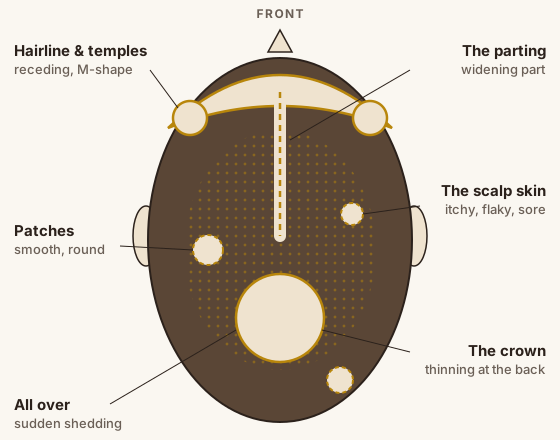
- Check the scalp first. Don't shave over a scalp that is sore, scaly, flaking badly or has patches you haven't had looked at. Those can be signs of a condition that needs treatment. 6 5
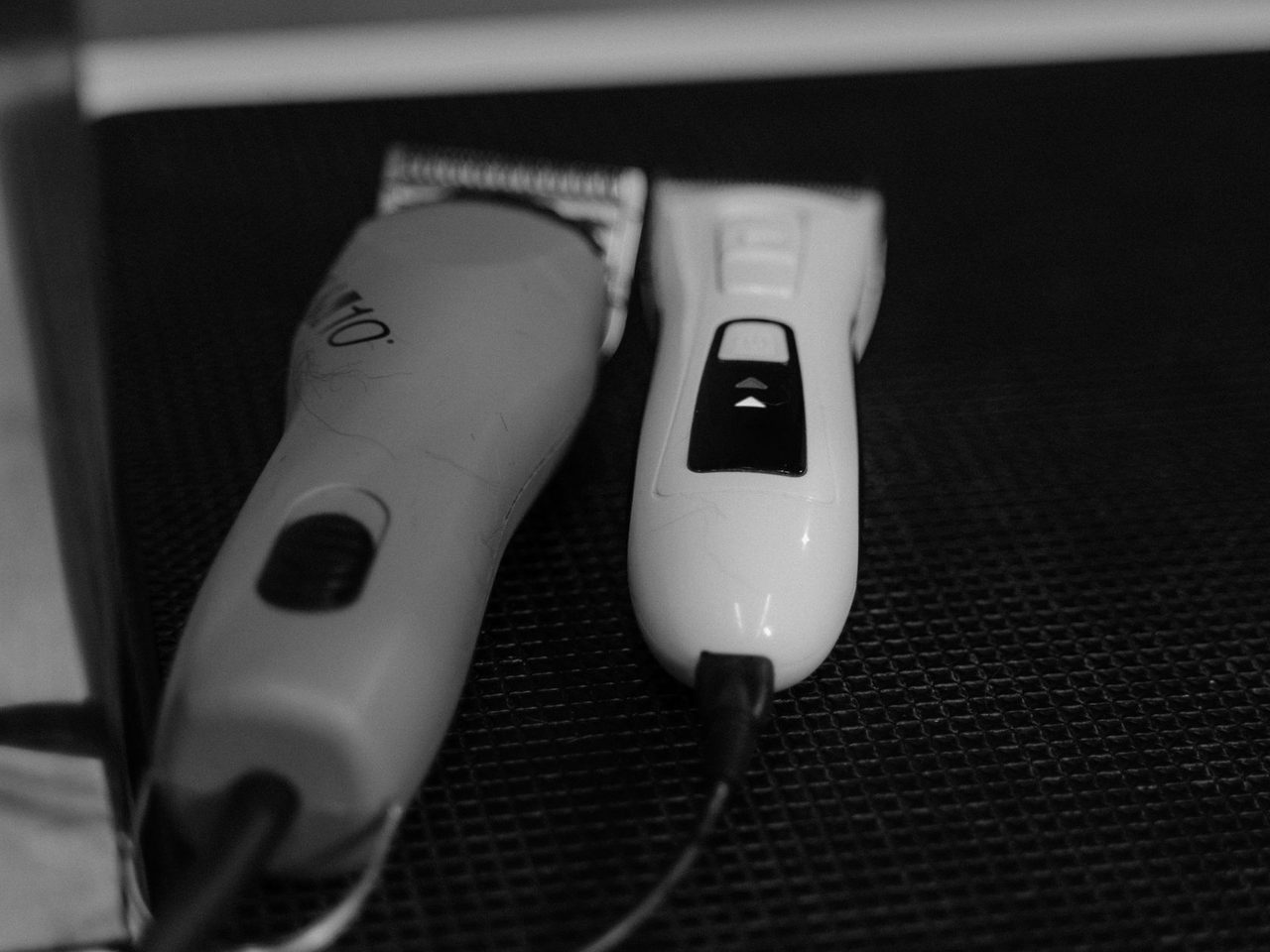
- Clip it short. Use clippers to take long hair down to stubble first. A razor clogs and pulls on long hair.
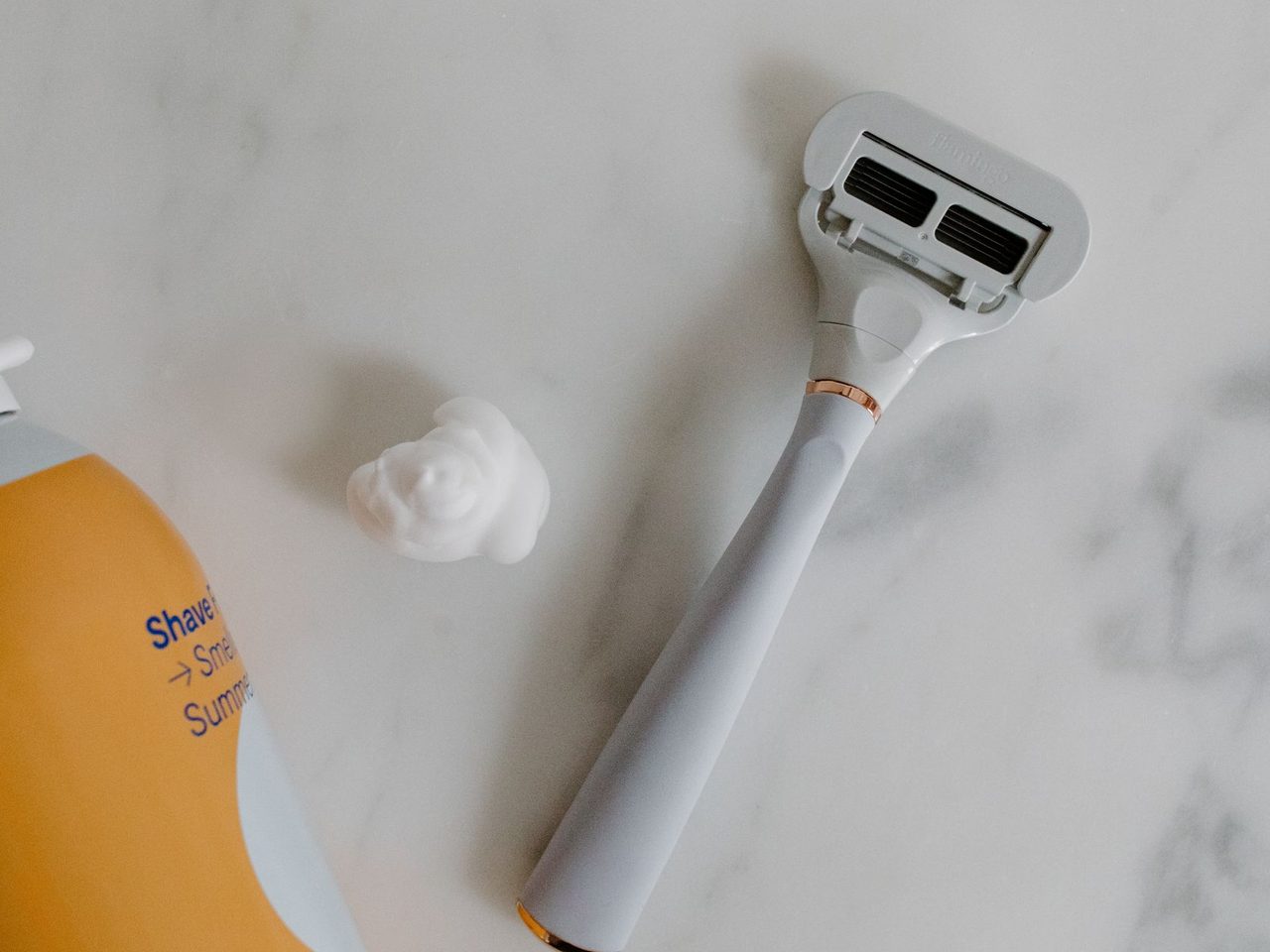
- Pick your razor. The AAD says a single-blade or electric razor is often recommended for people prone to razor bumps, and whatever you use must be sharp. 2
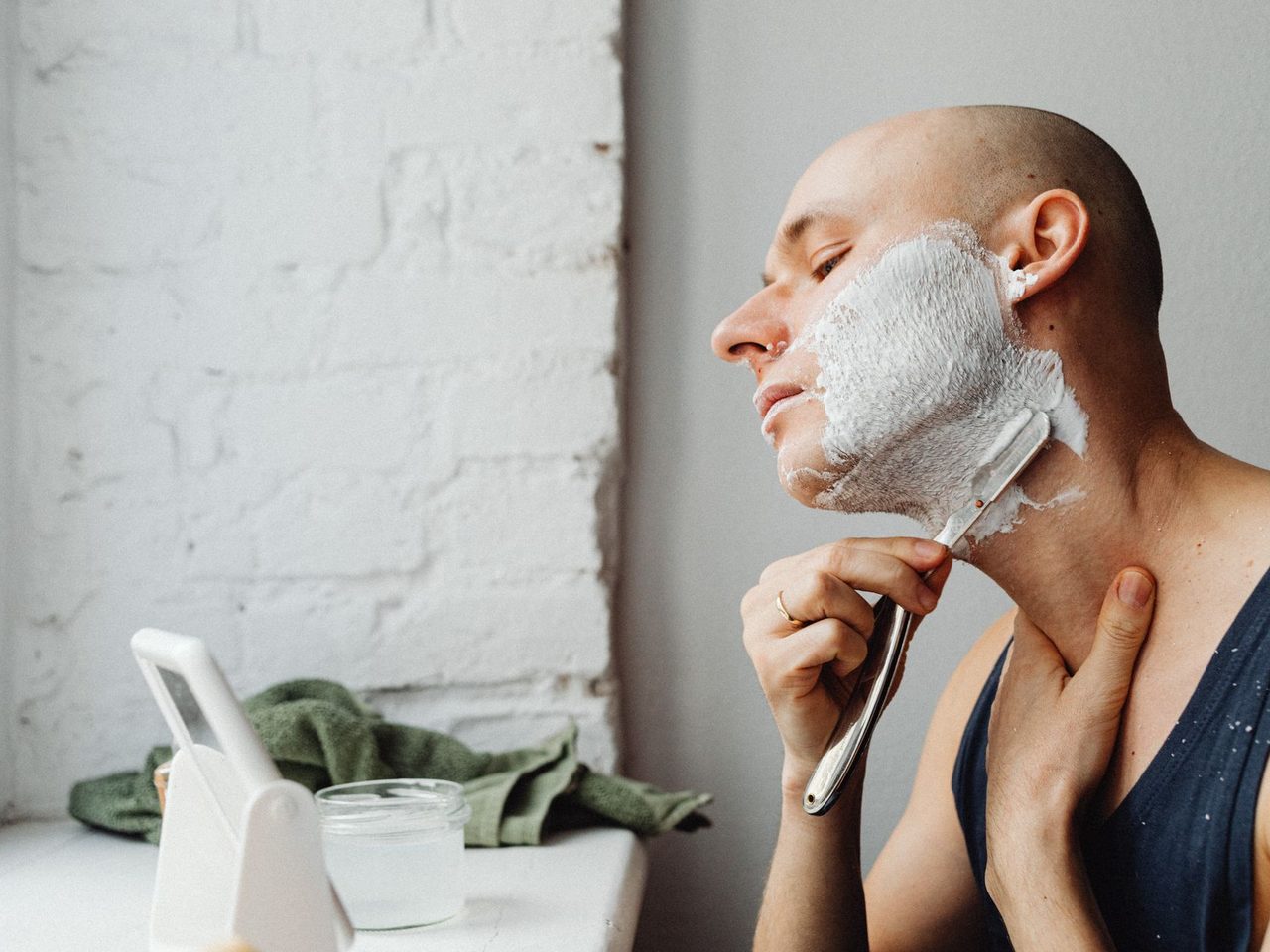
How to shave your head, step by step
These steps follow the American Academy of Dermatology's shaving advice, applied to the scalp. 1 2
- Soften the hair. Shave right after a warm shower, when skin and hair are soft. 1 Or hold a warm, wet washcloth on the area for five minutes. 2
- Use plenty of shaving cream or gel. Choose one for sensitive skin if yours is dry or sensitive. 1 The AAD says never dry shave. 2
- Work out which way the hair grows. On the scalp it often changes direction around the crown. Shave in the direction the hair grows to reduce bumps and razor burn. 1
- Use short, light strokes. Don't go over an area more than twice, and avoid pressing hard. 2
- Rinse the blade after each swipe. 1
- Rinse and cool. Rinse off all the cream with warm water, then hold a cool, wet washcloth on the skin for a few minutes. 2
Use a mirror held behind you, or a second mirror, for the back. Many people find the crown and the area above the neck the hardest to reach at first.
Avoiding bumps and irritation
Razor bumps form when hairs cut short curve back into the skin. The AAD says they are especially common in people with coarse, curly hair and darker skin tones. 2 Its advice:
- Keep blades sharp. Change a single blade, or throw away a disposable, after 5 to 7 shaves. 1 The AAD says a dull blade greatly increases the risk of razor bumps. 2
- Never pull or stretch the skin while shaving, and never pluck a hair from inside a bump. 2
- Shave regularly. For people prone to bumps, the AAD suggests shaving daily, or at least every 2 to 3 days, so hairs don't grow long enough to curve back in. 2
- Keep the razor dry between shaves, not in the shower, to stop bacteria growing on it. 1
If bumps keep coming, an electric clipper that leaves a little stubble is a good alternative to a razor. If they become painful or infected, see a dermatologist.
Protect the scalp from the sun
This is the most important part. A scalp that has always had hair has never needed sunscreen, and it burns quickly. The American Academy of Dermatology says thinning or balding hair on the scalp increases the risk of sunburn. 3
- Cover up. The AAD suggests a wide-brimmed hat when outdoors. 3
- Or use sunscreen on the scalp: broad-spectrum, water-resistant, SPF 30 or higher. 3 The AAD suggests reapplying every two hours, and after sweating or getting your head wet. 3
- Try a spray or powder. The AAD says spray sunscreen may be easiest where there is still some stubble, and powder or spray formulas make the scalp easier to cover. 3 7
- Don't forget the ears and back of the neck, which are newly exposed too. 8
The AAD's guidance on applying sunscreen also suggests applying it before going outside and using enough to cover all exposed skin. 8
Everyday scalp care
- Wash it. A shaved scalp still makes oil. Wash as often as it gets oily, as the AAD suggests for any scalp. 9
- Moisturize. A fragrance-free moisturizer helps if the skin feels tight or flaky. The AAD suggests fragrance-free, alcohol-free products for skin prone to irritation. 10
- Keep warm. The AAD notes that people without scalp hair can be very sensitive to cold, and suggests hats and scarves. 3
- Check your skin. A bare scalp makes it easier to notice changes. Show a doctor any new or changing spot.
If you are on the fence
Shaving is reversible: hair grows back in weeks if you change your mind. Many people try a very short clipper cut first to see how it feels. Cleveland Clinic notes that many people with male pattern baldness see it as part of aging and are comfortable with how it looks. 11 If hair loss is affecting your mood, the NHS says a GP may be able to arrange counseling, whatever you decide to do with your hair. 12
People with alopecia areata often shave too, to even out patches. The AAD's self-care advice for that condition, including sun protection, applies just the same. 3 Our guide to alopecia areata covers it.
- American Academy of Dermatology, “Hair removal: How to shave”. aad.org/public/everyday-care/skin-care-basics/hair/how-to-shave
- American Academy of Dermatology, “Razor bump remedies for men with darker skin tones”. aad.org/public/everyday-care/skin-care-basics/hair/razor-bump-remedies
- American Academy of Dermatology, “Hair loss types: Alopecia areata self-care”. aad.org/public/diseases/hair-loss/types/alopecia/self-care
- Mayo Clinic, “Hair loss - Diagnosis and treatment”. mayoclinic.org/diseases-conditions/hair-loss/diagnosis-treatment/drc-203
- Mayo Clinic, “Hair loss - Symptoms and causes”. mayoclinic.org/diseases-conditions/hair-loss/symptoms-causes/syc-2037292
- American Academy of Dermatology, “Hair loss: Signs and symptoms”. aad.org/public/diseases/hair-loss/insider/begin
- American Academy of Dermatology, “How to treat dandruff”. aad.org/public/everyday-care/hair-scalp-care/scalp/treat-dandruff
- American Academy of Dermatology, “How to apply sunscreen”. aad.org/public/everyday-care/sun-protection/shade-clothing-sunscreen/how
- American Academy of Dermatology, “Tips for healthy hair”. aad.org/public/everyday-care/hair-scalp-care/hair/healthy-hair-tips
- American Academy of Dermatology, “Seborrheic dermatitis: Self-care”. aad.org/public/diseases/a-z/seborrheic-dermatitis-self-care
- Cleveland Clinic, “Male Pattern Baldness (Androgenic Alopecia): Stages, Treatment”. my.clevelandclinic.org/health/diseases/24515-male-pattern-baldness-andro
- NHS, “Hair loss”. nhs.uk/symptoms/hair-loss/
General information, not medical advice. This article was drafted with AI assistance and checked against the sources listed above. Nobody at Balds is a doctor. If something here is wrong or out of date, tell us.