The American Academy of Dermatology says excessive heat can damage hair, no matter your hair type. 1 Damaged hair is fragile, so it tends to break. 2 Dermatologists suggest low or medium heat, using hot tools less often, and letting hair air-dry when possible. 1 2
Yes, heat styling can damage hair, and damaged hair tends to break. The American Academy of Dermatology (AAD) says that no matter your hair type, excessive heat can cause damage. 1 Damaged hair is fragile, so it tends to break. 2
Breakage is not the same as hair falling out at the root. The AAD's advice focuses on heat settings, how often you use hot tools, and how you handle wet hair. 1 3 This guide covers each of those. It also covers when broken hair may point to something else.
Breakage or shedding?
Hair on your brush can come from different places. DermNet says hair loss may be due to hair shedding, poor quality hair, or hair thinning. 4 Heat damage fits the middle group. DermNet lists hairdryer heat as one cause of acquired hair shaft defects. 4
Shedding is part of the normal hair cycle. A shed hair comes from the resting phase. It has a small bulb at the end, called a club hair. 4 Up to 10% of hairs in a normal scalp are in this resting phase. 4 For what counts as a usual amount, see how much hair loss a day is normal.
Breakage is different. It happens when damaged, fragile hair breaks. 2 The AAD says breakage can leave hair frizzy and unhealthy looking. 2 So a quick check can help. Look at a hair from your brush. A bulb at one end suggests a shed hair. 4
How heat damages the hair shaft
A hair shaft has three layers: the medulla, cortex and cuticle. 4 They are mainly made of keratin. That protein is also the main structure of skin and nails. 4 The shaft grows within a follicle at a rate of about 1 cm per month. 4
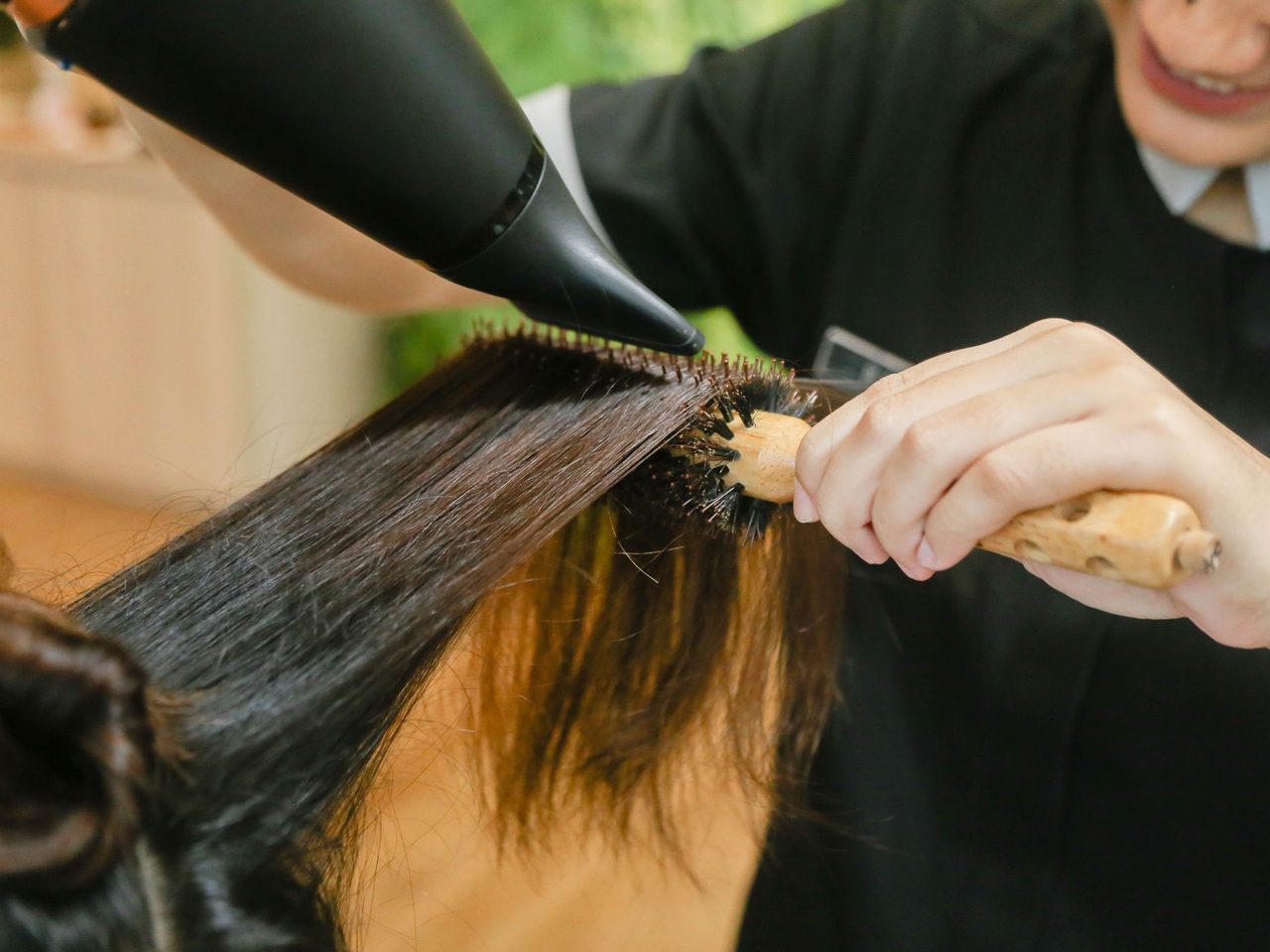
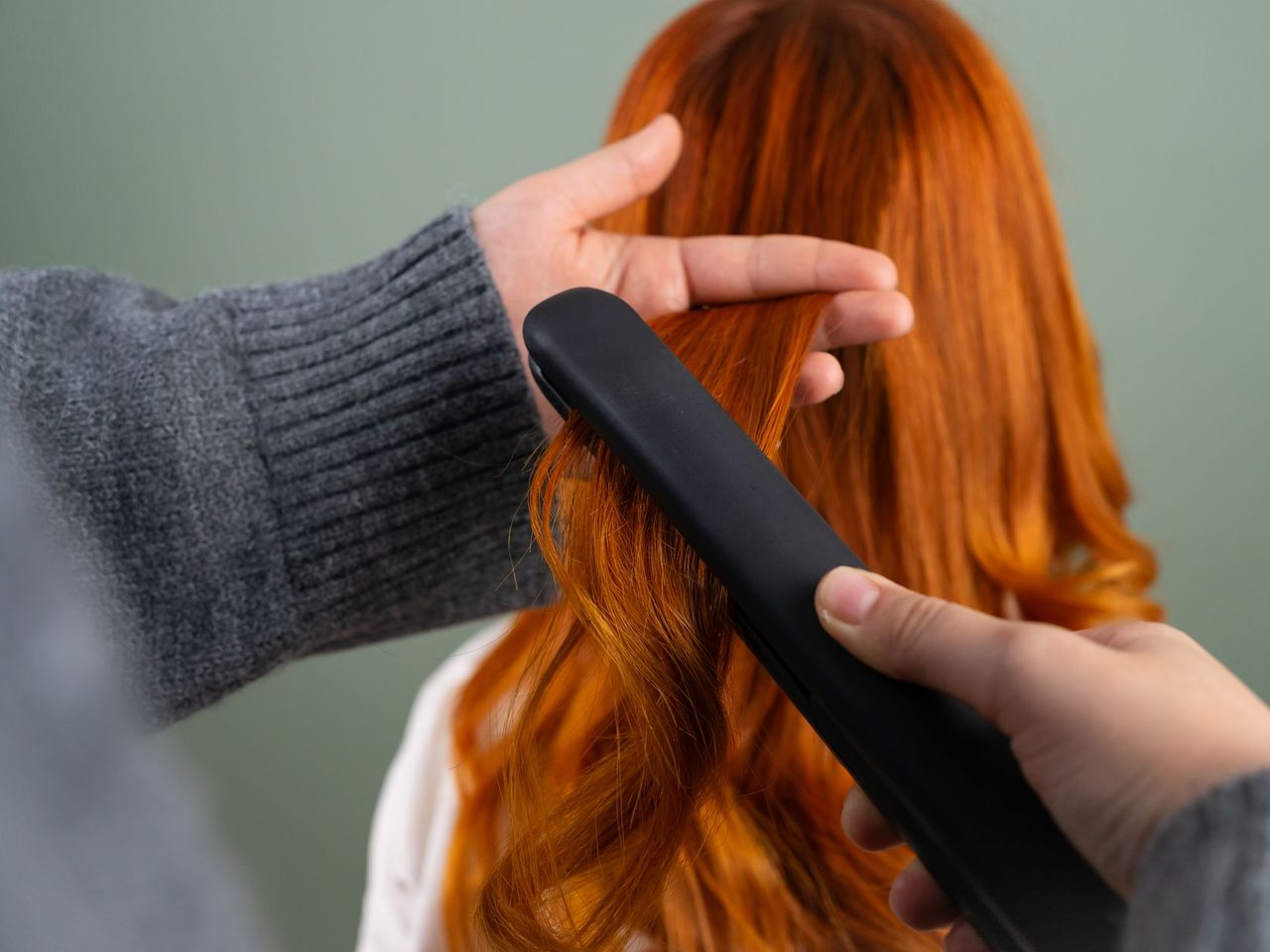
Heat works on that shaft. The AAD says curling irons, flat irons and hot combs heat up your hair, which can weaken it. 5 It says using a blow dryer can help contribute to hair damage. 2 DermNet names hairdryer heat alongside other injuries to the shaft. These include excessive brushing, hair pulling, relaxing chemicals and bleach. 4
The effects can build. The AAD says styling can make hair look brittle, frizzy and lackluster, or even make it fall out. 3 If the damage continues, it says, you may eventually see thinning hair or even bald spots. 2 It also says simple changes can prevent further hair damage. 2
Settings and how often
The AAD gives heat advice on several pages. Here is what each one says.
| Tool | Setting and technique | How often |
|---|---|---|
| Blow-dryer | Use the lowest heat setting. 5 DermNet suggests a cool setting. 4 | Fewer times per week helps limit damage. 3 |
| Flat iron | Use on dry hair, on a low or medium heat setting. 3 | No more often than every other day. 3 |
| Curling iron | Only leave it in place for a second or two. 3 | Aim for once a week or even less often. 2 |
| Hot comb | Limit the time it touches your hair. 2 | Aim for once a week or even less often. 2 |
| Any hot tool, if hair is thinning | Low or medium heat, plus a product that protects hair from heat. 1 | Irons and hot combs only on a special occasion, such as a wedding or job interview. 5 |
The pages do not match exactly. The AAD's styling page allows a flat iron up to every other day. 3 Its page on damage suggests once a week or less for blow dryers, hot combs and curling irons. 2 Its advice for people with hair loss is stricter. 5 That page says hair that's thinning or falling out is fragile and easily damaged. 5 If your hair is already thinning, that is the page written for you.
A few more heat habits from the same sources:
- Air-dry when you can. The AAD suggests letting hair dry naturally when possible. 2 5
- Let it partly dry first. Allow hair to partially air-dry before you style or comb. 3
- Protect it. The AAD suggests a product to protect your hair from the heat. 1
- Skip hot-oil treatments if hair is fragile. They heat up the hair, which further damages fragile hair. 5
Towel and comb habits
Heat is only part of the picture. The AAD's tips also cover what happens before the dryer comes out. Wet hair breaks more easily when combed or brushed, it says. 3 Most people should handle wet hair as little as possible. 3
- Wrap, don't rub. Roughly rubbing your hair dry can cause damage. Wrap it in a towel or t-shirt to absorb the moisture. 1
- Try a microfiber towel. It helps hair dry more quickly. That cuts the time you spend blow-drying. 5
- Use a wide-tooth comb on wet hair. The AAD suggests it instead of a brush. 1
- Straight hair: wait a little. Let it dry a bit before you gently comb it. 2 1
- Tight curls or textured hair: comb while damp. The AAD says this decreases the chances of breakage. 2 3 For thick, curly hair, the best time is in the shower before you rinse out conditioner. 1
- Start at the ends. Comb the ends first, then work higher. 1
- Condition and detangle gently. Conditioner coats your strands, which reduces breakage and split ends. 5 Remove tangles gently, with a moisturizing conditioner if needed. 2
- Brush only to style. Hair never needs 100 brush strokes a day. 2 Brushing 100 strokes each day can cause split ends. 3
If your hair is thin and you still want shape, see our guide to styling thinning hair. Chemical services carry their own risks. Our guide on whether you can color, perm or relax thinning hair covers them.
When broken hair is a sign of something else
Not all breakage comes from heat. The AAD says that if changing your hair care does not help, you may want to see a dermatologist. 2 Your hair care may not be the root cause of the problem. 2
Some other causes to know about:
- Tight styles. Braids, cornrows, ponytails and extensions pull on hair. That tension can lead to breakage. If it continues, permanent hair loss can develop. 3 See traction alopecia.
- Twisting or pulling habits. These can further weaken already fragile hair, causing more hair loss. 5 DermNet lists hair pulling, or trichotillomania, as an injury to the shaft. 4 See trichotillomania.
- Inherited or disease-related shaft problems. DermNet says hair shaft defects can be inherited, or acquired from disease or injury. 4 They are diagnosed by dermatoscopy or by looking at the hair under a microscope. 4
- Sudden shedding of growing hairs. Short broken hairs may be seen in anagen effluvium, which has a sudden onset. 4 DermNet lists autoimmune disease, such as severe diffuse alopecia areata, among its causes. 4 See alopecia areata.
- Shedding after an event. Telogen effluvium occurs 2–6 months after an event that stops active hair growth. 4 Those hairs come out at the root, not from breakage. See telogen effluvium.
The AAD says seeing a dermatologist is especially important if you are concerned about thinning hair or hair loss. 2 It says the sooner the cause is found, the better the chance of getting the results you want. 5 Our guide to seeing a dermatologist about hair loss explains what happens at a visit.
The short version
Heat can weaken hair, and weak hair tends to break. 5 2 Dermatologists suggest low or medium heat, a heat protection product, and less blow drying and ironing. 1 Air-dry when possible, wrap rather than rub, and use a wide-tooth comb. 2 1 If your hair is already thinning, the AAD suggests saving irons and hot combs for special occasions. 5
Using less heat is a choice, not a test. Some people air-dry, wear their natural texture, or keep their hair short. Others keep styling and adjust the settings. Any of those is a reasonable way to live with your hair. If breakage keeps going despite gentler care, it is worth having it checked. 2
- American Academy of Dermatology, “Tips for healthy hair”. aad.org/public/everyday-care/hair-scalp-care/hair/healthy-hair-tips
- American Academy of Dermatology, “How to stop damaging your hair”. aad.org/public/diseases/hair-loss/insider/stop-damage
- American Academy of Dermatology, “Hair styling without damage”. aad.org/public/diseases/hair-loss/hair-care/styling
- DermNet, “Hair loss, balding, hair shedding, alopecia”. dermnetnz.org/topics/hair-loss
- American Academy of Dermatology, “Hair loss: Tips for managing”. aad.org/public/diseases/hair-loss/treatment/tips
- American Academy of Dermatology, “Hair loss: Signs and symptoms”. aad.org/public/diseases/hair-loss/insider/begin
- Mayo Clinic, “Hair loss - Symptoms and causes”. mayoclinic.org/diseases-conditions/hair-loss/symptoms-causes/syc-2037292
General information, not medical advice. This article was drafted with AI assistance and checked against the sources listed above. Nobody at Balds is a doctor. If something here is wrong or out of date, tell us.