Scalp ringworm is a fungal infection that most often affects children, and a provider treats it with medicine taken by mouth. 1 With alopecia areata, the American Academy of Dermatology says many people, especially children, regrow their hair without treatment. 2 Tight hairstyles and hair pulling can also cause hair loss in children, and a dermatologist can work out which cause it is. 3 4
Finding a bald patch on your child's head can be unsettling. This guide covers four causes: scalp ringworm, alopecia areata, tight hairstyles and hair pulling. Each one looks a little different, and each is handled differently.
Ringworm is a fungal infection that most often affects children. 1 Alopecia areata typically causes small, round patches, usually without a rash. 5 With tight styles, the hairline is one of the first places hair loss shows. 3 Hair pulling tends to leave an uneven look. 4

Scalp ringworm: an infection that spreads
Ringworm of the scalp is also called tinea capitis. It is caused by mold-like fungi called dermatophytes, not a worm. 1 MedlinePlus says it most often affects children and goes away at puberty. It can still occur at any age. 1
Ringworm can spread quickly. 1 It passes by direct contact with an area of ringworm on someone else. 1 It can also spread through shared combs, hats or clothing, and from pets, particularly cats. 1
The affected areas may look like this:
- Bald, with small black dots from hairs that have broken off. 1
- Round, scaly patches of skin that are red or swollen. 1
- There may be pus-filled sores called kerions. 1
A child may also have a low-grade fever or swollen lymph nodes in the neck. 1
A health care provider will look at the scalp for signs of ringworm. They may also check a skin scraping under a microscope. 1 The provider will prescribe medicine taken by mouth, and MedlinePlus says it is taken for 4 to 8 weeks. 1 A medicated shampoo may slow or stop the spread. It does not get rid of ringworm. 1 Other family members and pets should be examined and treated, if necessary. 1
MedlinePlus also notes that ringworm may cause permanent hair loss and lasting scars. 1 It advises that no one in the home share combs, hairbrushes, hats, towels, pillowcases or helmets. 1 The Balds guide to scalp ringworm covers the other home steps.
Alopecia areata: round, bare patches
Alopecia areata happens when the immune system attacks hair follicles, the structures in skin that form hair. 5 In most cases, there is no obvious trigger. 5 It can begin at any age, but most people get it in their teens, twenties or thirties. 5
Hair typically falls out in small, round patches about the size of a quarter. 5 There is usually no rash, redness or scarring on the bare skin. 5 Around the edges, there are often short broken hairs called "exclamation point" hairs. These are narrower at the base than the tip. 5 Some people say they feel tingling, burning or itching just before the hair falls out. 5 Any body part may be affected, including the eyebrows or eyelashes. 5
A board-certified dermatologist can often diagnose it by looking carefully at the patches and the nails. 2 They will also ask whether close blood relatives have alopecia areata. 2
The American Academy of Dermatology says treatment is not always recommended. 2 For one or two bald spots there for less than one year, a dermatologist may suggest waiting to see. 2 The AAD says many people, especially children, regrow their hair without treatment. 2 Regrowth can be slow, and some people do not see the regrowth they expect. 2 New hair may look white or gray at first. It may regain its natural color over time. 5
The course is hard to predict. NIAMS says that when it starts in children younger than age 10, it tends to be more extensive and progressive. 5 Sometimes hair regrows in one patch while new bare patches form. 5 Some people have bouts of hair loss throughout their lives, while others have only one episode. 5 There is more in alopecia areata: patchy hair loss explained.
Tight hairstyles: traction alopecia
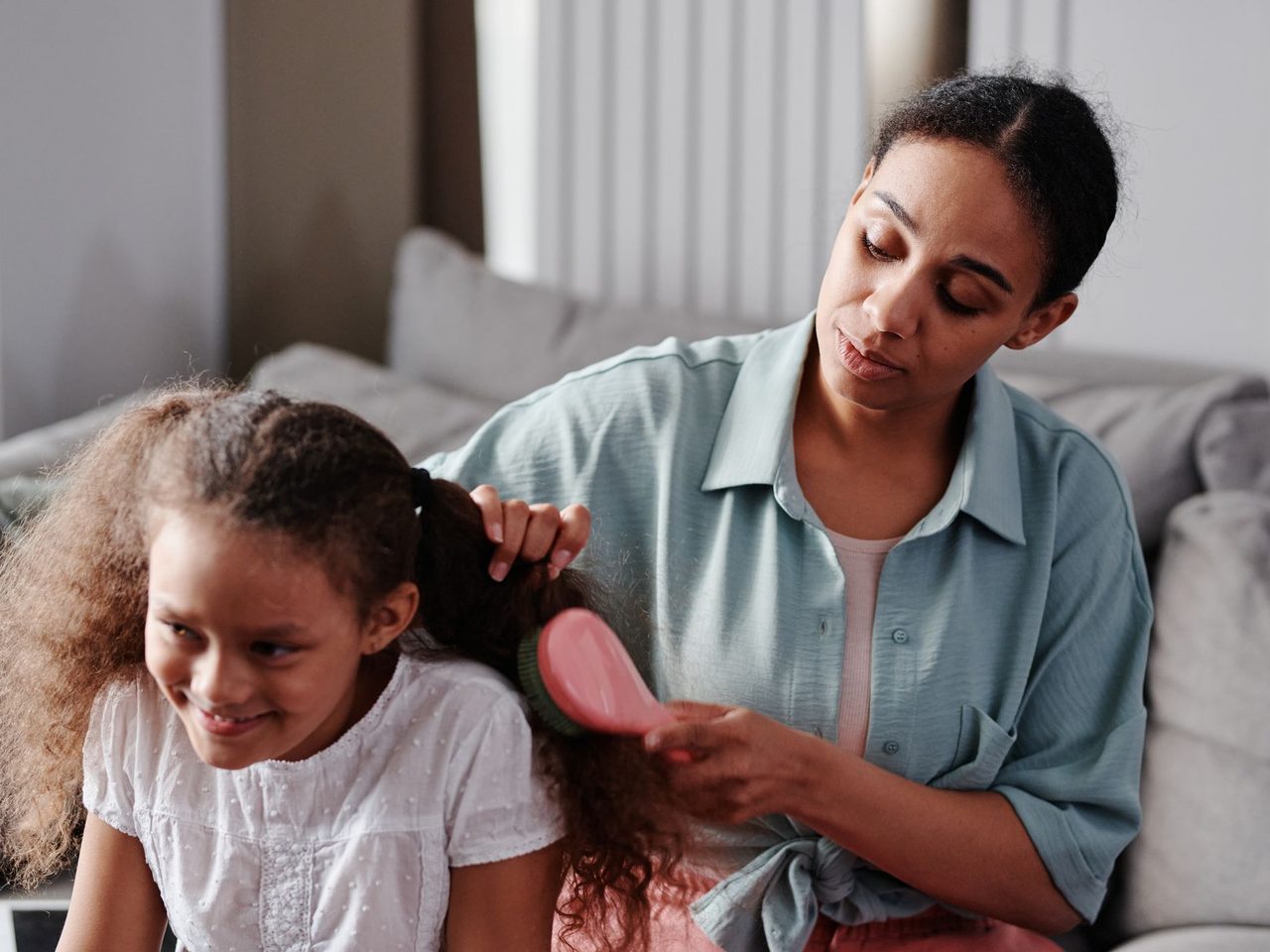
Traction alopecia is hair loss from hairstyles that pull. 3 The American Academy of Dermatology says children can get it too. Styling habits that can lead to hair loss often begin at a young age. 3 Some people get it more often because tight styles are common in their culture. The AAD says this is especially true for girls and women of African descent. 3
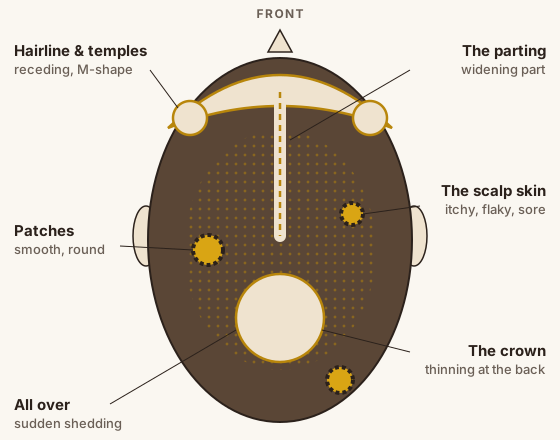
When they are too tight, risky styles include pulled-back buns, ponytails and updos, cornrows, and weaves or extensions. 3 Signs to look for include patches of hair loss where hair is pulled tightly. Another is "tenting," where sections of scalp are pulled up like a tent. 3 If a style feels painful, the AAD says it is too tight. 3
The AAD suggests ways to reduce the pulling:
- Loosen braids, especially around the hairline. 3
- Choose thicker braids and locs, and keep them short. Longer hair is heavier and pulls more. 3
- Switch styles regularly so the hair can recover. 3
Timing matters. If the pulling continues, most people eventually notice their hair stops growing. Shiny, bald skin is left behind. 3 At that stage, the AAD says, the hair cannot grow back. 3 See traction alopecia from tight hairstyles for more.
Hair pulling: trichotillomania
Trichotillomania is hair loss from repeated urges to pull or twist the hair until it breaks off. 4 People are unable to stop, even as their hair becomes thinner. 4 MedlinePlus calls it a type of obsessive-compulsive and related disorder. Its causes are not clearly understood. 4
Symptoms most often begin between the ages of 11 and 13. 4 Hair may come out in round patches or across the scalp, giving an uneven look. 4 A child may also pluck eyebrows, eyelashes or body hair. 4 Regrowth in the bare spots can feel like stubble. 4 There may be a growing sense of tension before pulling, and relief afterward. 4
MedlinePlus says trichotillomania that begins in children younger than 6 may go away without treatment. 4 For most people, it adds, the hair pulling ends within 12 months. 4 For others, it is lifelong. Even then, treatment often improves the pulling and feelings of depression, anxiety or poor self-image. 4 Behavioral therapy and habit reversal may also be effective. 4 The Balds guide to trichotillomania goes into more depth.
The four side by side
| Cause | What you may see | Does it settle on its own? |
|---|---|---|
| Scalp ringworm | Bald areas with small black dots, and round, scaly patches that are red or swollen. 1 | In many cases it gets better on its own after puberty. A provider will still prescribe medicine to treat it. 1 |
| Alopecia areata | Small, round patches, usually with no rash, redness or scarring. 5 | Many people, especially children, regrow their hair without treatment. 2 |
| Traction alopecia | Hair loss at the hairline or where hair is pulled tightly. 3 | It can be permanent the longer it goes untreated. 3 |
| Trichotillomania | Uneven patches, with regrowth that feels like stubble. 4 | When it begins in children younger than 6, it may go away without treatment. 4 |
When to see a doctor
The AAD says it is never too early to see a board-certified dermatologist about hair loss. 3 A dermatologist can diagnose the type of hair loss. 3 That matters here, because these causes are handled so differently.
It is worth booking a visit if you notice:
- Scaly, red or swollen patches, black dots, or pus-filled sores. These can be signs of ringworm. 1
- A low-grade fever or swollen lymph nodes in the neck along with scalp patches. 1
- Painful styles, tenting, or patches where hair is pulled tightly. 3
- A child eating the hair they pull out, which can cause a bowel blockage. 4
- Small patches joining to form larger ones. 5
For ringworm, MedlinePlus also says to contact a provider if home care is not enough. 1 Some people with alopecia areata may be at risk for other autoimmune diseases. The AAD says that makes it important to keep dermatology appointments. 2 The guide to seeing a dermatologist about hair loss explains what to bring.
Looking after how your child feels
Hair loss can feel bigger to a child than it looks to anyone else. A calm, matter-of-fact tone helps. NIAMS notes there are resources to help people cope with hair loss. 5 With hair pulling, MedlinePlus says decreasing stress can help, because stress may increase compulsive behavior. 4
Not every child wants to hide their patches. The AAD notes that some people prefer to shave, rather than cover up a patchy look. 2 Others choose not to treat at all. If hair does not come back, that is a real and acceptable outcome. NIAMS says most people with alopecia areata are healthy and have no other symptoms. 5
- MedlinePlus (NIH), “Ringworm of the scalp: MedlinePlus Medical Encyclopedia”. medlineplus.gov/ency/article/000878.htm
- American Academy of Dermatology, “Hair loss types: Alopecia areata diagnosis and treatment”. aad.org/public/diseases/hair-loss/types/alopecia/treatment
- American Academy of Dermatology, “Hairstyles that pull can lead to hair loss”. aad.org/public/diseases/hair-loss/causes/hairstyles
- MedlinePlus (NIH), “Trichotillomania: MedlinePlus Medical Encyclopedia”. medlineplus.gov/ency/article/001517.htm
- NIAMS (NIH), “Alopecia Areata–Hair Loss Symptoms, Types, & Causes”. niams.nih.gov/health-topics/alopecia-areata
- American Academy of Dermatology, “Hair loss: Signs and symptoms”. aad.org/public/diseases/hair-loss/insider/begin
- Mayo Clinic, “Hair loss - Symptoms and causes”. mayoclinic.org/diseases-conditions/hair-loss/symptoms-causes/syc-2037292
General information, not medical advice. This article was drafted with AI assistance and checked against the sources listed above. Nobody at Balds is a doctor. If something here is wrong or out of date, tell us.