Understanding hair loss
Four questions that sort out most hair loss
Hair loss has many causes, and the right next step depends on which one you have. Effective treatment begins with finding the cause, as the American Academy of Dermatology puts it. 1 The four questions below follow the order most people ask them. Each leads to the guides that answer it. If you would rather start from what you can see, the scalp map on our homepage sorts the same guides by area.
Is this normal?
Everyone sheds. The American Academy of Dermatology puts normal shedding at 50 to 100 hairs a day, and new hair grows in at the same time. 4 3 Washing, brushing and long hair can make ordinary shedding look like more. These guides cover the baseline and the habits people worry about.
- How much hair loss a day is normal?Everyone sheds every day. Here is what the main medical sources count as normal, why it can look like more, and the signs that it is something else.
- Does wearing a hat cause hair loss?An ordinary hat is not on any medical list of hair loss causes. Tight headwear over pulled-back hair is a different story.
- How often should you wash thinning hair?Washing does not cause hair loss, and skipping washes will not save hair. How often depends on your scalp and hair type, and how you wash matters more.
Is it a pattern?
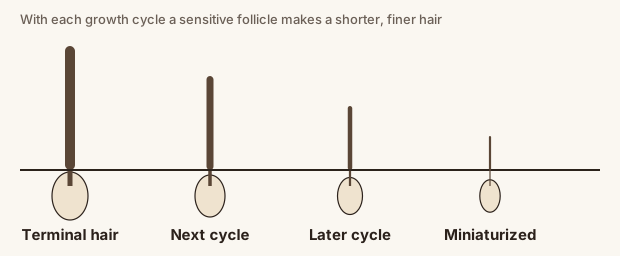
Gradual thinning at the temples or crown in men, or a widening part in women, is usually pattern hair loss, the most common type. 3 5 It is inherited and slow, and it looks different in men and women. 5 These guides cover the stages, the scales doctors use, and the causes.
- Female pattern hair loss explainedThe most common cause of hair loss in women: what it looks like, how common it is at each age, what causes it, how it is told apart from shedding, and what the options involve.
- The Norwood scale: the stages of male pattern hair lossWhat each of the seven stages looks like, how male pattern hair loss usually progresses, and what the scale can and can't tell you about your own hair.
- Diffuse thinning in women: the common causes and how they differWhen hair thins all over rather than in one spot, several causes are possible, and more than one can happen at once. How doctors tell them apart.
- Does testosterone cause baldness? Genes, hormones and pattern hair lossBald men don't have more testosterone. What matters is how sensitive certain follicles are to a hormone made from it, and that sensitivity is inherited.
- Hair loss at the temples: what it usually meansThinning at the temples is the classic first sign of male pattern hair loss. In women it is less common, and two other causes deserve a closer look.
- Is my hairline receding? How to tellHairlines change shape with age, and a mirror is a poor judge. A practical way to check, what the early stages look like, and what can fool you.
- Menopause and hair thinningPattern hair loss becomes more common after menopause, and a less common scarring condition tends to start then too. What changes, what to watch for, and what to ask.
- Signs of balding in your 20sPattern hair loss can start young. What the early signs look like, what else causes hair loss in your twenties, and why early is the time to get a proper answer.
- The Ludwig scale: grading female pattern hair lossThe three Ludwig grades, drawn and explained, plus the newer scales doctors use alongside it and what each grade does and doesn't tell you.
- Thinning crown: what it can mean and what to doThinning at the back-top of the head is usually pattern hair loss, in men and in women. Sometimes it isn't. How to tell, how to track it, and when to get it checked.
- Widening part: what it means and how to check itA part that looks wider than it used to is the most common early sign of female pattern hair loss. How to check it properly, what else can cause it, and what to do next.
Did something set it off?
Heavy shedding a few months after an illness, an operation, a birth, a diet or a shock is usually telogen effluvium, and it usually settles. 4 7 Thyroid problems, low iron and some medicines can also trigger it, and those need a doctor to check. 7 8 9
- Telogen effluvium: sudden shedding explainedHair coming out in handfuls a few months after an illness, a birth or a shock is usually telogen effluvium. Why it happens, how long it lasts, and what helps.
- Can diet cause hair loss? Iron, protein, crash diets and supplementsToo little food, too little protein and low iron can all cause shedding. So can too much of some supplements. What the evidence says, and which blood tests help.
- Does stress cause hair loss?Yes, in three distinct ways. Heavy shedding months after a shock is the most common. Stress can also bring on patchy hair loss, or the urge to pull hair out.
- Hair loss after an illness or surgeryA fever, an operation or a hard illness can make hair shed heavily a few months later. Why the delay, how long it lasts, and what is different about chemotherapy.
- Medicines that can cause hair sheddingMany common medicines list hair loss as a side effect. Which groups are involved, how the timing works, and why you should never stop a medicine on your own.
- Postpartum hair loss: the timeline, month by monthHeavy shedding a few months after giving birth is common and temporary. When it usually starts, when it peaks, when it settles, and what to do in the meantime.
- Thyroid problems and hair lossBoth an underactive and an overactive thyroid can thin the hair. The other symptoms that point to the thyroid, the blood tests that check it, and what to expect after treatment.
Should I see someone soon?
Some hair loss shouldn't wait. Patchy bald spots, a scalp that is itchy, burning, sore or scaly, and smooth, shiny skin where hair used to be all deserve a prompt appointment. 2 10 Scarring hair loss destroys follicles, so early treatment is what protects the hair that remains. 10 11
- Alopecia areata: patchy hair loss explainedRound, smooth bald patches that appear suddenly are the classic sign of alopecia areata, an autoimmune condition. What causes it, how it behaves, what treatment involves, and how to look after yourself.
- Itchy scalp and hair loss: when to get it checkedAn itchy scalp is usually harmless dandruff. With hair loss, scaling, soreness or bald patches, it can be a sign of something that needs treatment. How to tell the difference.
- Scalp ringworm (tinea capitis): the signs, how it spreads and how it's treatedA contagious fungal scalp infection that most often affects children. How to spot it, how it moves through a home, and why prompt treatment matters for hair.
- Scarring hair loss: why early assessment mattersSome hair loss destroys the follicle and replaces it with scar tissue. Lost hair then cannot grow back. The warning signs, the main types, and why waiting has a real cost.
- Seborrheic dermatitis, dandruff and hair sheddingFlaky, itchy, greasy scalp conditions are common and manageable. How dandruff and seborrheic dermatitis differ from dry scalp, how they relate to hair loss, and what keeps them under control.
- Seeing a dermatologist about hair loss: what happens and what to bringWhat a dermatologist asks, looks at and tests at a hair loss appointment, how to prepare so the visit gets an answer, and when to go to a GP first.
- Traction alopecia: hair loss from tight hairstylesStyles that pull, worn often, can thin the hairline and edges. Caught early, it is reversible; left too long, it is permanent. The early signs and the safer ways to wear the styles you like.
- Trichotillomania: when hair pulling causes hair lossTrichotillomania is a hair-pulling disorder that can leave patches or uneven thinning. Here is how it shows up, how stress fits in, and what care involves.
- What is frontal fibrosing alopecia, and why does early treatment matter?A thin band of hair loss along the hairline, often with eyebrow loss, can be frontal fibrosing alopecia. Here is why it scars and why early assessment matters.
What can be done
Once you know the cause, our guide to options and living with hair loss explains what each choice involves, from medicines and transplants to styling and shaving. It doesn't rank them.
- American Academy of Dermatology, “Hair loss: Diagnosis and treatment”. aad.org/public/diseases/hair-loss/treatment/diagnosis-treat
- American Academy of Dermatology, “Hair loss: Signs and symptoms”. aad.org/public/diseases/hair-loss/insider/begin
- Mayo Clinic, “Hair loss - Symptoms and causes”. mayoclinic.org/diseases-conditions/hair-loss/symptoms-causes/syc-2037292
- American Academy of Dermatology, “Do you have hair loss or hair shedding?”. aad.org/public/diseases/hair-loss/insider/shedding
- MedlinePlus Genetics (NIH), “Androgenetic alopecia: MedlinePlus Genetics”. medlineplus.gov/genetics/condition/androgenetic-alopecia/
- DermNet, “Male pattern hair loss (androgenetic alopecia, balding)”. dermnetnz.org/topics/male-pattern-hair-loss
- DermNet, “Telogen effluvium (hair shedding)”. dermnetnz.org/topics/telogen-effluvium
- NHS, “Iron deficiency anaemia”. nhs.uk/conditions/iron-deficiency-anaemia/
- DermNet, “Alopecia from drugs”. dermnetnz.org/topics/alopecia-from-drugs
- Cleveland Clinic, “Scarring (Cicatricial) Alopecia: What It Looks Like & Treatment”. my.clevelandclinic.org/health/diseases/24582-scarring-alopecia
- American Academy of Dermatology, “Hair loss types: Central centrifugal cicatricial alopecia overview”. aad.org/public/diseases/hair-loss/types/ccca