Telogen effluvium is heavy, temporary shedding that starts a few months after a shock to the body, such as a high fever, surgery, giving birth or a crash diet. 1 2 Many growing hairs switch to resting at once and fall out later. 2 It usually settles on its own: the AAD says hair tends to regain its normal fullness within six to nine months, unless the stressor continues. 1
It often starts in the shower. A clump of hair in the drain, then another the next day, then hair on the pillow, the sofa and the sleeves. The loss can feel frightening, and it is easy to assume the worst.
In many cases the explanation is telogen effluvium. It is one of the most common causes of sudden hair loss, and one of the most reassuring once you understand it. Cleveland Clinic calls it one of the most common causes of rapid hair loss. 3
What is happening
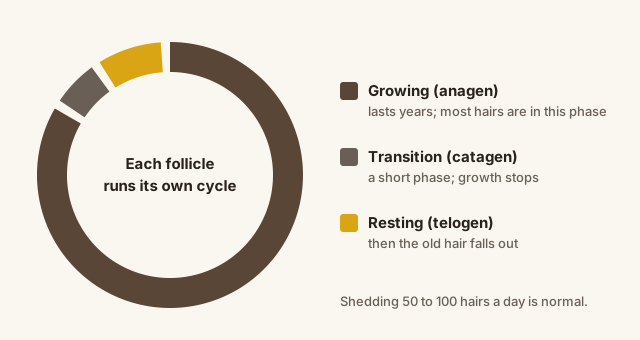
Every hair follows a cycle of growing, a short transition and resting. 4 Normally most hairs are growing. DermNet says that in a healthy scalp about 85% of follicles are growing and about 15% are resting. 2 At the end of the rest, a new hair pushes the old one out. That is why normal shedding is up to about 100 hairs a day. 2
A shock to the body changes the ratio. DermNet says that as many as 70% of the growing hairs can be pushed into the resting phase at once. 2 Nothing seems to happen at first, because resting hairs stay in place for a while. Then, months later, they all let go together.
DermNet notes a strange upside. The shed hairs are being pushed out by new ones, so the hair fall is, paradoxically, a sign of regrowth. 2 A fine fringe of new hair often shows along the forehead as it recovers. 2
What triggers it
The triggers are things that put the body under strain. The sources list similar ones. 1 2 3 5
- Illness, especially with fever, including flu, pneumonia and COVID-19. 1 6
- Surgery, major illness or sudden blood loss. 5
- Giving birth. 2 7
- Severe emotional stress, such as caring for someone who is ill, a divorce or losing a job. 1
- Weight loss, crash or unusual diets, or a nutritional deficiency such as iron deficiency. 2 5
- Thyroid problems, both underactive and overactive. 2
- Some medicines, and stopping birth control pills. 1 3
Often the trigger is long over by the time the hair falls. Cleveland Clinic notes that many people have fully recovered and don't connect the event with their hair loss. 3
The timing, step by step
The delay is the most confusing part. DermNet says increased hair fall is noticed 2 to 4 months after the triggering event. 2 The AAD gives the example of a new mother, who can see heavy shedding about two months after giving birth, peaking at about four months. 1
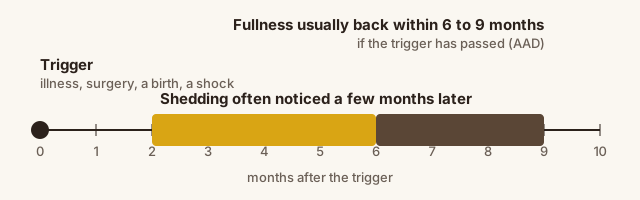
| Stage | What usually happens |
|---|---|
| The trigger | Illness, surgery, a birth, a shock or a diet change. Hair looks normal. 2 |
| 2 to 4 months later | Shedding starts, often in handfuls when washing or combing. 2 8 |
| The peak | Shedding peaks after several months, then begins to ease. 2 |
| Recovery | Shedding tapers back to normal over 6–9 months in most cases. 2 The AAD says hair tends to regain its normal fullness within six to nine months. 1 |
Cleveland Clinic says acute telogen effluvium lasts fewer than six months, and that it resolves in 95% of cases. 3 DermNet adds that recovery may be incomplete in some people. 2
What it looks like
Telogen effluvium thins hair all over rather than in patches. DermNet describes diffuse thinning without areas of total baldness. 2 Cleveland Clinic says it most often shows on the top of the head and usually spares the hairline. 3 It doesn't cause complete baldness. 2 3
The scalp itself should look healthy. Cleveland Clinic says there should be no rash, itching, burning, pain or flaking. 3 If you have those, something else may be involved.
The shed hairs have a small white bulb at the root. These are club hairs, and they mean the hair came out at the end of its resting phase. 2 3 DermNet notes that people with thick, long hair often notice the shedding most, simply because each hair is more visible. 2

A clue in your fingernails
DermNet points out a little-known sign that can help date the trigger. Hair and nails respond to the same influences. A shock that stops hair growth can also leave a groove across the fingernails, called a Beau line. 2
Because nails grow at a steady pace, the groove's position works like a calendar. DermNet says a fingernail takes about 5 months to grow from its base to the free edge. So a groove halfway along the nail suggests the shock happened about two and a half months earlier. 2 Not everyone gets a groove, but if you see one, it can help you and your doctor link the shedding to the right event.
Other kinds of hair loss it can be mistaken for
DermNet lists the main conditions a doctor considers before settling on telogen effluvium. 2
| Condition | What points to it instead |
|---|---|
| Female pattern hair loss | A widened part and thinner hair at the front and top of the scalp. 2 |
| Male pattern hair loss | Recession at both temples, though this is sometimes seen in telogen effluvium too. 2 |
| Diffuse alopecia areata | Other immune-related signs, such as vitiligo; a biopsy shows inflammation around the follicles. 2 |
| Anagen effluvium | Usually more severe; hair growth itself is interrupted, as with chemotherapy. 2 1 |
How doctors confirm it
It is usually diagnosed from the history and a look at the scalp. 2 3 A doctor will ask about illness, surgery, births, diets and medicines in the months before. 3
A simple test helps. In a pull test, the doctor gently tugs a small bunch of hair. Cleveland Clinic says a clump of 40 to 60 hairs usually releases two to three. With telogen effluvium, at least four to six come out, with white bulbs at the roots. 3
Blood tests check for causes that need fixing. DermNet recommends correcting thyroid problems and low iron, vitamin B12 or folic acid if found. 2 A scalp biopsy is rarely needed. 2
When it doesn't stop
Sometimes shedding continues for longer than six months. Cleveland Clinic calls this chronic telogen effluvium. 3 DermNet says it can go on, on and off, for years, and that it tends to affect otherwise healthy women aged 30–60, often without a clear cause. 2 It still doesn't cause complete baldness. 2 3
The AAD notes that if the stressor stays with you, shedding can be long-lived. 1 So ongoing stress, an untreated thyroid problem or a continuing diet deficit can keep it going.
There is one more possibility. DermNet says telogen effluvium may unmask an inherited tendency to pattern hair loss, and repeated episodes can sometimes evolve into female pattern hair loss. 2 If thinning on top remains after the shedding stops, it is worth asking about. Our guide to diffuse thinning in women explains how doctors tell them apart.
What helps
DermNet describes telogen effluvium as self-correcting. 2 Its practical advice:
- Handle the hair gently. Avoid over-vigorous combing, brushing and scalp massage. 2
- Eat well, with plenty of protein, fruit and vegetables. 2
- Treat the cause, such as a thyroid problem or low iron, if one is found. 2
- Don't ignore the emotional side. DermNet says the psychological effects of hair loss should not be ignored. 2
If a medicine might be the trigger, talk to the prescriber first. The AAD warns that stopping some treatments suddenly can cause serious side effects. 1 Our guide to medicines that can cause shedding lists the common ones.
Waiting is hard, but it is usually the right plan. The AAD notes that most people regrow their hair over several months without treatment after illness-related shedding. 6
While you wait, a few cosmetic changes can make thinner hair look fuller. For new mothers with this kind of shedding, the AAD suggests a volumizing shampoo, a conditioner made for fine hair used mainly on the ends, and a shorter cut, which can look fuller and is easier to manage. 7 The same ideas work after any trigger.
When to see a doctor sooner
See a doctor if the shedding is severe, lasts beyond six months, or comes with other symptoms. MedlinePlus lists tiredness, weight gain, muscle weakness and feeling cold among the reasons to call, as these can point to a thyroid problem. 5 Patches of baldness, a sore or flaky scalp, or eyebrow loss also point to other causes. 9 3

- American Academy of Dermatology, “Do you have hair loss or hair shedding?”. aad.org/public/diseases/hair-loss/insider/shedding
- DermNet, “Telogen effluvium (hair shedding)”. dermnetnz.org/topics/telogen-effluvium
- Cleveland Clinic, “Telogen Effluvium: Symptoms, Causes, Treatment & Regrowth”. my.clevelandclinic.org/health/diseases/24486-telogen-effluvium
- DermNet, “Hair loss, balding, hair shedding, alopecia”. dermnetnz.org/topics/hair-loss
- MedlinePlus (NIH), “Hair loss: MedlinePlus Medical Encyclopedia”. medlineplus.gov/ency/article/003246.htm
- American Academy of Dermatology, “Can COVID-19 cause hair loss?”. aad.org/public/diseases/hair-loss/causes/covid-19
- American Academy of Dermatology, “Hair loss in new moms: Dermatologist tips”. aad.org/public/diseases/hair-loss/insider/new-moms
- Mayo Clinic, “Hair loss - Symptoms and causes”. mayoclinic.org/diseases-conditions/hair-loss/symptoms-causes/syc-2037292
- American Academy of Dermatology, “Hair loss: Signs and symptoms”. aad.org/public/diseases/hair-loss/insider/begin
General information, not medical advice. This article was drafted with AI assistance and checked against the sources listed above. Nobody at Balds is a doctor. If something here is wrong or out of date, tell us.