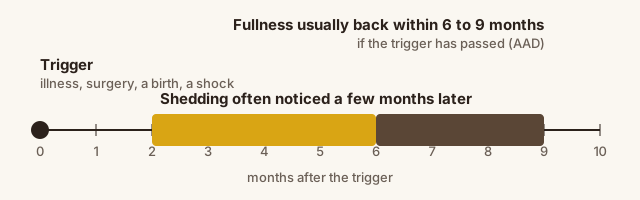
A high fever, a serious illness or an operation can trigger heavy shedding two to three months later. 1 2 This is telogen effluvium, and it usually settles: the AAD says shedding after an illness such as COVID-19 usually lasts 3 to 6 months, and most people see complete regrowth within 6 to 8 months. 1 1 Chemotherapy is different: it stops hair growing, and hair tends to regrow once treatment ends. 2
Recovery from an illness or an operation usually brings relief. Then, weeks after you feel better, your hair starts to fall out. It can feel like a cruel second blow, and because of the gap in time, many people don't connect the two.
This guide explains why it happens, how long it lasts, and how hair loss from chemotherapy is different.
Why illness and surgery cause shedding
The body treats a serious illness or an operation as a shock. One of the things it does is push many growing hairs into the resting phase at once. DermNet says that after a shock to the system, as many as 70% of growing hairs can switch to resting. 3 Those hairs fall out later, all together.
The AAD lists recovering from an illness, especially one with a high fever, among the common triggers. 2 MedlinePlus lists major surgery, major illness and sudden blood loss. 4 Fever matters in particular. The AAD notes that people develop heavy shedding after illnesses like pneumonia, scarlet fever and the flu. 1
After COVID-19
COVID-19 made this kind of shedding familiar to many people. The AAD says that in studies, about 20% of people who had COVID-19 later developed temporary shedding. 1 You didn't need to have severe COVID. Many people who lost hair had mild symptoms. 1
The AAD gives a timeline from the research: 1
- shedding usually begins 2 to 3 months after the illness; 1
- it usually lasts 3 to 6 months; 1
- regrowth begins 3 to 6 months after the shedding starts; 1
- most people see complete regrowth within 6 to 8 months. 1
A less common cause after COVID-19 is a flare of alopecia areata, which causes round or oval patches rather than all-over shedding. 1 The AAD says it can start earlier, often 1 to 3 months after the illness. 1 Patches are a reason to see a dermatologist.
After surgery
Surgery works the same way. The operation itself, the anesthesia, blood loss and the stress of recovery all add to the strain. 4 The shedding shows up a few months later and usually settles on its own. 2
Recovery can be slowed by things that come with being unwell: eating less, losing weight quickly, or not getting enough protein. MedlinePlus lists crash diets, especially those low in protein, as a separate cause of shedding. 4 Eating well while you recover supports regrowth. DermNet recommends a nutritious diet with plenty of protein, fruit and vegetables. 3
Chemotherapy is different
Hair loss from chemotherapy is not shedding in the same sense. The AAD calls it hair loss rather than shedding, with the medical name anagen effluvium. It happens because the treatment stops hair from growing. 2 DermNet says anagen shedding has a sudden onset. 5 Mayo Clinic notes that chemotherapy can cause hair loss all over the body. 6
The outlook is usually good. The AAD says that when the treatment stops, hair tends to regrow. 2 Mayo Clinic says the hair usually grows back. 6 Radiation to the head is the exception: Mayo Clinic says the hair may not grow back the same as before. 6
Some people can reduce chemotherapy hair loss. Mayo Clinic suggests asking about a cooling cap. 6 The AAD says wearing one before, during and after each session may help prevent hair loss. 7 Your cancer team can say whether it suits your treatment.
Medicines started during the illness
Sometimes the shedding comes from a medicine rather than the illness. DermNet says drug-related hair loss is usually reversible and can start within days to weeks of a new medicine or a dose change. 8 The AAD stresses that you should never stop a medicine on your own, because stopping some treatments abruptly can be dangerous. 2 Our guide to medicines that can cause shedding covers this.
What to do in the meantime
- Be gentle with your hair. DermNet advises against over-vigorous combing, brushing and scalp massage. 3
- Eat enough, especially protein, while you recover. 3
- Write down the dates of the illness or operation. It helps a doctor connect the dots later. 9
- Give it time. Most people regrow their hair over several months without treatment. 1
When to see a doctor
See a doctor if the shedding goes on for more than six months, if you see bald patches, or if the scalp is red, sore or flaky. 9 1 The AAD suggests a dermatologist if you're unsure why your hair is falling out or the loss seems dramatic or patchy. 1

- American Academy of Dermatology, “Can COVID-19 cause hair loss?”. aad.org/public/diseases/hair-loss/causes/covid-19
- American Academy of Dermatology, “Do you have hair loss or hair shedding?”. aad.org/public/diseases/hair-loss/insider/shedding
- DermNet, “Telogen effluvium (hair shedding)”. dermnetnz.org/topics/telogen-effluvium
- MedlinePlus (NIH), “Hair loss: MedlinePlus Medical Encyclopedia”. medlineplus.gov/ency/article/003246.htm
- DermNet, “Hair loss, balding, hair shedding, alopecia”. dermnetnz.org/topics/hair-loss
- Mayo Clinic, “Hair loss - Symptoms and causes”. mayoclinic.org/diseases-conditions/hair-loss/symptoms-causes/syc-2037292
- American Academy of Dermatology, “Hair loss: Who gets and causes”. aad.org/public/diseases/hair-loss/causes/18-causes
- DermNet, “Alopecia from drugs”. dermnetnz.org/topics/alopecia-from-drugs
- Cleveland Clinic, “Telogen Effluvium: Symptoms, Causes, Treatment & Regrowth”. my.clevelandclinic.org/health/diseases/24486-telogen-effluvium
- American Academy of Dermatology, “Hair loss: Signs and symptoms”. aad.org/public/diseases/hair-loss/insider/begin
General information, not medical advice. This article was drafted with AI assistance and checked against the sources listed above. Nobody at Balds is a doctor. If something here is wrong or out of date, tell us.