The NHS says synthetic wigs are easier to look after, while real-hair wigs look more natural but are harder to look after. 1 Some wigs are available on the NHS, though you may have to pay unless you qualify for financial help. 1 In the US, Mayo Clinic says a wig's cost might be covered by insurance if hair loss is due to a medical condition. 2
A wig, topper or hairpiece is one way to live with hair loss. It is not the only way. Some people wear one every day, some only now and then, and some never do. All of those are fine.
Mayo Clinic lists wigs and extensions alongside styling products that add volume, hair color, a new style or a shaved head. 2 It says these approaches can be used for permanent or temporary hair loss. 2 This guide covers the main types, comfort, the scalp underneath and help with the cost.
Full wigs, toppers, integrations and hairpieces
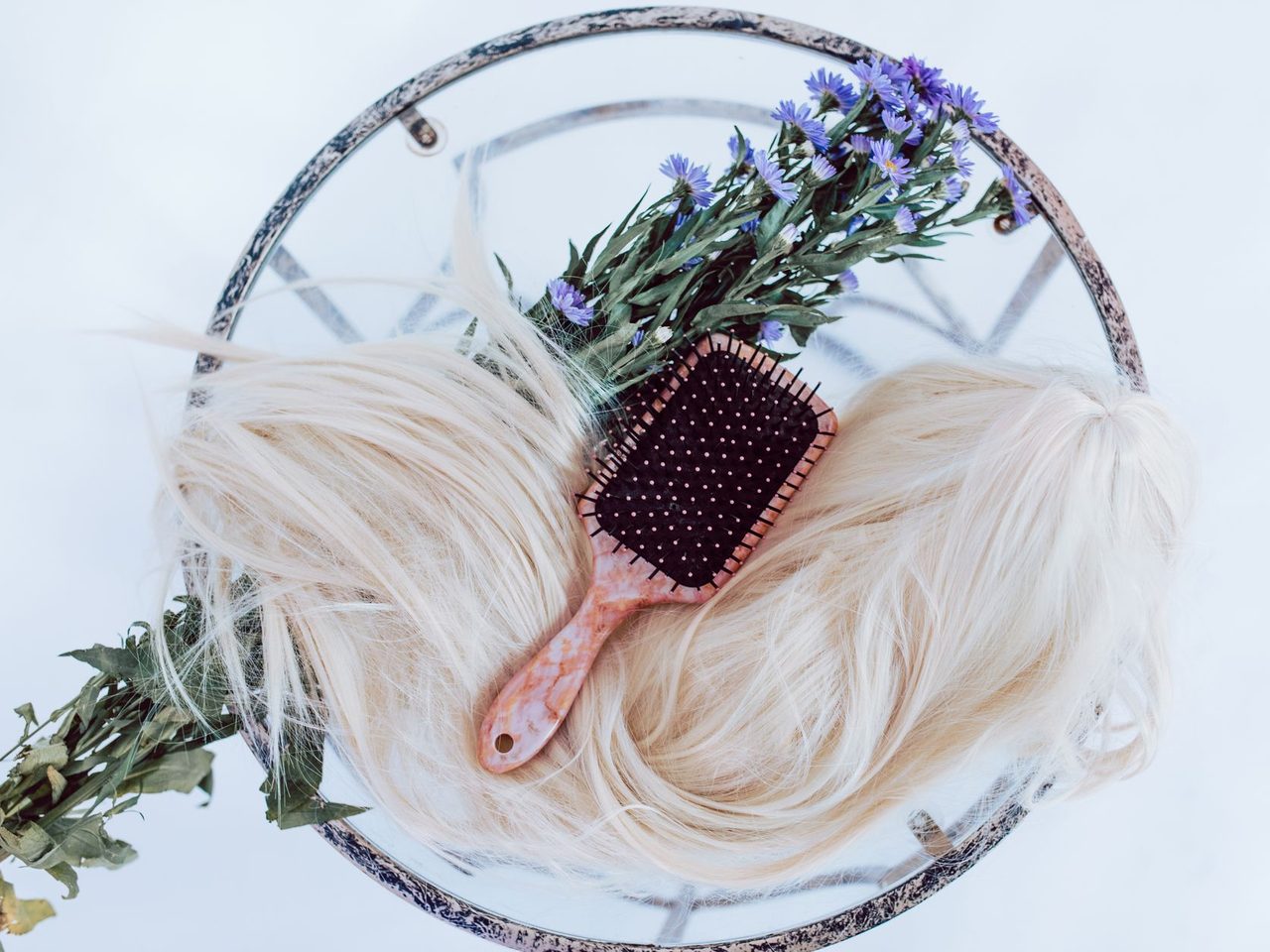
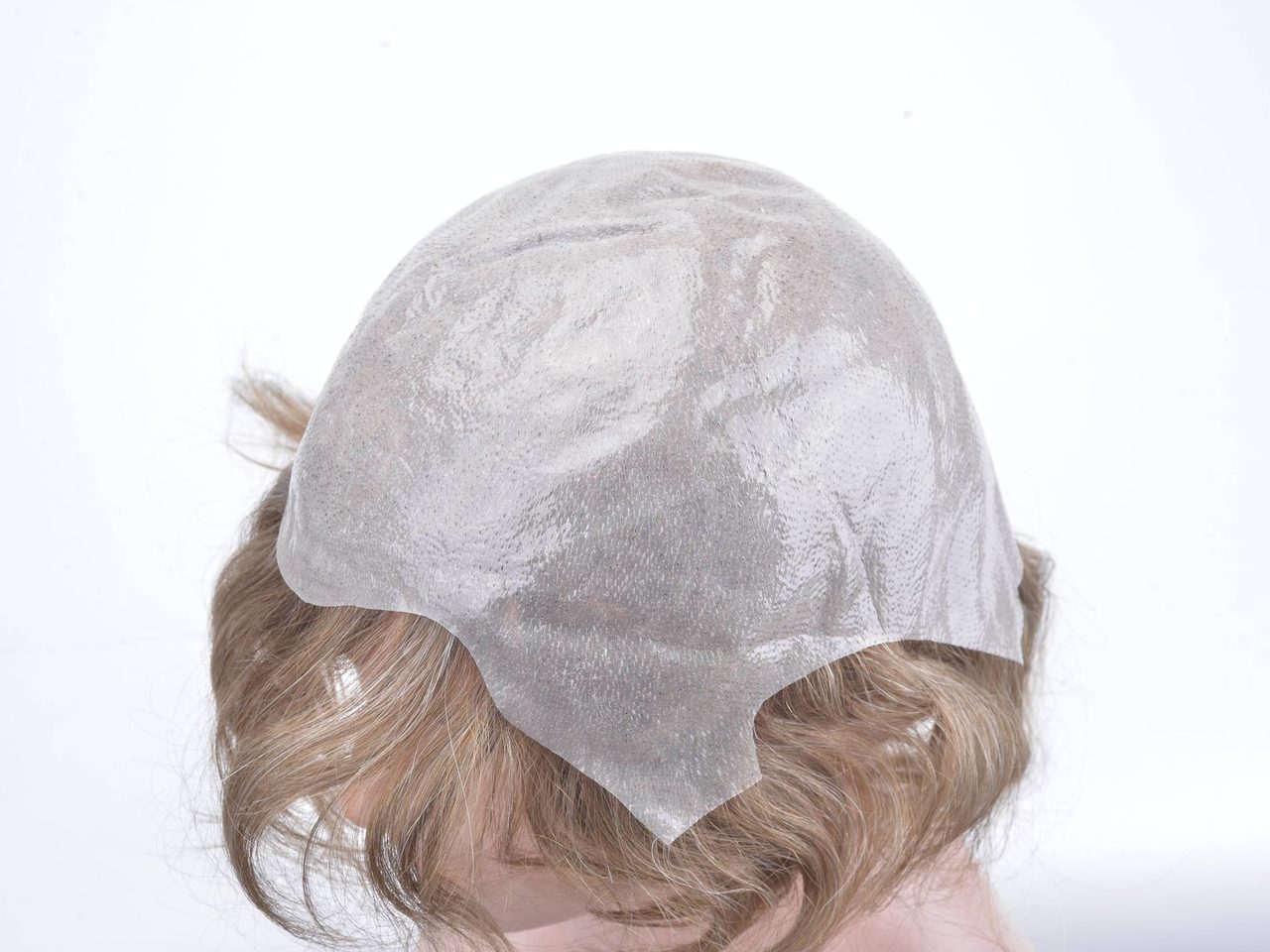
The names overlap, and sellers use them loosely. The main difference is how much of the head each one covers. A full wig covers the whole head. It can sit over short hair or a bare scalp. A topper is a smaller piece for the top of the head, usually clipped to the hair you have. An integration has a base with openings, and your own hair is pulled through to blend in. "Hairpiece" is a catch-all word for smaller additions.
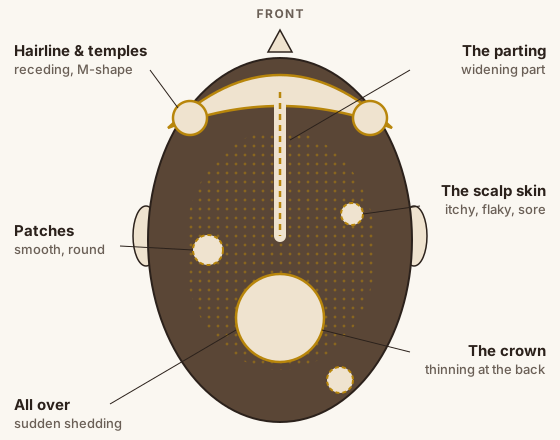
Partial pieces exist because hair loss is often partial. Mayo Clinic says that in the most common type of permanent hair loss, only the top of the head is affected. 2 In women, pattern hair loss usually means thinning over the crown and frontal scalp, with the frontal hairline kept. 3 A review of female pattern hair loss calls cosmetic aids an integral part of management. 3 It lists hair replacements, accessories and additions among them, alongside styling and camouflage products. 3
Synthetic or real hair
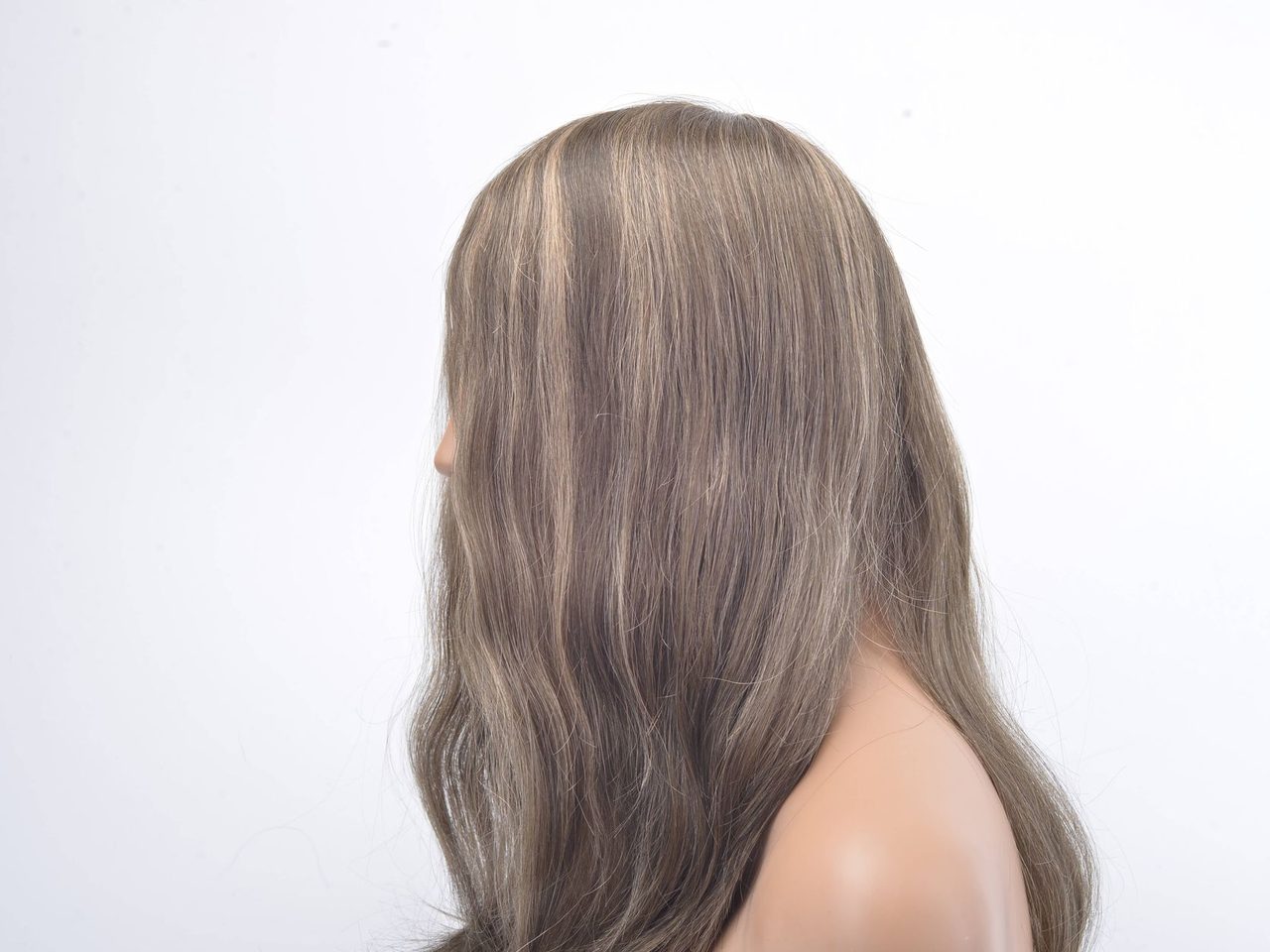
The NHS sets out the basic trade-off between the two. 1
| Type | What the NHS says |
|---|---|
| Synthetic wig | Easier to look after than a real-hair wig. 1 |
| Real-hair wig | Looks more natural than a synthetic wig, but is harder to look after. 1 |
Neither is right for everyone. It comes down to the look you want and how much upkeep suits you. Mayo Clinic suggests talking with a hair stylist for ideas. 2 If you still have some of your own hair, our guide to styling thinning hair covers cuts and tricks to try, with or without a piece.
Comfort and fit
A piece that grips your own hair should sit without pulling. The American Academy of Dermatology's advice on weaves and extensions is a useful guide here. It says that if you feel pain or have a headache while a style is put in, it is too tight. 4 Constant pulling can cause strands to break or fall out, and it could damage hair follicles. 4 Repeated pulling can cause traction alopecia, which can be permanent. 4 If a style hurts, the AAD says to ask the stylist to loosen the affected area. 4
The AAD also suggests wearing a weave or extensions for two or three months at most, then switching to a style without them. 4 Ask whoever fits your topper or integration how a break applies to it. Our guides to weaves and extensions and traction alopecia go further.
Comfort also means warmth. The AAD notes that hair loss on the scalp can make you extremely sensitive to the cold. 5 It suggests hats and scarves, and says wearing a wig can also help. 5
Caring for the scalp underneath
The skin under a wig or topper still needs care. For weaves and extensions, the AAD says to keep your own hair clean and free of buildup from products like hairspray. 4 It recommends a gentle, moisturizing shampoo and conditioner to keep the scalp clean and hydrated. 4 It also says to remove clip-in extensions before washing your natural hair. 4 Taking a clip-in topper off to wash follows the same idea.
For people with alopecia areata, dermatologists recommend avoiding products with harsh chemicals on the scalp and any area of hair loss. 5 That includes hair dyes and products with fragrance or alcohol, and the AAD suggests looking for fragrance-free products. 5 A dermatologist can help you choose products for sensitive skin. 5
If a piece sits at your hairline, be gentle with your edges. The AAD calls those wispy baby hairs very fragile. 4 It suggests only water-based styling gels, conditioner to moisturize, and as little heated styling as possible. 4 An itchy, sore or flaky scalp under a wig is worth noticing. Our guide to itchy scalp and hair loss explains when to get it checked.
Going without, and the sun
You do not have to cover your head at all. Mayo Clinic lists shaving your head as one option among the rest. 2 Our guide on how to shave your head covers the practical side.
A bare scalp does need sun protection. The AAD says balding or thinning hair on the scalp increases your risk of sunburn. 5 It recommends a wide-brimmed hat or a wig outdoors. 5 If you go uncovered, it advises sunscreen with SPF 30 or higher, broad-spectrum protection and water resistance. 5 Reapply every two hours, and after sweating or getting wet. 5 With patchy loss, a spray may be easiest, while a lotion or cream often works best on bald areas. 5
Some people also lose eyebrows or eyelashes. The AAD mentions artificial eyebrows and eyelashes as one way to protect the eyes. 5 The NHS lists a tattoo made to look like short hair and eyebrows among other options, some of which may not be available on the NHS. 1 For more on patchy loss, see alopecia areata explained.
Help with the cost
The NHS says some wigs are available on the NHS. 1 You may have to pay unless you qualify for financial help. 1 In the US, Mayo Clinic says that if hair loss is due to a medical condition, the cost of a wig might be covered by insurance. 2 Surgical procedures to treat baldness, by contrast, are not usually covered. 2
Since coverage can depend on the cause, a diagnosis is worth having. 2 The NHS suggests seeing a GP about the cause before going to a commercial hair clinic. 1 Our guide to seeing a dermatologist covers what to bring. If you are also weighing medical options, hair loss treatment options explains what each one involves.
How you feel about it
The NHS says losing hair can be upsetting, and for many people their hair is an important part of who they are. 1 A review of female pattern hair loss describes concealment as one way people cope. 3 It notes women may wear hats or wigs to avoid negative reactions from others. 3 That is a valid choice. So is deciding a wig is not for you.
If hair loss is weighing on you, the NHS says your GP may be able to help you get some counselling. 1 You may also benefit from a support group or online forums with people in the same situation. 1 The AAD notes alopecia areata can cause some people to feel lonely, sad or anxious, and says help is available. 5
When to get it checked
A wig covers hair loss. It does not explain it. The NHS says hair loss is not usually anything to worry about, but occasionally it can be a sign of a medical condition. 1 A GP may be able to tell what is causing it by looking at your hair. 1 Tell them if it is affecting your wellbeing. 1 The AAD advises seeing a board-certified dermatologist if you are concerned about hair loss, as the sooner an issue is addressed, the better your results. 4
The short version
According to the NHS, synthetic wigs are easier to look after, and real-hair wigs look more natural but are harder to look after. 1 Anything that grips your own hair should not hurt. 4 Keep the scalp clean, and cover it or use sunscreen outdoors. 4 5 Ask about NHS wigs or insurance cover, especially if a medical condition is behind your hair loss. 1 2 And if you would rather go without, that is fine too.
- NHS, “Hair loss”. nhs.uk/symptoms/hair-loss/
- Mayo Clinic, “Hair loss - Diagnosis and treatment”. mayoclinic.org/diseases-conditions/hair-loss/diagnosis-treatment/drc-203
- Dinh & Sinclair, Clin Interv Aging (PMC), “Female pattern hair loss: Current treatment concepts - PMC”. pmc.ncbi.nlm.nih.gov/articles/PMC2684510/
- American Academy of Dermatology, “How to prevent hair damage from a weave or extensions”. aad.org/public/diseases/hair-loss/insider/stop-damage/prevent-hair-damag
- American Academy of Dermatology, “Hair loss types: Alopecia areata self-care”. aad.org/public/diseases/hair-loss/types/alopecia/self-care
- American Academy of Dermatology, “Hair loss: Signs and symptoms”. aad.org/public/diseases/hair-loss/insider/begin
- Mayo Clinic, “Hair loss - Symptoms and causes”. mayoclinic.org/diseases-conditions/hair-loss/symptoms-causes/syc-2037292
General information, not medical advice. This article was drafted with AI assistance and checked against the sources listed above. Nobody at Balds is a doctor. If something here is wrong or out of date, tell us.