Most dermatology sources put normal shedding at about 50 to 100 hairs a day. 1 2 3 It usually goes unnoticed because new hairs are growing in at the same time. What matters more than a count is change: sudden handfuls, patches, a widening part or a receding hairline are reasons to look closer. 4 3
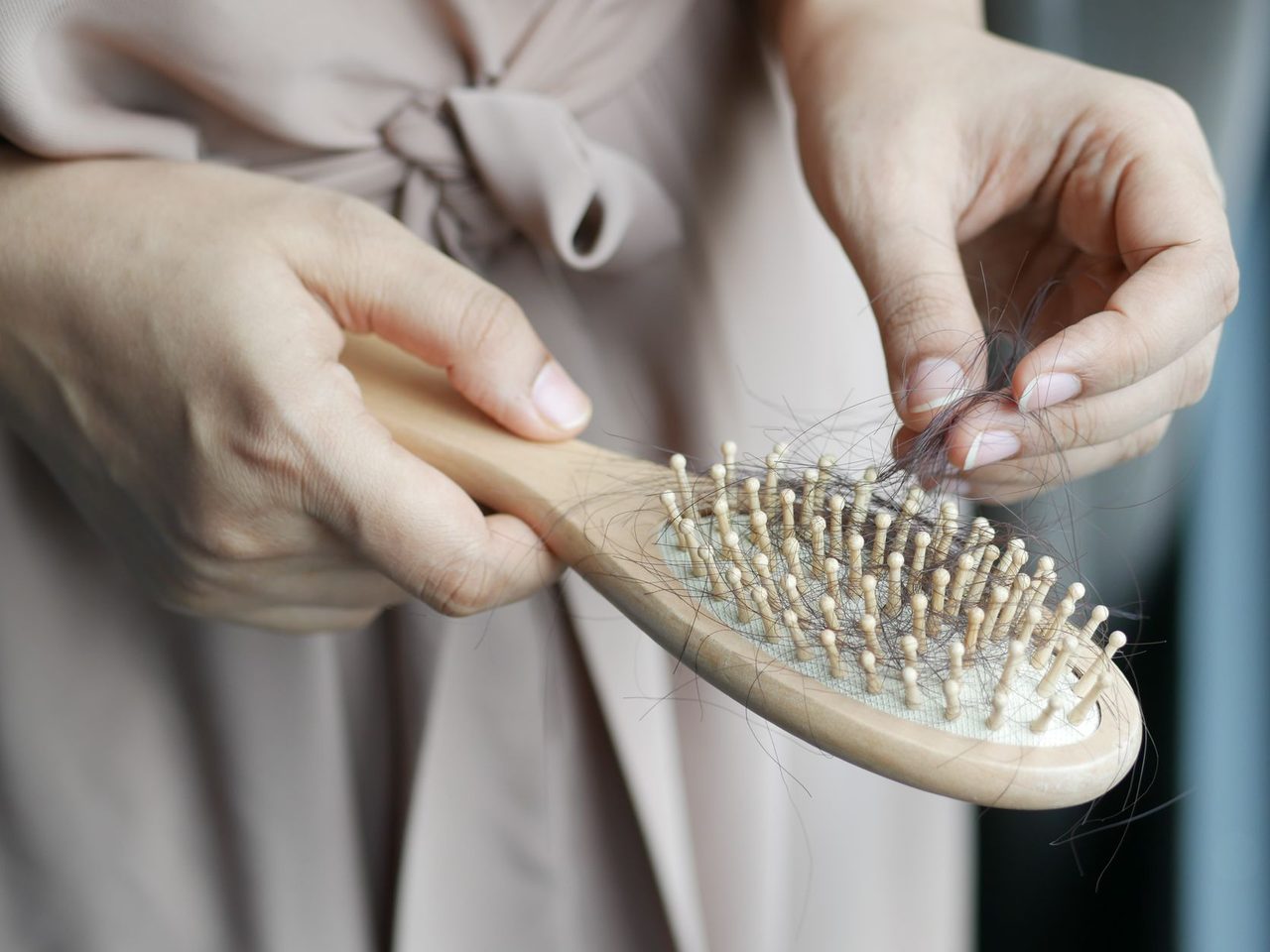
Finding hair on your pillow, in the shower drain or caught in a brush is part of having hair. Every follicle on your scalp grows a hair, rests, lets it go and starts again. So some loss every day is not a sign of anything. It is the system working.
The useful questions are different ones. How much is ordinary? Why does it sometimes look like a lot more? And what would make it worth a closer look? This guide answers those three, using what the main medical sources actually say.
The number most sources use
The American Academy of Dermatology says it is normal to shed between 50 and 100 hairs a day. 1 The NHS uses the same range and adds that people often lose that many without noticing. 2 Mayo Clinic gives the same figure. It explains why the loss usually goes unseen: new hair is growing in at the same time. 3
One source stretches the range. MedlinePlus, from the US National Library of Medicine, says people normally lose roughly 50 to 200 hairs a day, out of about 100,000 on the scalp. 5 The difference matters less than it looks. Nobody is expected to count. The point all four make is the same: daily shedding is expected, and it is small next to the total.
| Source | What it calls normal daily shedding |
|---|---|
| American Academy of Dermatology | 50 to 100 hairs a day 1 |
| NHS | 50 to 100 hairs a day, often without noticing 2 |
| Mayo Clinic | 50 to 100 hairs a day 3 |
| MedlinePlus (NIH) | roughly 50 to 200 hairs a day, from about 100,000 on the scalp 5 |
Why hair falls out at all: the growth cycle
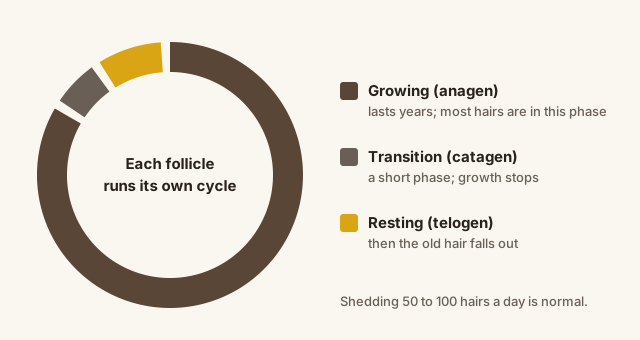
Each hair grows from a follicle, and each follicle runs its own cycle. DermNet, a dermatology reference written by dermatologists, describes three main phases. 6
- Growing (anagen). Most hairs are in this phase at any time. On the scalp it can last up to 6 years or longer, and the hair grows about 1 cm a month. 6
- Transition (catagen). A short phase of 2–3 weeks when growth stops and the follicle shrinks. Only 1–3% of hairs are here at once. 6
- Resting (telogen). A resting phase of 1–4 months. Up to 10% of hairs in a normal scalp are resting. At the end, the old hair is released and a new one starts. 6
The key detail is that follicles are not in step. DermNet notes that any hair can be at any phase. 6 That is why you lose a few hairs every day rather than all of them at once, the way some animals molt.
A hair that has finished its resting phase has a small white bulb at the root. DermNet calls this a club hair. 6 Finding that bulb on a shed hair is normal. It means the hair came out at the end of its cycle, not that the root was damaged.
Why normal shedding can look like a lot
Daily loss does not arrive evenly. A few things make the same amount look bigger.
- Washing day. Hairs that were already loose come out together in the shower. If you wash less often, more collect between washes.
- Long hair. One long hair on a white pillow is very visible. The same number of short hairs is easy to miss.
- Brushing. A brush gathers hairs that had already let go. The American Academy of Dermatology also warns that hard brushing can break hair. It calls the old advice of 100 strokes a day a myth. 7
- Breakage. Short pieces of snapped hair are not shedding at all. They come from damage to the hair shaft, often from heat, tight styles or rough handling. 7 6
Breakage is worth separating out because the fix is different. A shed hair comes out whole, with the bulb. A broken hair has no bulb and is often short. Gentler care can reduce breakage. It does nothing for shedding, which is part of the cycle.
Shedding, thinning and breakage are different things
The words get used loosely, but they describe three separate processes. The American Academy of Dermatology draws a firm line between hair shedding and hair loss. 1
| What you see | What is happening | Usual direction |
|---|---|---|
| More hairs than usual coming out, often all over the scalp | Shedding: more follicles than normal entering the resting phase at once, called telogen effluvium 1 | Often stops on its own once the trigger passes 1 |
| The same number of hairs covering less scalp, a wider part or a receding hairline | Thinning: follicles making finer, shorter hairs over time, as in pattern hair loss 6 8 | Usually gradual and ongoing 1 |
| Short, snapped pieces and frizz | Breakage: damage to the hair shaft, not the follicle 7 | Improves with gentler care 7 |
Many people have more than one at the same time. A dermatologist can tell them apart, and the AAD notes that some people have both shedding and hair loss together. 1

When shedding goes above normal
When the body sheds a lot more than usual every day, the medical term is telogen effluvium. 1 It often follows a stressor: a high fever, an operation, giving birth, a big life shock or stopping birth-control pills. 1 Mayo Clinic describes handfuls of hair coming out when combing or washing after a physical or emotional shock. 3
The timing surprises people. The AAD says most people notice the extra shedding a few months after the event. 1 DermNet puts the gap at 2–6 months. 6 So the cause is often something you have already forgotten about.
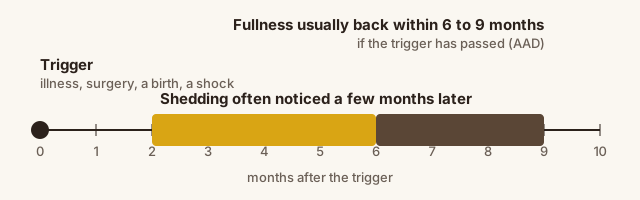
This kind of shedding usually settles. The AAD says that within six to nine months, hair tends to regain its normal fullness once the body readjusts. 1 If the stress keeps going, though, the shedding can last much longer. 1 Our guide to sudden shedding covers the triggers and what a doctor checks.
Signs that it is not ordinary shedding
Ordinary shedding is spread out and steady. These patterns point to something else.
- A receding hairline, a bald spot or overall thinning. The AAD lists these as signs of hair loss rather than shedding. 4
- Round or patchy bald spots. Mayo Clinic notes the skin may itch or hurt before the hair falls out. 3
- Patches of scaling that spread over the scalp, sometimes with broken hairs, redness or swelling. Mayo Clinic says this can be a sign of ringworm, a fungal infection. 3
- Losing hair quickly or young, such as in your teens or twenties, or with pain or itching. MedlinePlus lists these among reasons to contact a doctor. 5
- Other symptoms alongside it, such as tiredness, weight gain, muscle weakness or feeling cold. MedlinePlus lists these too. 5
Mayo Clinic adds that sudden hair loss can signal an underlying medical condition that needs treatment. 3 The NHS suggests seeing a GP to find the cause before paying for a commercial hair clinic. 2
A calm way to check what is happening
Counting hairs is stressful and not very accurate. Watching for change over time works better.
- Take photos. Use the same light, the same angle and the same parting, once a month. Photos show a widening part or a thinner crown better than a mirror.
- Note dates. Write down illnesses, surgery, a birth, a new medicine or a big diet change. Shedding after a trigger shows up months later, so a written note helps. 1
- Look at where. Loss spread evenly suggests shedding. Loss at the hairline, crown or part, or in patches, suggests a different cause. The scalp map on our homepage sorts guides by area.
- Bring it to an appointment. A careful history and a look at the hair and scalp are usually enough to find the cause, says MedlinePlus. Tests are sometimes added. 5
Our guide to what happens at a hair loss appointment explains the questions and tests to expect.

The short version
Losing hair every day is normal. Most sources put it at about 50 to 100 hairs, and one at up to 200. 1 5 Washing day, long hair and breakage can make it look like more. A count matters less than a change: sudden handfuls, patches, a scalp that is sore or scaly, or thinning in one area. Those are the signs worth showing to a doctor or dermatologist. Most causes are easier to deal with when they are caught early. 4
- American Academy of Dermatology, “Do you have hair loss or hair shedding?”. aad.org/public/diseases/hair-loss/insider/shedding
- NHS, “Hair loss”. nhs.uk/symptoms/hair-loss/
- Mayo Clinic, “Hair loss - Symptoms and causes”. mayoclinic.org/diseases-conditions/hair-loss/symptoms-causes/syc-2037292
- American Academy of Dermatology, “Hair loss: Overview”. aad.org/public/diseases/hair-loss/causes/fall-out
- MedlinePlus (NIH), “Hair loss: MedlinePlus Medical Encyclopedia”. medlineplus.gov/ency/article/003246.htm
- DermNet, “Hair loss, balding, hair shedding, alopecia”. dermnetnz.org/topics/hair-loss
- American Academy of Dermatology, “How to stop damaging your hair”. aad.org/public/diseases/hair-loss/insider/stop-damage
- American Academy of Dermatology, “Hair loss: Who gets and causes”. aad.org/public/diseases/hair-loss/causes/18-causes
- American Academy of Dermatology, “Hair loss: Signs and symptoms”. aad.org/public/diseases/hair-loss/insider/begin
General information, not medical advice. This article was drafted with AI assistance and checked against the sources listed above. Nobody at Balds is a doctor. If something here is wrong or out of date, tell us.