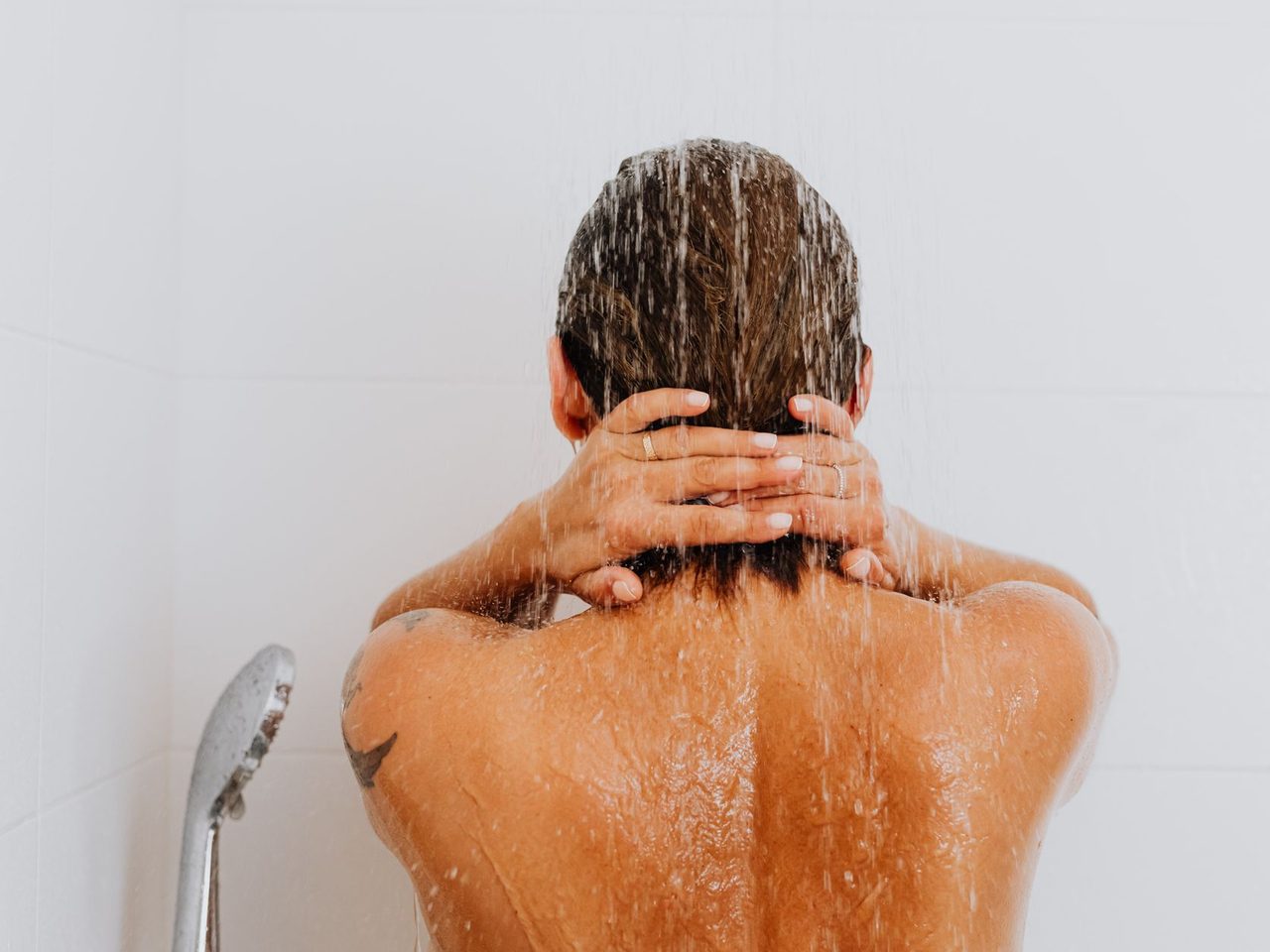
Wash according to how oily your scalp gets, not to save hair. The American Academy of Dermatology suggests daily washing can suit straight hair with an oily scalp, while dry, curly or thick hair may need shampoo only when needed, at least once every 2 to 3 weeks. 1 For thinning hair, the AAD's advice is about being gentle: a mild shampoo on the scalp, conditioner every time, and less heat. 2
When hair starts to thin, the shower can feel like the enemy. More hairs seem to come out on wash day, so washing less looks like a way to hold on to them. It is a common instinct. It does not work the way people hope.
This guide covers how often to wash, how to wash thinning hair gently, and why the drain fills up more on some days than others.
Washing less does not save hair
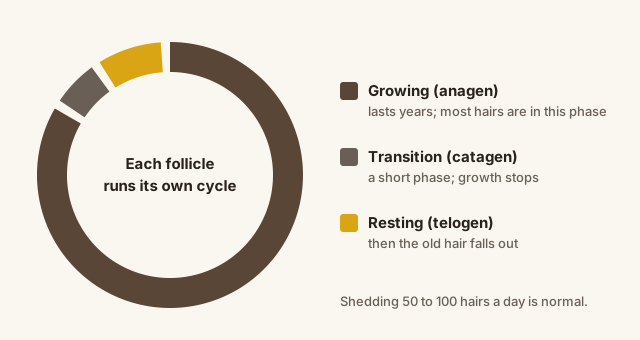
The hairs you see after a wash were already on their way out. Every follicle runs a cycle, and at the end of its resting phase the hair is released. 3 Normal shedding is about 50 to 100 hairs a day, according to the American Academy of Dermatology. 4 Washing gathers the loose ones together. Skip a few days and more collect, so the next wash looks worse.
The AAD notes that some women with hair loss scale back how often they shampoo. It says the results of efforts like this are often modest at best and rarely get to the root of the problem. 2 Thinning has causes, such as genes, hormones, illness or tight styles. 5 Shampoo frequency is not one of them.
How often, by hair and scalp type
The American Academy of Dermatology's rule is simple: wash based on how often your hair gets dirty or oily. 1
| Your hair and scalp | What dermatologists suggest |
|---|---|
| Straight hair, oily scalp | You may want to shampoo every day. 1 |
| Dry, textured, curly or thick hair | Shampoo when needed, at least once every 2 to 3 weeks. 1 |
| Flakes showing up | Often a sign of not shampooing enough, or not using the right conditioner or scalp moisturizer for your hair type. 1 |
| Dandruff | Fine or straight hair and oily scalps may need daily shampoo with a dandruff shampoo twice a week. Coarse or curly hair may use a dandruff shampoo about once a week. 6 |
Thinning hair shows oil sooner, because there is less hair to spread it. Many people with fine, thinning hair find their hair looks fuller when it is clean. That is a reason to wash as often as your scalp needs, not less.
How to wash thinning hair gently
The American Academy of Dermatology says hair that is thinning or falling out is fragile and easily damaged. 2 The goal is to clean the scalp without roughing up the hair.
- Use a gentle shampoo. Some shampoos strip moisture from the hair. 2
- Put shampoo on the scalp, not the lengths. Massage it in gently. When you rinse, let it run through the hair rather than rubbing it in. 7 1
- Condition every time. The AAD says to use a moisturizing conditioner after every shampoo. It coats the strands and reduces breakage. 2
- Add a leave-in conditioner or detangler if your hair tangles. It reduces breakage, split ends and frizz. 2
- Don't rub with a towel. Wrap the hair instead. A microfiber towel helps it dry faster. 2 7
After the shower: combing and drying
Wet hair breaks more easily. The AAD suggests a wide-tooth comb rather than a brush on wet hair. 1 With straight hair, let it dry a little before combing. With tight curls or textured hair, comb while it is damp, ideally in the shower with conditioner still in. 1 7 Start at the ends and work up.
Heat is the other big factor. The AAD recommends the lowest heat setting on a blow-dryer and letting hair dry naturally when you can. 2 It suggests saving curling irons, flat irons and hot combs for special occasions. 2 It also advises skipping hot-oil treatments, which heat up already fragile hair. 2
What about "thickening" shampoos?
Shampoos sold for thinning hair often promise more than they can show. The American Academy of Dermatology notes that many people with hair loss buy products with claims that they can restore hair, and that the results are often modest at best. 2 A volumizing shampoo can make hair look fuller for a day by coating the strands. That is cosmetic. It does not change what the follicles are doing.
Our guide to spotting hair loss product claims covers what to look for on a label.
When the scalp itself is the problem
Sometimes wash habits matter because the scalp needs treatment. Flakes, itching or greasy scales can point to dandruff or seborrheic dermatitis. 6 The AAD lists dandruff shampoo ingredients such as zinc pyrithione, salicylic acid, selenium sulfide and ketoconazole. 6 Some need to sit on the scalp for 5–10 minutes before rinsing. 6
If home care does not help, a dermatologist can check whether the cause is seborrheic dermatitis, psoriasis, a fungal infection or eczema. 6 Our guide to seborrheic dermatitis and shedding explains more.
The short version
Wash as often as your scalp needs. That might be daily for an oily scalp, or every week or two for dry, curly hair. 1 Washing does not cause thinning, and washing less will not stop it. What helps thinning hair is gentleness: mild shampoo on the scalp, conditioner every time, no rough towels and less heat. 2 If shedding stays heavy or the scalp is sore or scaly, have it checked. 7
- American Academy of Dermatology, “Tips for healthy hair”. aad.org/public/everyday-care/hair-scalp-care/hair/healthy-hair-tips
- American Academy of Dermatology, “Hair loss: Tips for managing”. aad.org/public/diseases/hair-loss/treatment/tips
- DermNet, “Hair loss, balding, hair shedding, alopecia”. dermnetnz.org/topics/hair-loss
- American Academy of Dermatology, “Do you have hair loss or hair shedding?”. aad.org/public/diseases/hair-loss/insider/shedding
- American Academy of Dermatology, “Hair loss: Who gets and causes”. aad.org/public/diseases/hair-loss/causes/18-causes
- American Academy of Dermatology, “How to treat dandruff”. aad.org/public/everyday-care/hair-scalp-care/scalp/treat-dandruff
- American Academy of Dermatology, “How to stop damaging your hair”. aad.org/public/diseases/hair-loss/insider/stop-damage
- American Academy of Dermatology, “Hair loss: Signs and symptoms”. aad.org/public/diseases/hair-loss/insider/begin
- Mayo Clinic, “Hair loss - Symptoms and causes”. mayoclinic.org/diseases-conditions/hair-loss/symptoms-causes/syc-2037292
General information, not medical advice. This article was drafted with AI assistance and checked against the sources listed above. Nobody at Balds is a doctor. If something here is wrong or out of date, tell us.