Many medicines can cause hair shedding, including some blood thinners, anticonvulsants, mood stabilizers, retinoids, beta-blockers and NSAIDs, and starting, stopping or changing hormonal birth control. 1 2 It is usually diffuse and reversible. 1 Never stop a medicine on your own: the AAD warns that stopping some suddenly can cause serious health problems. Ask the prescriber instead. 3
A new prescription can solve one problem and quietly start another. Hair loss is listed as a possible side effect on many common medicines. It is usually temporary, but it can be distressing, especially when nobody warned you.
This guide covers which kinds of medicine are involved, how the timing works, and how to raise it with your doctor safely.
First: don't stop the medicine yourself
This comes first for a reason. The American Academy of Dermatology says that if you think a medicine is causing hair loss, ask the doctor who prescribed it, and do not stop taking it before talking with them. Stopping some medicines abruptly can cause serious health problems. 3 The AAD repeats the warning elsewhere: serious side effects can occur if you suddenly stop a treatment. 4
Often there is an alternative medicine, a dose change, or a simple reassurance that the shedding will settle. The prescriber is the right person to weigh that.
The two ways medicines cause hair loss
DermNet describes two kinds of drug-related hair loss. 1
- Anagen effluvium: loss of actively growing hairs. It is usually caused by chemotherapy drugs, and shows within days to weeks. 1
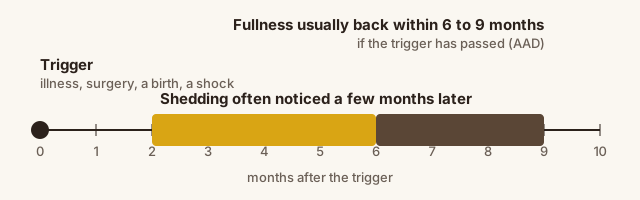
- Telogen effluvium: shedding of resting hairs. DermNet says this is the mechanism for virtually all other medicine-related hair loss. It usually becomes noticeable after 2–4 months. 1
DermNet also notes that whether it happens, and how badly, depends on both the drug and the person. Some drugs cause hair loss in most people taking them; others only occasionally. 1

Which medicines are involved
DermNet says the list of possible causes is very long. 1 These are the groups the sources name most often. Being on the list doesn't mean the medicine will cause hair loss for you.
| Group | Examples named by the sources |
|---|---|
| Blood thinners (anticoagulants) | Heparin and warfarin, and possibly newer ones 1 |
| Hormones | The birth control pill when starting, stopping or changing it; hormone replacement therapy; androgens 1 4 |
| Anticonvulsants | Valproic acid, carbamazepine and phenytoin 1 |
| Mood stabilizers and antidepressants | Most, including lithium 1; certain antidepressants 2 |
| Heart and blood pressure medicines | Beta-blockers and calcium channel blockers 2 5 |
| Retinoids | Including acitretin and isotretinoin 1 2 |
| Pain relievers | NSAIDs, including ibuprofen 2 |
| Others | Antithyroid drugs, cholesterol-lowering drugs, interferons, some anti-infectives, and others 1 |
Mayo Clinic adds medicines used for cancer, arthritis, depression, heart problems, gout and high blood pressure. 6 Some numbers give a sense of scale. DermNet says hair loss is reported in 12–28% of people taking valproic acid, depending on dose, and 12–19% of people taking lithium. 1
Supplements count too
Over-the-counter products can cause hair loss as well. DermNet says a drug history should include supplements. 1 The American Academy of Dermatology notes that getting too much selenium, vitamin A or vitamin E has been linked to hair loss. 7 It also lists large amounts of vitamin A or selenium among toxic causes. 3

Working out whether it's the medicine
Timing is the main clue. DermNet says a doctor should focus on the three months before the hair loss was noticed, including new medicines, dose changes and supplements. 1 Bring a list with dates.
Other causes need ruling out too, such as recent illness, surgery or diet changes. 1 DermNet says that if the cause is unclear, it is usual to check at least a blood count, iron levels and thyroid function. 1
The only way to be sure is to stop the drug and see whether the hair recovers. DermNet says that means stopping it for at least three months, which is a decision for the prescriber. 1
Questions to take to the prescriber
- Is hair loss a known side effect of this medicine, and how common is it? 3
- Could the timing fit? Shedding usually shows 2–4 months after a change. 1
- Is there an alternative, or a different dose, that would suit me? 1
- Should we check iron and thyroid function while we are at it? 1
How recovery usually goes
DermNet describes medicine-related hair loss as usually reversible. 1 Once the medicine is stopped, shedding settles, though this can take up to 6 months. 1 Signs of regrowth usually appear within 3–6 months, but it can take 12–18 months for the hair to look the way it did. 1
Sometimes stopping isn't possible or wise. Then the choice is between living with some shedding and a different treatment for the underlying condition. That is a conversation for the prescriber, with the full picture of your health in view.
Chemotherapy
Chemotherapy works differently. DermNet says hair loss may become obvious within days to weeks of starting, and the degree varies widely even between people on the same drugs. 1 The AAD says hair tends to regrow when treatment stops. 4 DermNet says the most effective way found so far to reduce it is scalp cooling during infusion. 1 Ask your cancer team whether it suits your treatment. Our guide to hair loss after illness or surgery covers this in more detail.

- DermNet, “Alopecia from drugs”. dermnetnz.org/topics/alopecia-from-drugs
- MedlinePlus (NIH), “Hair loss: MedlinePlus Medical Encyclopedia”. medlineplus.gov/ency/article/003246.htm
- American Academy of Dermatology, “Hair loss: Who gets and causes”. aad.org/public/diseases/hair-loss/causes/18-causes
- American Academy of Dermatology, “Do you have hair loss or hair shedding?”. aad.org/public/diseases/hair-loss/insider/shedding
- Cleveland Clinic, “Telogen Effluvium: Symptoms, Causes, Treatment & Regrowth”. my.clevelandclinic.org/health/diseases/24486-telogen-effluvium
- Mayo Clinic, “Hair loss - Symptoms and causes”. mayoclinic.org/diseases-conditions/hair-loss/symptoms-causes/syc-2037292
- American Academy of Dermatology, “Hair loss: Tips for managing”. aad.org/public/diseases/hair-loss/treatment/tips
- American Academy of Dermatology, “Hair loss: Signs and symptoms”. aad.org/public/diseases/hair-loss/insider/begin
General information, not medical advice. This article was drafted with AI assistance and checked against the sources listed above. Nobody at Balds is a doctor. If something here is wrong or out of date, tell us.