Male pattern hair loss can begin in the late teens or early twenties. 1 Cleveland Clinic says about 25% of men see the first signs before age 21. 2 Early signs are a receding hairline at the temples, thinning at the crown, or finer hair on top. 2 MedlinePlus advises contacting a provider if you are losing hair rapidly or at an early age, such as in your teens or twenties, because other causes need ruling out. 3
Hair loss is usually pictured as a middle-age problem. For a lot of people it starts much earlier, and it can be a lonely thing to notice in your early twenties when nobody around you seems to be dealing with it.
This guide covers how common early hair loss is, what the first signs look like, and why your twenties are a good time to find out what is actually going on.
Early hair loss is common
The American Academy of Dermatology says male pattern hair loss can begin early, sometimes in the late teens or early twenties. 1 Cleveland Clinic gives a figure: about 25% of men see the first signs of hair loss before age 21. 2 MedlinePlus Genetics says androgenetic alopecia can start as early as the teens, and the risk rises with age. 4
So early thinning is not rare or strange. It is also not a forecast. DermNet notes that onset, progression and severity vary between people, even in the same family. 5
The early signs
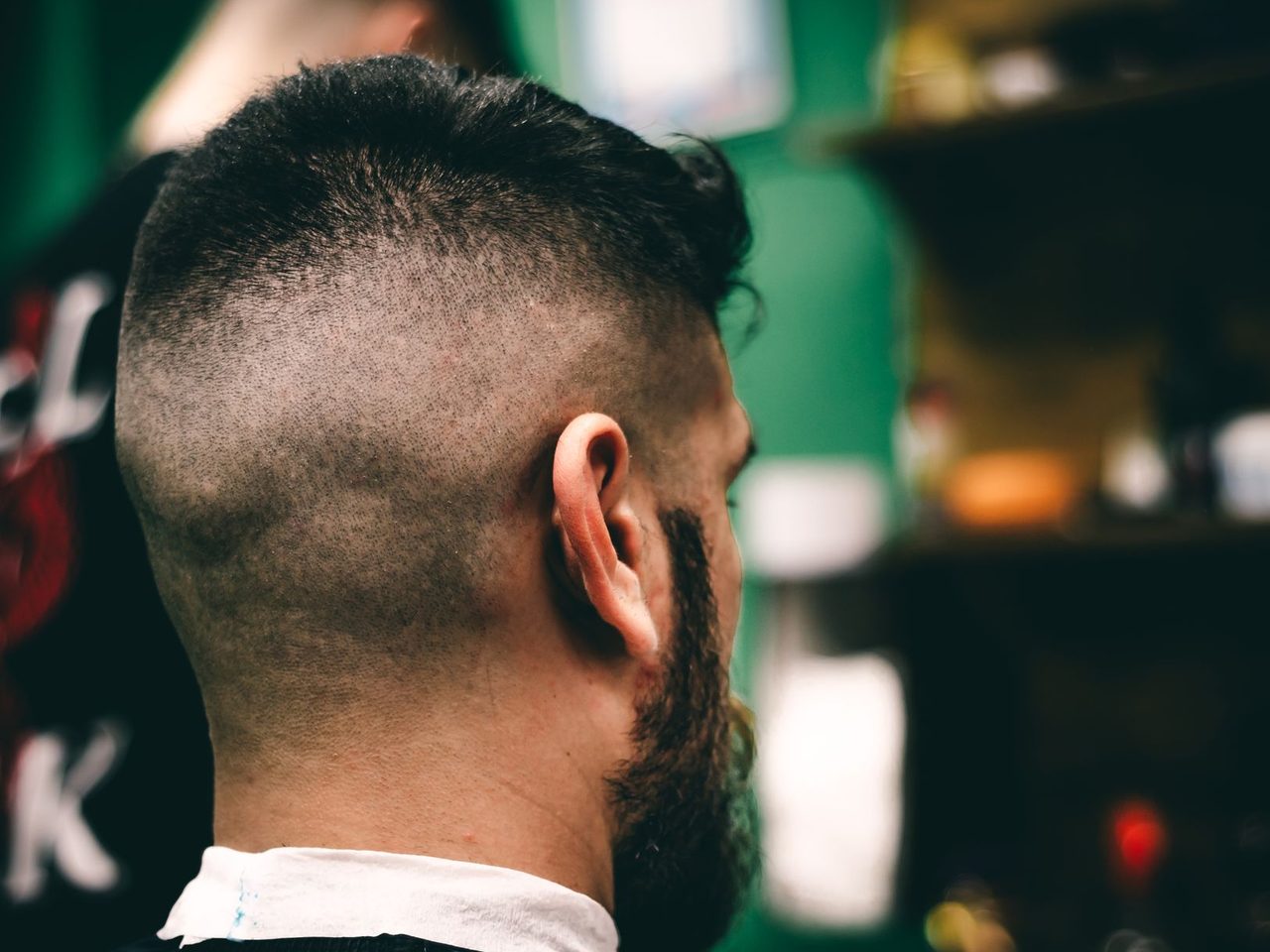
Cleveland Clinic lists the main symptoms of male pattern baldness as thinning or loss on the crown and near the temples, and a receding hairline. 2 In practice the first signs usually look like this:
- Temples moving back, often unevenly at first, toward an "M" shape. 4
- Finer, shorter hairs at the front or crown. Affected follicles make progressively finer hairs before any bare skin shows. 5
- A thin spot at the crown, often first seen in a photo from above or noticed by a barber. 2
- Hair that won't hold a style it used to, because it has less density.
Cleveland Clinic notes that male pattern baldness doesn't hurt. 2 Pain, itching or scaling point to something else.
Young women lose hair too
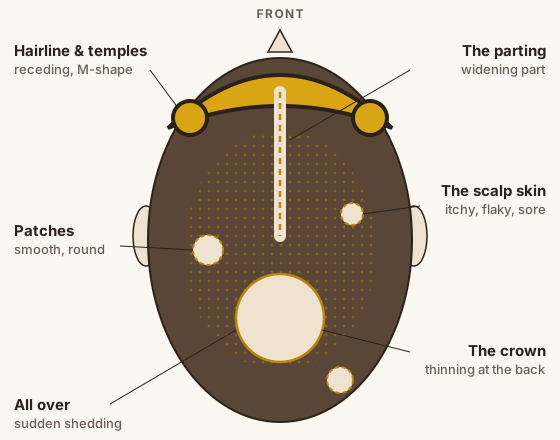
Women's pattern hair loss most often starts in the 40s, 50s or 60s, says the American Academy of Dermatology, though it can begin earlier. 6 For many women the first sign is a widening part or a thinner ponytail. 7
In a young woman, hair loss with acne, irregular periods and extra facial or body hair can point to excess androgens, for example from polycystic ovary syndrome. 8 That combination is worth raising with a doctor, because it is about more than hair.
Other causes to rule out at this age
Not all hair loss in your twenties is genetic. Several common causes look different and are often temporary.
| Cause | What points to it |
|---|---|
| Sudden shedding after a trigger | Hair coming out all over a few months after an illness with fever, surgery, or a big shock. 9 |
| Crash dieting | MedlinePlus lists crash diets, especially those short on protein, as a cause of shedding. 3 The AAD says eating too few calories can cause significant hair loss. 10 |
| Alopecia areata | Round, smooth patches, sometimes in the beard or eyebrows. 11 3 |
| Tight styles | Thinning at the edges where hair is pulled back, such as from ponytails, braids or buns. 12 |
| Hair pulling | Some people pull their hair, often to relieve stress, sometimes without realizing it. The medical term is trichotillomania. 13 |
| A scalp infection | Scaly or inflamed patches, sometimes with broken hairs. 13 |
MedlinePlus advises contacting a provider when you are losing hair rapidly or at an early age, such as in your teens or twenties. 3 It also lists pain or itching, an abnormal-looking scalp, and acne or an abnormal menstrual cycle among the reasons to call. 3

Why early is a good time to get an answer
Early is when you have the most choices. The American Academy of Dermatology says men who start treatment soon after noticing hair loss tend to see the best results. 1 For causes like traction alopecia or scarring conditions, early action can be the difference between hair that recovers and hair that doesn't. 12 14
Getting an answer doesn't commit you to treatment. Knowing it is ordinary pattern loss lets you decide calmly, whether that means treating it, styling around it, or shaving it off.
It is allowed to bother you
Hair loss at any age can be hard. DermNet notes that studies link male pattern hair loss with low self-esteem, depression, introversion and feeling unattractive. 5 Cleveland Clinic says it can affect mental health, and suggests seeing a provider if it is causing stress, anxiety or depression. 2 The NHS says a GP may be able to arrange counseling if hair loss is causing distress. 15
None of that means something is wrong with you for minding. It also doesn't mean you have to fix it. Plenty of men decide to go short or bald early and stop thinking about it. Our guide to shaving your head is there if that is where you land.
- American Academy of Dermatology, “What is male pattern hair loss, and can it be treated?”. aad.org/public/diseases/hair-loss/treatment/male-pattern-hair-loss-treat
- Cleveland Clinic, “Male Pattern Baldness (Androgenic Alopecia): Stages, Treatment”. my.clevelandclinic.org/health/diseases/24515-male-pattern-baldness-andro
- MedlinePlus (NIH), “Hair loss: MedlinePlus Medical Encyclopedia”. medlineplus.gov/ency/article/003246.htm
- MedlinePlus Genetics (NIH), “Androgenetic alopecia: MedlinePlus Genetics”. medlineplus.gov/genetics/condition/androgenetic-alopecia/
- DermNet, “Male pattern hair loss (androgenetic alopecia, balding)”. dermnetnz.org/topics/male-pattern-hair-loss
- American Academy of Dermatology, “Thinning hair and hair loss: Could it be female pattern hair loss?”. aad.org/public/diseases/hair-loss/types/female-pattern
- American Academy of Dermatology, “Hair loss: Signs and symptoms”. aad.org/public/diseases/hair-loss/insider/begin
- DermNet, “Female pattern hair loss”. dermnetnz.org/topics/female-pattern-hair-loss
- American Academy of Dermatology, “Do you have hair loss or hair shedding?”. aad.org/public/diseases/hair-loss/insider/shedding
- American Academy of Dermatology, “Hair loss: Tips for managing”. aad.org/public/diseases/hair-loss/treatment/tips
- Mayo Clinic, “Hair loss - Symptoms and causes”. mayoclinic.org/diseases-conditions/hair-loss/symptoms-causes/syc-2037292
- American Academy of Dermatology, “Hairstyles that pull can lead to hair loss”. aad.org/public/diseases/hair-loss/causes/hairstyles
- American Academy of Dermatology, “Hair loss: Who gets and causes”. aad.org/public/diseases/hair-loss/causes/18-causes
- American Academy of Dermatology, “Hair loss types: Frontal fibrosing alopecia overview”. aad.org/public/diseases/hair-loss/types/frontal-fibrosing-alopecia
- NHS, “Hair loss”. nhs.uk/symptoms/hair-loss/
General information, not medical advice. This article was drafted with AI assistance and checked against the sources listed above. Nobody at Balds is a doctor. If something here is wrong or out of date, tell us.