The American Academy of Dermatology says research on home laser caps and combs is limited to a few studies, with promising results. 1 In one study, some laser comb users had overall thicker, fuller hair, though not all of them saw regrowth. 1 DermNet considers the benefit in pattern balding unproven. 2
Laser caps and combs are home devices for hair loss. The American Academy of Dermatology (AAD) says only a few studies have looked at them, and that the results are promising. 1 DermNet, a dermatology reference, is more cautious. It calls low-level laser therapy of unproven benefit in pattern balding. 2
So the honest answer is mixed. In one study, some people using a laser comb saw thicker, fuller hair. Not every laser user saw regrowth. 1 This guide covers what the devices are, what the FDA labels mean, what the research looked at, and what to ask first.

What these devices are
You can buy laser caps and combs to use at home. 1 The AAD also mentions helmets and other devices, sold without a prescription. 3 They give off a low level of laser light that may help stimulate new hair growth, according to the AAD. 3 The treatment is called low-level laser therapy. 1
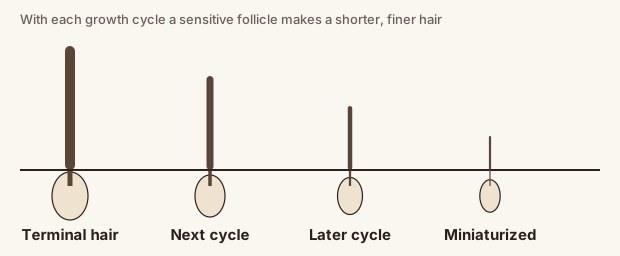
The study the AAD describes involved people with hereditary hair loss. 1 This is the inherited kind, often called pattern hair loss. 2 3 In men, DermNet links it to a sensitivity to a hormone called DHT in some areas of the scalp. 2 Over time, the follicles shrink and progressively produce fewer and finer hairs. 2 Female pattern hair loss is also hereditary, and the AAD says hormones may play a role. 3
"FDA cleared" is not the same as "FDA approved"
The words on the box matter. The AAD says the FDA has cleared some home laser devices for hair loss. 4 If you see "FDA cleared," the AAD says it means the FDA recognizes the laser as a safe treatment. 4 It adds that the requirements for clearance are much less stringent than for approval. 4 The AAD's description of clearance mentions safety, not results. 4
Sources do not all use the same word. A separate AAD page on female pattern hair loss says the FDA has approved laser combs, helmets and other devices. 3 DermNet says one device has been approved by the FDA for marketing. 2 If a label uses either word, it is fair to ask the seller which one applies and what it covers.
What the main study looked at
The AAD describes one study in some detail. It compared a real laser comb with a sham device that only looked like one. 1
| Question | What the study did |
|---|---|
| Who took part | More than 200 men and women who had hereditary hair loss. 1 |
| What they used | Either a laser hair comb or a sham device that looked like a laser comb. 1 |
| How often | 3 times per week. 1 |
| For how long | 26 weeks. 1 |
| What researchers found | Some patients using the laser rather than the sham saw overall thicker and fuller hair. 1 |
| What else they found | Not everyone who used a laser saw regrowth. 1 |
For women, the AAD says a few studies show home lasers can be effective for treating female pattern hair loss. 3
The limits of the evidence
The AAD lists several open questions. They are worth knowing before you buy.
- Few studies. The research so far amounts to a small number of studies. 1
- Who benefits. More studies are needed to find out who is most likely to benefit. 1
- Long-term safety. More studies are needed on whether these devices cause long-term side effects. 1 The AAD says it is still not known whether they are safe for long-term use. 3
- Ongoing use. The AAD says you must keep using a home laser device to see results. 3 It is not yet known whether the devices can continue to produce new hair growth. 3
- Different verdicts. DermNet does not consider the benefit proven for pattern balding. 2
Two general points from the AAD apply here too. No one treatment works for everyone, even two people with the same type of hair loss. 1 And it can take months before you see results from treatment. 1

Laser therapy in a clinic
Low-level laser therapy is also offered as a procedure. The AAD lists it among treatments a dermatologist may include in a plan. 1 It says this may be an option for people who find daily minoxidil or medication unappealing. 1 A few studies suggest it may help stimulate healing and hair growth after a hair transplant. 1
The AAD says studies indicate laser therapy is safe and painless but requires many treatment sessions. 1 To see a bit of hair growth, it says, you may need several treatments a week for many months. 1 That phrase, "a bit," is worth keeping in mind when you read product claims.
Lasers are one of several approaches. Our guide to hair loss treatment options explains what each one involves. For minoxidil, see what it involves and what to ask a doctor.
Questions to ask before buying
These questions can help you decide whether a device fits your situation.
- Do I know what is causing my hair loss? The AAD says effective treatment begins with finding the cause. 1 Other causes can look like female pattern hair loss, and each needs different treatment. 3 Everyone in the study above had hereditary hair loss. 1
- Does the label say cleared or approved? The AAD says clearance is about safety, under far looser requirements than approval. 4
- Can I keep it up? People in the study used the device 3 times per week for 26 weeks. 1 The AAD says you must continue using the device to see results. 3
- What exactly does the ad promise? The FDA says claims like "guaranteed results" and "miracle cure" should set off alarms. 5 Few conditions can be treated quickly, even with legitimate products. 5
- Are the reviews real? The FDA says success stories are easy to make up and are not a substitute for scientific evidence. 5 Reviews on online marketplaces and social media can be fake. 5
- Have I asked a doctor? The FDA suggests checking with a doctor or other health care professional before buying an unproven product. 5
The FDA once found an expensive laser device sold with fraudulent cure-all claims to treat cancer, HIV/AIDS and diabetes. 5 That case was not about hair loss. It is still a reminder to read device claims closely. Our guide on how to spot a hair loss scam covers more warning signs.
When to see a dermatologist
The AAD suggests seeing a board-certified dermatologist to get an accurate diagnosis. 1 A dermatologist will ask how long you have had hair loss and whether it came on quickly. 1 They look closely at the scalp and nails, and may gently pull on the hair. 1 If a disease, deficiency, hormone imbalance or infection is suspected, you may need a blood test or scalp biopsy. 1
A dermatologist can also tell you what results you can expect from treatment. 4 That is useful to know before buying any device. Our guide to seeing a dermatologist about hair loss explains what to bring.
The FDA says consumers who have adverse reactions to a product should submit voluntary adverse event reports. 5
Choosing not to treat is fine
For male pattern hair loss, the AAD says you don't need to treat it. 4 Wigs and concealers cannot slow hair loss or regrow hair. The AAD says they can boost self-esteem and offer immediate results. 1 Living with thinning hair, or shaving your head, is a legitimate choice.
The short version
Home laser devices give off low-level light that may help stimulate new hair growth, the AAD says. 3 In one study of hereditary hair loss, some laser comb users had fuller hair, but not every user did. 1 The evidence comes from a small number of studies, and long-term safety is not yet known. 1 3 "FDA cleared" speaks to safety, and it is not the same as approval. 4 Get the cause checked first and read claims with care. Treatment is a choice, not a must.

- American Academy of Dermatology, “Hair loss: Diagnosis and treatment”. aad.org/public/diseases/hair-loss/treatment/diagnosis-treat
- DermNet, “Male pattern hair loss (androgenetic alopecia, balding)”. dermnetnz.org/topics/male-pattern-hair-loss
- American Academy of Dermatology, “Thinning hair and hair loss: Could it be female pattern hair loss?”. aad.org/public/diseases/hair-loss/types/female-pattern
- American Academy of Dermatology, “What is male pattern hair loss, and can it be treated?”. aad.org/public/diseases/hair-loss/treatment/male-pattern-hair-loss-treat
- FDA, “6 Tip-offs to Rip-offs: Don't Fall for Health Fraud Scams”. fda.gov/consumers/consumer-updates/6-tip-offs-rip-offs-dont-fall-health-
- American Academy of Dermatology, “Hair loss: Signs and symptoms”. aad.org/public/diseases/hair-loss/insider/begin
- Mayo Clinic, “Hair loss - Symptoms and causes”. mayoclinic.org/diseases-conditions/hair-loss/symptoms-causes/syc-2037292
General information, not medical advice. This article was drafted with AI assistance and checked against the sources listed above. Nobody at Balds is a doctor. If something here is wrong or out of date, tell us.