Dandruff and seborrheic dermatitis are the same condition at different strengths: flaking, itching and, in seborrheic dermatitis, red, greasy scaly patches. 1 2 They are common, not contagious, and usually controlled with medicated shampoos containing ingredients such as ketoconazole, zinc pyrithione or selenium sulfide. 3 1 Severe scalp inflammation can cause reversible thinning, so persistent loss is worth checking. 4
Flakes on dark clothing, an itchy scalp, and greasy yellowish scales along the hairline: these are among the most common reasons people look closely at their scalp. They can be embarrassing. They are rarely serious, and they can usually be brought under control.
This guide covers the difference between dandruff, seborrheic dermatitis and a dry scalp, how they relate to hair, and what dermatologists suggest.
Dandruff and seborrheic dermatitis: one condition, two strengths
DermNet describes seborrheic dermatitis as a common, long-term or relapsing form of eczema that mainly affects oil-rich areas of the scalp, face and chest. 1 It calls dandruff a non-inflamed form of the same condition on the scalp: flaky patches without redness underneath. 1 Mayo Clinic notes that seborrheic dermatitis is also called dandruff, and in babies, cradle cap. 2
Mayo Clinic lists its signs. 2
- flaking skin on the scalp, hair, eyebrows, beard or mustache; 2
- patches of greasy skin covered with white or yellow scales or crust, on the scalp, face, sides of the nose, eyebrows, ears or chest; 2
- a rash that may look darker or lighter on brown or Black skin, and redder on white skin. 2
It is not contagious. 2 5 Its exact cause isn't clear. Mayo Clinic says it may involve the yeast Malassezia, excess oil in the skin or a problem in the immune system. 2
How it differs from a dry scalp
| Dandruff or seborrheic dermatitis | Dry scalp | |
|---|---|---|
| Flakes | Often larger, greasy, white or yellow 2 | Small and dry |
| Skin | Can be red or inflamed, with scaly patches 2 | Tight, not greasy |
| Other areas | Eyebrows, sides of the nose, ears, beard 2 1 | Usually dry skin elsewhere too |
| What helps | Medicated dandruff shampoos 3 | Gentle shampoo and moisturizing care 6 |
The AAD notes that flakes can also come from not shampooing often enough, or not using the right conditioner or scalp moisturizer for your hair type. 6 And a dermatologist can tell whether flaking is a sign of something else, such as psoriasis, a fungal infection or eczema. 3
Does it cause hair loss?
Usually not much. Mild dandruff doesn't damage follicles. But DermNet lists severe local skin disease, including seborrheic dermatitis and psoriasis, among the causes of reversible patchy thinning. 4 Constant scratching also breaks hairs.
There is an interesting overlap with pattern hair loss. DermNet notes some evidence that ketoconazole shampoo may benefit male pattern hair loss, perhaps because it works on seborrheic dermatitis and dandruff. 7 That is not a reason to rely on it for thinning; it is a reason not to ignore a flaky scalp.
If hair loss is noticeable, or comes in patches, look for another cause. Scaly bald patches with broken hairs can be scalp ringworm, which needs prescription treatment. 8 Our guide to an itchy scalp with hair loss covers the warning signs.
Shampoo: what dermatologists suggest
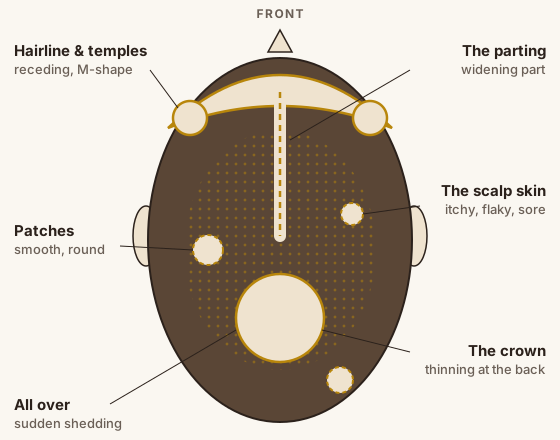
The American Academy of Dermatology suggests a dandruff shampoo with one of these ingredients: zinc pyrithione, salicylic acid, sulfur, selenium sulfide, ketoconazole or coal tar. 3 If one doesn't work, try alternating shampoos with different active ingredients. 3
- Follow the label. Some need to stay on the scalp for 5–10 minutes before rinsing. 3
- Match the routine to your hair. With fine or straight hair or an oily scalp, the AAD says you may shampoo daily and use the dandruff shampoo twice a week. With coarse, curly or coily hair, it suggests a dandruff shampoo about once a week, applied only to the scalp. 3
- Mind light hair. The AAD says tar shampoos can discolor light-colored, bleached or tinted hair. 9
- Protect the scalp from sun if you use coal tar, which can make it more sun-sensitive. 3
DermNet notes that medicated shampoos are often used twice a week for at least a month, and sometimes long term. 1 Mayo Clinic says the condition may clear without treatment, or may need medicated products long term. 2

What makes it flare
The AAD lists common triggers. 9
- stress, which makes flares more common for most people; 9
- cold, dry weather, and hot showers that dry the scalp; 9
- harsh soaps, detergents and chemicals; 9
- sweat, heat and sun; 9
- products containing alcohol or fragrance, and heavy use of hair spray, gel or pomade. 9
Mayo Clinic adds fatigue and a change of season. 2 The AAD suggests keeping a journal to learn your own triggers, and treating a flare as soon as it starts. 9
When to see a doctor
Mayo Clinic suggests seeing a provider if you are uncomfortable enough to lose sleep, if the condition makes you embarrassed or anxious, if you think the skin is infected, or if self-care hasn't helped. 2 The AAD says a dermatologist can prescribe stronger shampoo or medicine. 3 See someone sooner if flaking comes with bald patches, sores or pain. 10
- DermNet, “Seborrheic dermatitis: Causes and treatment — DermNet”. dermnetnz.org/topics/seborrhoeic-dermatitis
- Mayo Clinic, “Seborrheic dermatitis - Symptoms and causes”. mayoclinic.org/diseases-conditions/seborrheic-dermatitis/symptoms-causes
- American Academy of Dermatology, “How to treat dandruff”. aad.org/public/everyday-care/hair-scalp-care/scalp/treat-dandruff
- DermNet, “Hair loss, balding, hair shedding, alopecia”. dermnetnz.org/topics/hair-loss
- Mayo Clinic, “Dandruff - Symptoms and causes”. mayoclinic.org/diseases-conditions/dandruff/symptoms-causes/syc-20353850
- American Academy of Dermatology, “Tips for healthy hair”. aad.org/public/everyday-care/hair-scalp-care/hair/healthy-hair-tips
- DermNet, “Male pattern hair loss (androgenetic alopecia, balding)”. dermnetnz.org/topics/male-pattern-hair-loss
- MedlinePlus (NIH), “Ringworm of the scalp: MedlinePlus Medical Encyclopedia”. medlineplus.gov/ency/article/000878.htm
- American Academy of Dermatology, “Seborrheic dermatitis: Self-care”. aad.org/public/diseases/a-z/seborrheic-dermatitis-self-care
- American Academy of Dermatology, “Hair loss: Signs and symptoms”. aad.org/public/diseases/hair-loss/insider/begin
- Mayo Clinic, “Hair loss - Symptoms and causes”. mayoclinic.org/diseases-conditions/hair-loss/symptoms-causes/syc-2037292
General information, not medical advice. This article was drafted with AI assistance and checked against the sources listed above. Nobody at Balds is a doctor. If something here is wrong or out of date, tell us.