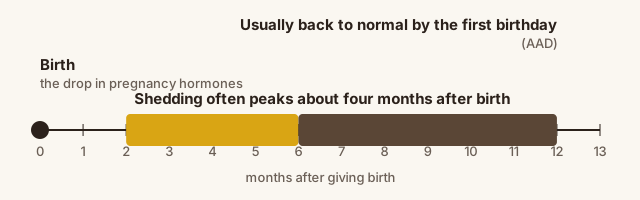
Many new mothers notice heavy shedding a few months after giving birth. 1 The AAD says it usually peaks about four months after the birth, and most women's hair is back to its normal fullness by the child's first birthday, often sooner. 1 It is temporary shedding, not true hair loss, and needs no treatment. 1 If it hasn't settled after a year, see a dermatologist. 1
The weeks after a birth are busy enough. Then, just as things settle, hair starts coming out in clumps in the shower and in the brush. For many new parents it is a shock, especially when nobody mentioned it beforehand.
The good news is that it is very common, it is temporary, and it follows a fairly predictable course.
Why it happens
The American Academy of Dermatology says the shedding is caused by falling estrogen levels after the birth. 1 Cleveland Clinic explains the mechanism: pregnancy hormones cause many growing hairs to switch suddenly to the resting phase, and a few months later those hairs fall out. 2
It is a form of telogen effluvium, the medical term for excessive shedding. 1 2 The AAD is clear that it is not true hair loss. 1 The follicles are still there and keep working.

The timeline
| When | What usually happens |
|---|---|
| Pregnancy | Many women notice fuller hair. Pregnancy hormones keep more hairs in the growing phase. 2 |
| A few months after birth | Noticeable shedding begins. 1 Cleveland Clinic puts the start at about three months. 2 |
| About four months | Shedding usually peaks. 1 |
| By the first birthday | Most women's hair is back to its normal fullness, many sooner. 1 |
Cleveland Clinic says the shedding can last up to six months. 2 It also says people normally shed up to 100 hairs a day, while postpartum shedding goes above that. 2 So a handful in the drain is not unusual during the peak.
What to do while it settles
The AAD says you don't have to do anything to fix it. 1 But if it bothers you, its dermatologists suggest a few tweaks. 1
- Use a volumizing shampoo. These often contain protein that coats the hair and makes it look fuller. 1
- Skip "conditioning shampoos". Heavy conditioners can weigh hair down and make it look limp. 1
- Choose a conditioner for fine hair, and use it mainly on the ends. 1
- Try a new cut. The AAD notes many new mothers prefer short hair, which can look fuller and is quicker to manage. 1
Be gentle too. Avoid tight ponytails while the hair is shedding, since constant pulling can cause a separate kind of loss. 3
Hair care during the peak
Shedding hair is not damaged hair, but rough handling adds breakage on top. The AAD's general advice on avoiding damage fits this stage well. 4 Wrap wet hair in a towel instead of rubbing it. Use a wide-tooth comb, and with straight hair let it dry a little first. Let hair air dry when you can, and keep curling irons and hot combs for occasional use. 4 If you color your hair, the AAD suggests stretching the time between touch-ups. 4 None of this changes the shedding itself, which follows its own timetable. It keeps the hair you have in better shape while the new growth comes in.
One safety point for the baby
Shed hair can cause a rare problem. The AAD warns about hair tourniquets: a shed strand wraps tightly around a baby's toe, finger or other body part and can cut off circulation. 1 It is very rare, but worth knowing.
If you see a hair wrapped around part of your baby, the AAD says to look for a loose end and unwind it gently, or cut it carefully. If it is too tight or embedded in the skin, call your baby's doctor or go to the emergency room. 1
When it may be something else
Postpartum shedding is so common that other causes can be overlooked. A few are worth keeping in mind.
- It hasn't settled after a year. The AAD suggests seeing a dermatologist, because something else may be causing it. 1
- Thyroid problems. MedlinePlus lists having been pregnant or had a baby within the past 6 months as a risk factor for an overactive thyroid. 5 DermNet lists both underactive and overactive thyroid as triggers for shedding. 6
- Low iron. The NHS lists hair loss among the symptoms of iron deficiency anemia. 7
- Pattern hair loss underneath. DermNet notes that postpartum shedding can resolve after a few months or transition into female pattern hair loss. 6 A widening part that remains after the shedding stops is worth checking.
Tell your doctor about extreme tiredness, feeling cold or hot, a racing heart or weight changes alongside the shedding. These are reasons to check thyroid function. 8
A note on treatments and supplements
Most people need no treatment. If you are considering one, timing matters. The AAD says women who are breastfeeding should avoid minoxidil, because traces may pass into breast milk. 9 Hair supplements are not checked for safety and effectiveness before sale, the AAD notes. 10 Ask your doctor before adding anything while breastfeeding.
Our guide to telogen effluvium explains shedding after any trigger in more depth.

- American Academy of Dermatology, “Hair loss in new moms: Dermatologist tips”. aad.org/public/diseases/hair-loss/insider/new-moms
- Cleveland Clinic, “Postpartum Hair Loss: Causes, Treatment & What to Expect”. my.clevelandclinic.org/health/diseases/23297-postpartum-hair-loss
- American Academy of Dermatology, “Hairstyles that pull can lead to hair loss”. aad.org/public/diseases/hair-loss/causes/hairstyles
- American Academy of Dermatology, “How to stop damaging your hair”. aad.org/public/diseases/hair-loss/insider/stop-damage
- MedlinePlus (NIH), “Hyperthyroidism | Graves' Disease | Overactive Thyroid”. medlineplus.gov/hyperthyroidism.html
- DermNet, “Telogen effluvium (hair shedding)”. dermnetnz.org/topics/telogen-effluvium
- NHS, “Iron deficiency anaemia”. nhs.uk/conditions/iron-deficiency-anaemia/
- MedlinePlus (NIH), “Hair loss: MedlinePlus Medical Encyclopedia”. medlineplus.gov/ency/article/003246.htm
- American Academy of Dermatology, “Thinning hair and hair loss: Could it be female pattern hair loss?”. aad.org/public/diseases/hair-loss/types/female-pattern
- American Academy of Dermatology, “Hair loss: Tips for managing”. aad.org/public/diseases/hair-loss/treatment/tips
- American Academy of Dermatology, “Hair loss: Signs and symptoms”. aad.org/public/diseases/hair-loss/insider/begin
- Mayo Clinic, “Hair loss - Symptoms and causes”. mayoclinic.org/diseases-conditions/hair-loss/symptoms-causes/syc-2037292
General information, not medical advice. This article was drafted with AI assistance and checked against the sources listed above. Nobody at Balds is a doctor. If something here is wrong or out of date, tell us.