Alopecia areata is a disease in which the immune system attacks hair follicles, usually causing round or oval bald patches on the scalp or beard. 1 2 It can start at any age, most often in the teens, twenties or thirties. 1 Hair often regrows, sometimes on its own, but new episodes are common. 2 1 There is no cure, but a dermatologist can offer treatments that help hair regrow. 1
It often starts with a discovery. A barber points out a smooth, coin-sized bald spot. Or a hand runs across the back of the head and finds bare skin that wasn't there a week ago. The AAD notes that a bald patch can appear within 1 or 2 days. 3
That kind of sudden, round patch is the classic sign of alopecia areata. It is one of the more common types of hair loss, according to the American Academy of Dermatology. 2 It is also one of the most unpredictable.
What it is
Alopecia areata is an autoimmune disease. NIAMS, part of the US National Institutes of Health, says the immune system mistakenly attacks hair follicles, causing inflammation and hair loss. 1 "Alopecia" means hair loss, and "areata" means patchy. 2
It is not contagious. The AAD says it cannot spread from person to person. 2 NIAMS adds that people with it are usually otherwise healthy, with no other symptoms. 1
The follicles are not destroyed. That is the key difference from scarring forms of hair loss, and it is why hair can grow back. 2 Our guide to scarring hair loss explains the contrast.
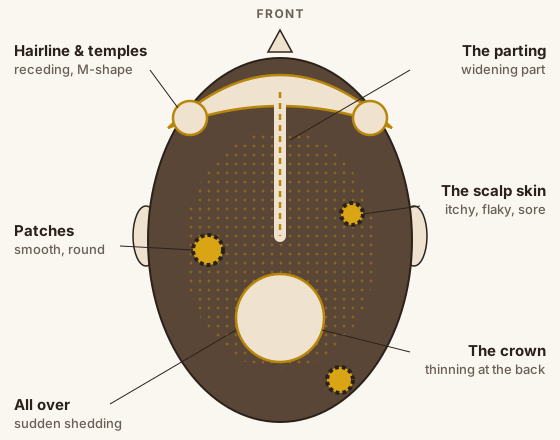
What it looks like
NIAMS says it typically starts with a sudden loss of round or oval patches of hair on the scalp. Any body part can be affected, such as the beard area, eyebrows or eyelashes. 1 The patches are often about the size of a quarter. 1
- Smooth skin. There is usually no rash, redness or scarring on the bald patch. 1
- "Exclamation point" hairs. Around the edges of a patch there are often short broken hairs that are narrower at the base than the tip. 1
- Sensations first. Some people feel burning or stinging before the hair falls. 3 Mayo Clinic notes the skin may itch or hurt beforehand. 4
- Nail changes. Tiny dents called pits appear in some people, especially those with more extensive loss. 1
The types
| Name | What it means |
|---|---|
| Patchy alopecia areata | The most common type: one or more coin-sized patches on the scalp or body. 1 |
| Alopecia barbae | Patchy hair loss in the beard. 2 |
| Alopecia ophiasis | A band or strip of hair loss on the scalp. 2 |
| Alopecia totalis | All or nearly all of the hair on the scalp is lost. 1 |
| Alopecia universalis | Complete or nearly complete loss of hair on the scalp, face and body. This is rare. 1 2 |
Who gets it, and why
NIAMS says anyone can get it. It affects men and women and all racial and ethnic groups. It can start at any age, but most people get it in their teens, twenties or thirties. 1 When it starts before age 10, it tends to be more extensive and progressive. 1
Genes play a role. A close family member with the disease raises the risk, though many people have no family history. 1 Many of the genes linked to it are important for the immune system. 1 DermNet notes that other autoimmune conditions, such as thyroid disease and vitiligo, are seen more often in people with it. 5
Triggers are uncertain. NIAMS says emotional stress or an illness may bring it on in people who are at risk, but in most cases there is no obvious trigger. 1 The AAD says a flare can follow COVID-19, usually 1 to 3 months after the illness. 6
How it behaves over time
This is the hardest part: it is unpredictable. NIAMS says some people have bouts throughout their lives, while others have only one episode. 1 After a bare patch develops, several things can happen. 1
- The hair regrows within a few months, sometimes white or gray at first. 1
- New patches appear, sometimes while the first one is regrowing. 1
- Small patches join into larger ones. 1
- Rarely, hair is lost from the whole scalp or the whole body. 1
Relapses are common. The AAD says many people have a relapse within a year of regrowing their hair, and most relapses occur within 5 years. 2 Some people never have another episode. 2 Regrowth is more likely to be full in people with no family history of the disease, NIAMS says. 1
When hair returns, it may be white or blond and finer than before. The AAD says this is usually temporary, and the natural color and texture often return. 2
Getting a diagnosis
A dermatologist can usually tell from the pattern and a look at the patch. 2 Other causes of patches need ruling out. A scaly, inflamed patch with broken hairs suggests a fungal infection, scalp ringworm. 4 3 Patches where the hair is pulled tight suggest traction. 7 Shiny or scarred skin points to a scarring condition. 7 8 Our guide to the hair loss appointment explains what to expect.
What treatment involves
NIAMS says there is no cure, but treatments can help hair grow back more quickly. 1 The American Academy of Dermatology says the right choice depends on age and how much hair is lost. 9 Here is what it describes, without ranking.
- Waiting. For one or two spots present less than a year, a dermatologist may suggest a wait-and-see approach. Many people, especially children, regrow hair without treatment. 9
- Corticosteroid injections. For adults with patches, injections into the spots are repeated every 4 to 6 weeks. When they work, some regrowth usually shows within 3 months. 9
- Creams and solutions. Prescription corticosteroids applied to the patches, sometimes followed by minoxidil to help keep regrown hair. 9
- Contact immunotherapy. A weekly in-office treatment for more extensive loss, aimed at redirecting the immune response. 9
- JAK inhibitors. Pills that calm the overactive immune system. The AAD says the FDA has approved three for alopecia areata: baricitinib and deuruxolitinib for adults with severe disease, and ritlecitinib for people 12 and older with extensive loss. 9
The AAD notes that with treatment some regrowth can be seen in 6 weeks, but full regrowth takes months. 2 Without treatment, loss may stay the same or worsen. 2
In children
Alopecia areata can start in childhood, and the plan is often gentler. The AAD says that in children, hair may regrow without treatment. 9 When a young child needs treatment, a dermatologist may suggest a prescription corticosteroid applied to the bald spots, then minoxidil to help keep the hair that regrows. The AAD notes minoxidil has few side effects, which makes it a good option for children. 9 Injections are usually kept for adults because they hurt. 9
NIAMS says that when the condition starts before age 10, it tends to be more extensive and progressive. 1 That is a reason for a child with patches to see a dermatologist early, even if the plan ends up being to wait.
Eyebrows and eyelashes
Losing brows or lashes can feel more exposing than losing scalp hair, and it has a practical side: they protect the eyes. The AAD says they keep out sweat, rain, light, dust and germs. 10 It suggests glasses, a hat or a sweatband, and artificial brows or lashes. 10
Regrowth is possible. The AAD says a prescription eye medicine called bimatoprost is FDA-approved to help eyelashes grow longer, and that JAK inhibitors can help some people regrow brows and lashes. 9 Ask a dermatologist which, if any, suits you.
Looking after yourself
The AAD's dermatologists give practical self-care advice. 10
- Be gentle. Use a soft brush and a wide-tooth comb, let hair dry naturally and wear loose styles. 10
- Protect bare skin from the sun. Wear a wide-brimmed hat or wig, or use a broad-spectrum, water-resistant sunscreen of SPF 30 or higher on the scalp. 10
- Protect your eyes if you lose eyebrows or eyelashes, with glasses, a hat or a sweatband. 10
- Keep warm. Hair loss on the scalp, in the ears or nose can make you sensitive to cold. 10
The AAD also suggests learning ways to manage stress, noting that many people say they feel stressed before a cycle of hair loss starts. 10 The emotional side is real. DermNet notes higher rates of depression and anxiety in people with alopecia areata. 5 NIAMS points to resources to help people cope. 1 Many people choose to shave their heads, wear wigs or simply go bare. Our guide to shaving your head covers that route.

- NIAMS (NIH), “Alopecia Areata–Hair Loss Symptoms, Types, & Causes”. niams.nih.gov/health-topics/alopecia-areata
- American Academy of Dermatology, “Hair loss types: Alopecia areata overview”. aad.org/public/diseases/hair-loss/types/alopecia
- American Academy of Dermatology, “Hair loss: Signs and symptoms”. aad.org/public/diseases/hair-loss/insider/begin
- Mayo Clinic, “Hair loss - Symptoms and causes”. mayoclinic.org/diseases-conditions/hair-loss/symptoms-causes/syc-2037292
- DermNet, “Alopecia Areata: Causes, Diagnosis, and Treatment — DermNet”. dermnetnz.org/topics/alopecia-areata
- American Academy of Dermatology, “Can COVID-19 cause hair loss?”. aad.org/public/diseases/hair-loss/causes/covid-19
- American Academy of Dermatology, “Hairstyles that pull can lead to hair loss”. aad.org/public/diseases/hair-loss/causes/hairstyles
- Cleveland Clinic, “Scarring (Cicatricial) Alopecia: What It Looks Like & Treatment”. my.clevelandclinic.org/health/diseases/24582-scarring-alopecia
- American Academy of Dermatology, “Hair loss types: Alopecia areata diagnosis and treatment”. aad.org/public/diseases/hair-loss/types/alopecia/treatment
- American Academy of Dermatology, “Hair loss types: Alopecia areata self-care”. aad.org/public/diseases/hair-loss/types/alopecia/self-care
General information, not medical advice. This article was drafted with AI assistance and checked against the sources listed above. Nobody at Balds is a doctor. If something here is wrong or out of date, tell us.