Yes. The most common link is telogen effluvium: heavy, temporary shedding that starts a few months after a stressful event and usually stops on its own. 1 Stress may also bring on alopecia areata, patchy loss caused by the immune system, in people who are at risk. 2 And some people pull out their hair to relieve stress, a condition called trichotillomania. 3
Stress gets blamed for a lot, and hair loss is high on the list. In this case the link is real. But "stress causes hair loss" covers three quite different things, and they need different responses.
1. Shedding a few months after a stressful time
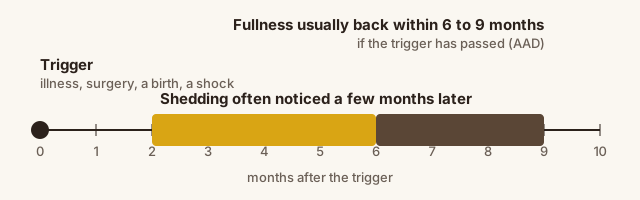
The most common link is telogen effluvium, heavy but temporary shedding. The American Academy of Dermatology lists experiencing lots of stress among its triggers, with examples such as caring for a sick loved one, going through a divorce or losing a job. 1 Mayo Clinic says many people notice a general thinning several months after a physical or emotional shock. 4
The delay is the giveaway. The AAD says most people notice the shedding a few months after the stressful event. 1 By then the crisis may have passed, which makes the connection easy to miss.
It usually stops on its own. The AAD says that as the body readjusts, the extra shedding stops, and within six to nine months hair tends to regain its fullness. 1 There is one catch. If the stress continues, the shedding can continue too. The AAD notes that people who are under a lot of stress all the time can have long-term heavy shedding. 1
2. Patchy loss: alopecia areata
Alopecia areata is different. The immune system attacks hair follicles, usually causing round or oval patches of hair loss. 3 2 Its causes are mostly genetic and immune-related. But NIAMS, part of the US National Institutes of Health, says emotional stress or an illness may bring it on in people who are at risk. 2 In most cases there is no obvious trigger. 2
People with alopecia areata often feel stress plays a part. DermNet describes a French study in which 65% of respondents with extensive alopecia areata linked stress to its start or worsening. 5 Living with it is stressful too. DermNet notes higher rates of depression and anxiety. 5
Patchy hair loss needs a dermatologist, not just time. Our guide to alopecia areata explains what is involved.
3. Pulling: trichotillomania
The third link is a behavior. The AAD says some people pull on their hair, often to relieve stress, and may not even realize they are doing it. The medical term is trichotillomania. 3 MedlinePlus describes repeated urges to pull or twist the hair until it breaks off, with tension before pulling and relief afterward. 6
MedlinePlus says treatment often improves the pulling and the feelings of depression, anxiety or poor self-image that come with it. 6 It also says reducing stress can help, because stress may increase the behavior. 6 If this sounds familiar, it is worth raising with a doctor. It is common and treatable, and not a failure of willpower.
How to tell which one it is
| Shedding | Alopecia areata | Hair pulling | |
|---|---|---|---|
| Shape | All over 7 | Round or oval patches 8 | Irregular areas, often where hands reach 6 |
| Hairs | Whole hairs with a white bulb 7 | Hair stops growing in the patch 8 | Broken hairs 6 |
| Timing | A few months after the stress 1 | Can appear quickly 9 | Ongoing, linked to urges 6 |
| Outlook | Usually settles 1 | Varies; often needs a dermatologist 8 | Often improves with treatment 6 |
Does stress cause pattern baldness?
Pattern hair loss is mainly inherited and hormone-driven. 10 11 The sources here don't describe stress as its cause. Stress-related shedding can, however, make an underlying pattern easier to see. DermNet notes that telogen effluvium may unmask an inherited tendency to pattern hair loss. 7 If thinning on top remains after the shedding stops, that is worth asking about.
When hair loss becomes the stress
The link runs both ways. Losing hair is stressful in itself. Cleveland Clinic notes that telogen effluvium can cause emotional stress, anxiety and depression, and that people often fear they will lose all their hair. 12 It also stresses that this kind of shedding does not cause total baldness. 12 DermNet says the psychological effects of hair loss should not be ignored. 7 Knowing the usual timeline helps. Hair that sheds months after a hard period is usually on its way back, and checking the drain every morning tends to feed the worry rather than ease it.
What helps
- Treat the hair gently while it sheds. Avoid vigorous brushing and tight styles. 7 13
- Look after the basics. MedlinePlus notes long-term stress can affect health in many ways. 14 Sleep, food and support all matter.
- Ask for help with the stress itself. The NHS says a GP may be able to arrange counseling if hair loss is causing distress. 15
- Don't let worry about hair add to the stress. Shedding after a hard time is a sign of the past, and it usually passes. 1

- American Academy of Dermatology, “Do you have hair loss or hair shedding?”. aad.org/public/diseases/hair-loss/insider/shedding
- NIAMS (NIH), “Alopecia Areata–Hair Loss Symptoms, Types, & Causes”. niams.nih.gov/health-topics/alopecia-areata
- American Academy of Dermatology, “Hair loss: Who gets and causes”. aad.org/public/diseases/hair-loss/causes/18-causes
- Mayo Clinic, “Hair loss - Symptoms and causes”. mayoclinic.org/diseases-conditions/hair-loss/symptoms-causes/syc-2037292
- DermNet, “Alopecia Areata: Causes, Diagnosis, and Treatment — DermNet”. dermnetnz.org/topics/alopecia-areata
- MedlinePlus (NIH), “Trichotillomania: MedlinePlus Medical Encyclopedia”. medlineplus.gov/ency/article/001517.htm
- DermNet, “Telogen effluvium (hair shedding)”. dermnetnz.org/topics/telogen-effluvium
- American Academy of Dermatology, “Can COVID-19 cause hair loss?”. aad.org/public/diseases/hair-loss/causes/covid-19
- American Academy of Dermatology, “Hair loss: Signs and symptoms”. aad.org/public/diseases/hair-loss/insider/begin
- DermNet, “Male pattern hair loss (androgenetic alopecia, balding)”. dermnetnz.org/topics/male-pattern-hair-loss
- American Academy of Dermatology, “Thinning hair and hair loss: Could it be female pattern hair loss?”. aad.org/public/diseases/hair-loss/types/female-pattern
- Cleveland Clinic, “Telogen Effluvium: Symptoms, Causes, Treatment & Regrowth”. my.clevelandclinic.org/health/diseases/24486-telogen-effluvium
- American Academy of Dermatology, “Hairstyles that pull can lead to hair loss”. aad.org/public/diseases/hair-loss/causes/hairstyles
- MedlinePlus (NIH), “Stress: MedlinePlus”. medlineplus.gov/stress.html
- NHS, “Hair loss”. nhs.uk/symptoms/hair-loss/
General information, not medical advice. This article was drafted with AI assistance and checked against the sources listed above. Nobody at Balds is a doctor. If something here is wrong or out of date, tell us.