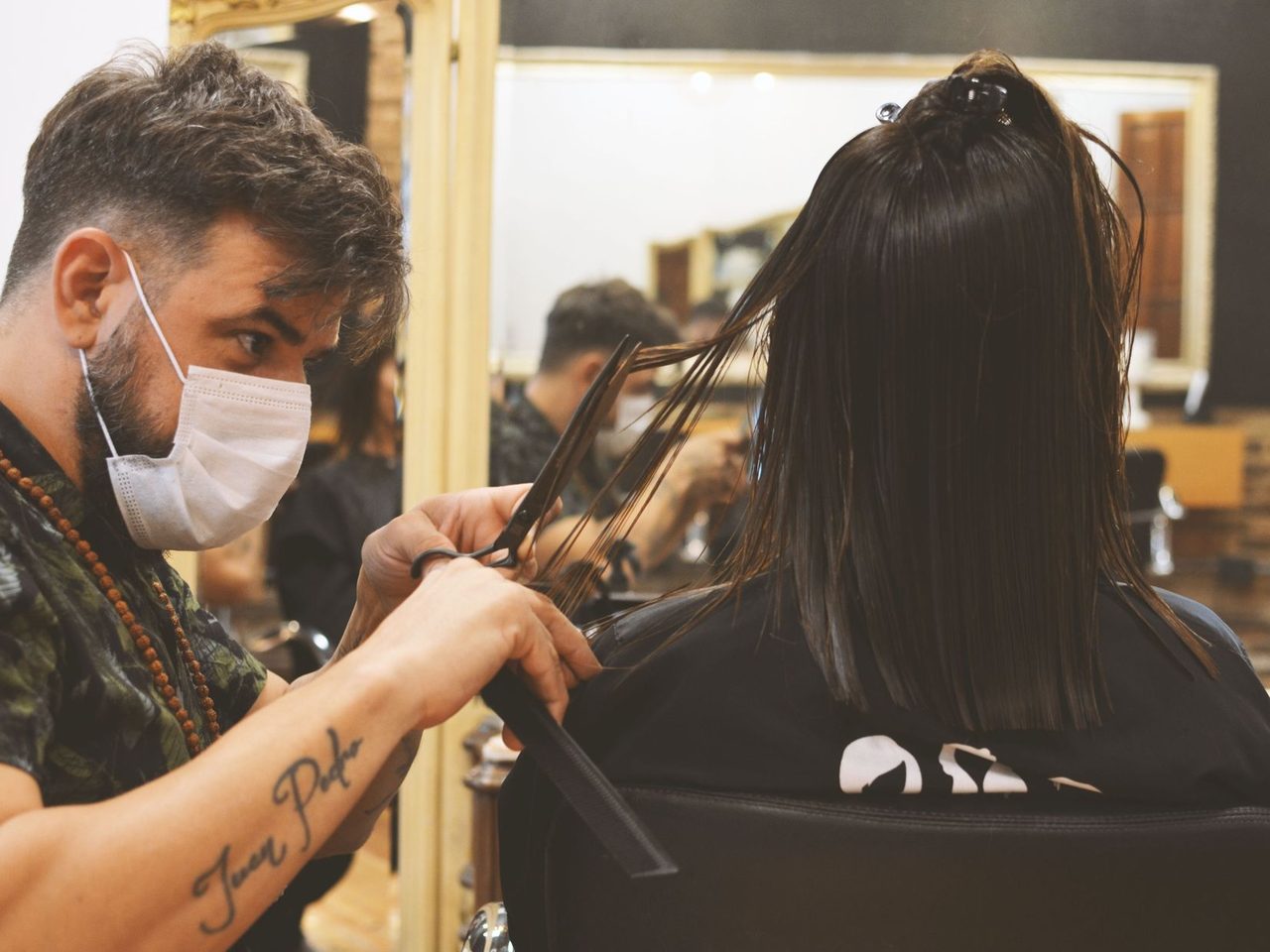
Shorter cuts usually look fuller, because they give more lift at the roots. 1 2 A side or zigzag part softens a wide central part, and soft layers on top add volume. 1 Volumizing shampoo, a light conditioner on the ends, hair-building fibers and colored sprays help too. 2 3 Avoid what damages fragile hair: tight styles, high heat, rough towels and home chemical treatments. 4
Thinning hair doesn't have to look thin. Styling won't change what is happening at the root, but it changes how much scalp shows and how full the hair looks, often a great deal. Mayo Clinic suggests trying different hair care methods to find one that makes you feel better about how you look. 5
This guide brings together what dermatology sources suggest, for women and for men, including a receding hairline.
Start with the cut
A published review on female pattern hair loss says shorter styles give more volume and lift. 1 The American Academy of Dermatology makes the same point for new mothers whose hair is shedding: a short style can make hair look fuller and is easier to manage. 2
The same review says it can take 3 or 4 different haircuts before a woman finds the look that suits her. 1 That is normal. An experienced stylist can tell you what will work for your hair. 2
- Layers on top. Soft layers at the top let hair that is pulled back look fuller. 1
- Blunt ends. Fine hair often looks thicker when the ends are cut to one length rather than thinned out.
- Avoid heavy length. Long, heavy hair pulls flat at the root and shows the scalp more.
Soften a wide part
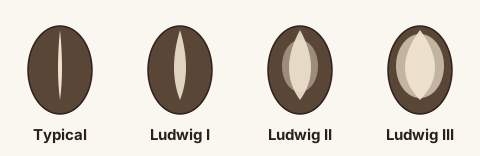
The review suggests disguising central thinning with a side part or a zigzag part. 1 Mayo Clinic suggests choosing a hairstyle that makes a widening part less noticeable. 5 Changing where you part your hair now and then also shows less of the same strip of scalp. Our guide to the widening part explains what it usually means.
A receding hairline
For men, temple recession is the most common early pattern. 6 The aim of styling is to make the contrast between the corners and the rest of the hair less obvious.
- Go shorter. A shorter cut reduces the contrast between full and thinning areas, the same principle the sources describe for fuller-looking hair. 1 2
- Bring hair forward slightly rather than sweeping it straight back off the forehead.
- Avoid long hair combed over. It separates and shows the scalp more, especially in wind or rain.
- Consider clippers. A short, even clipper cut, or shaving it all off, is a common choice. Mayo Clinic lists shaving among the options. 5 Our guide to shaving your head has the details.
In women, a receding hairline is less usual and worth a dermatologist's look, because it can be frontal fibrosing alopecia, which needs early treatment. 7 8
Products that add fullness
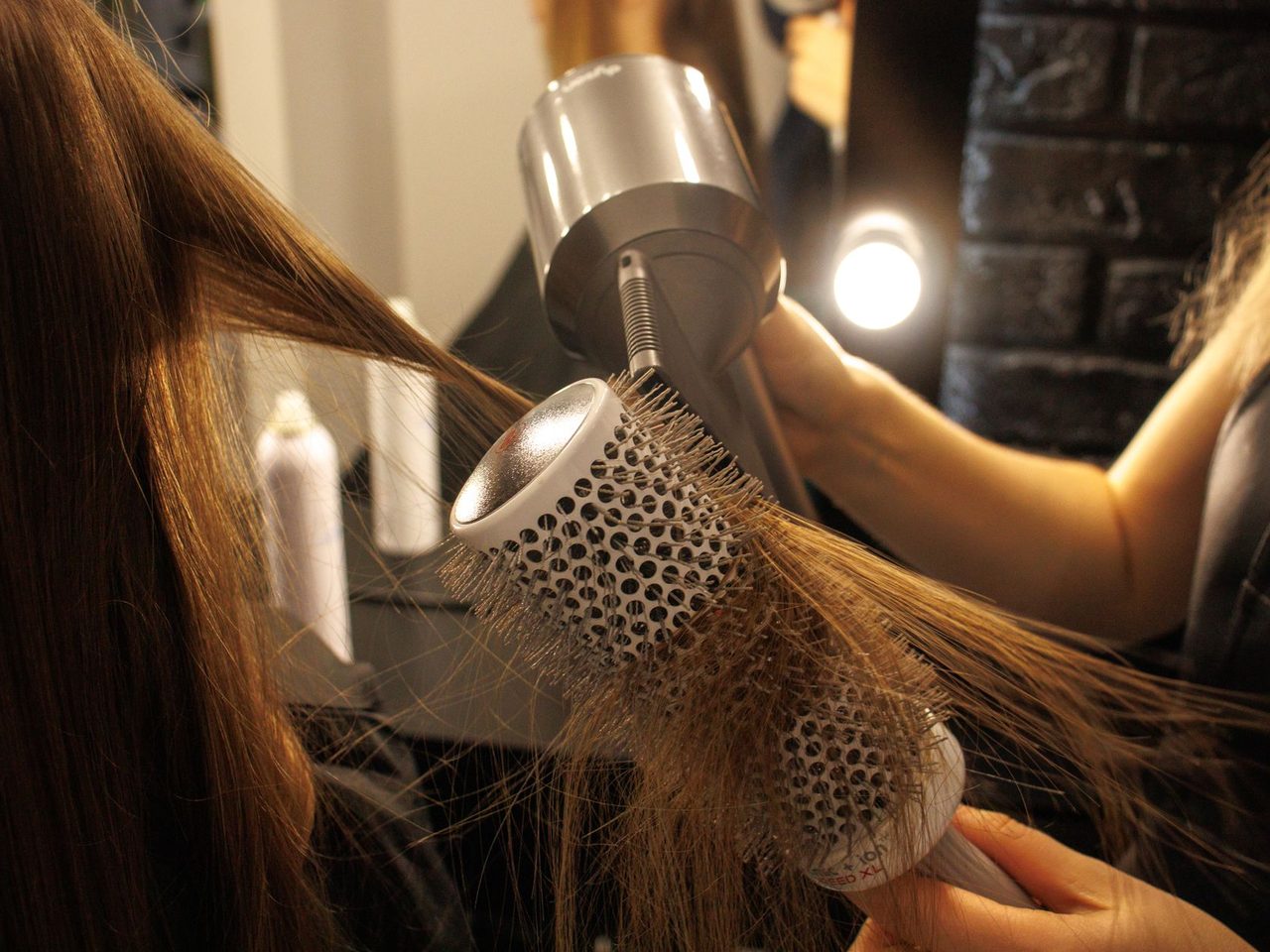
- Volumizing shampoo. The AAD says these often contain ingredients such as protein that coat the hair and make it look fuller. 2
- Light conditioner on the ends. The AAD suggests a conditioner made for fine hair, used mainly on the ends, and avoiding heavy "conditioning shampoos" that weigh hair down. 2
- Hair-building fibers and sprays. DermNet mentions colored hair sprays and hair-bulking fiber powders. 3 The review says these cover visible scalp and add lift at the base of the hair, and suit mild to moderate thinning best. 1
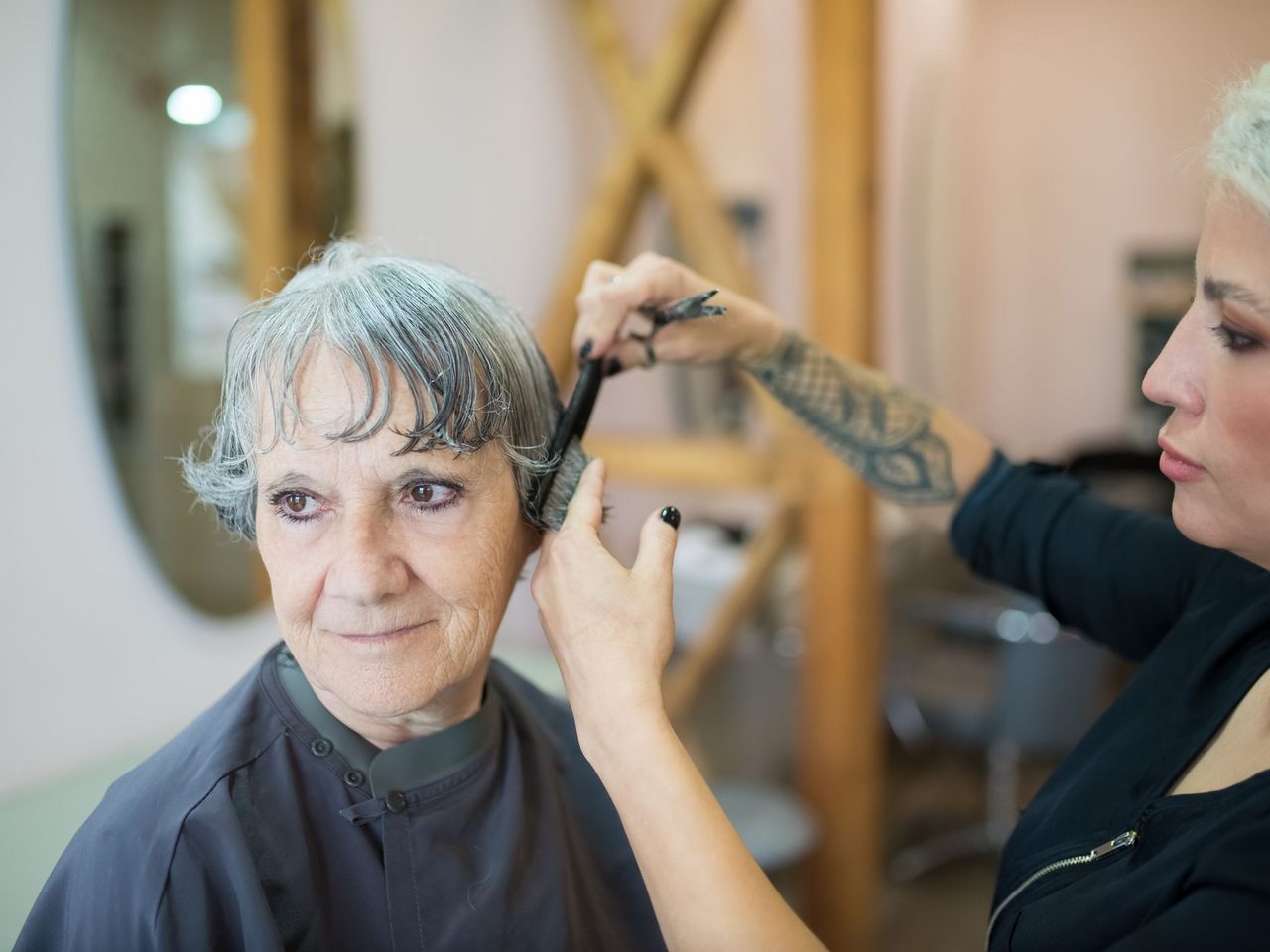
- Color. Mayo Clinic suggests coloring hair as one option. 5 The AAD advises having it done at a salon and stretching the time between touch-ups. 4 9
Match cover-up products to your scalp. The review says a pressed powder suits oily to normal scalps and prevents shine, while a cream suits a dry scalp. 1 Fibers need some hair to cling to, so they work best where hair is thinning rather than gone. 1
Be realistic about "thickening" products. The AAD says hair loss shampoos can make hair look fuller and reduce breakage, but cannot regrow hair. 10
Extensions, hairpieces and wigs
For more noticeable thinning, the review describes a range of options: clip-in or permanent extensions for mild thinning, integrations that blend your own hair through a base, and hairpieces or wigs for advanced loss. 1 It warns that extensions can damage hair that breaks easily, so choose carefully. 1
The NHS compares wigs: synthetic wigs are easier to look after, while real-hair wigs look more natural but are harder to care for. 11 Mayo Clinic says insurance may cover a wig if hair loss is due to a medical condition. 5 Hats, scarves and headbands are options too. 1
Habits that make thinning worse
The AAD says thinning hair is fragile and easily damaged. 4 Its dermatologists suggest avoiding:
- tight ponytails, buns, braids and cornrows, which can cause traction hair loss; 4
- hot-oil treatments, and frequent curling irons, flat irons and hot combs; 4
- at-home coloring, perming, chemical straightening and relaxing; 4
- rough towel drying, and brushing or combing more than needed to style. 4 9
Use the lowest heat setting on a blow-dryer and let hair dry naturally when you can. 4 Extensions should be light and worn for two or three months at most. 9
- Dinh & Sinclair, Clin Interv Aging (PMC), “Female pattern hair loss: Current treatment concepts - PMC”. pmc.ncbi.nlm.nih.gov/articles/PMC2684510/
- American Academy of Dermatology, “Hair loss in new moms: Dermatologist tips”. aad.org/public/diseases/hair-loss/insider/new-moms
- DermNet, “Female pattern hair loss”. dermnetnz.org/topics/female-pattern-hair-loss
- American Academy of Dermatology, “Hair loss: Tips for managing”. aad.org/public/diseases/hair-loss/treatment/tips
- Mayo Clinic, “Hair loss - Diagnosis and treatment”. mayoclinic.org/diseases-conditions/hair-loss/diagnosis-treatment/drc-203
- MedlinePlus Genetics (NIH), “Androgenetic alopecia: MedlinePlus Genetics”. medlineplus.gov/genetics/condition/androgenetic-alopecia/
- American Academy of Dermatology, “Hair loss types: Frontal fibrosing alopecia overview”. aad.org/public/diseases/hair-loss/types/frontal-fibrosing-alopecia
- Mayo Clinic, “Hair loss - Symptoms and causes”. mayoclinic.org/diseases-conditions/hair-loss/symptoms-causes/syc-2037292
- American Academy of Dermatology, “How to stop damaging your hair”. aad.org/public/diseases/hair-loss/insider/stop-damage
- American Academy of Dermatology, “Thinning hair and hair loss: Could it be female pattern hair loss?”. aad.org/public/diseases/hair-loss/types/female-pattern
- NHS, “Hair loss”. nhs.uk/symptoms/hair-loss/
- American Academy of Dermatology, “Hair loss: Signs and symptoms”. aad.org/public/diseases/hair-loss/insider/begin
General information, not medical advice. This article was drafted with AI assistance and checked against the sources listed above. Nobody at Balds is a doctor. If something here is wrong or out of date, tell us.