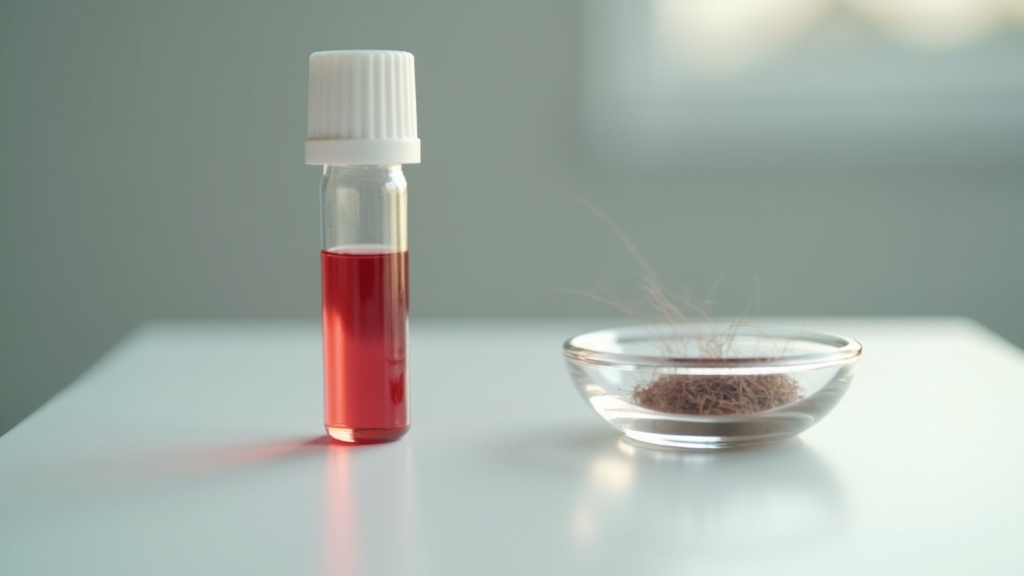
Ferritin is a blood marker that reflects how much iron your body has stored, and low levels are one of several things doctors sometimes check when someone reports unusual shedding. Asking about it makes sense if your hair loss is diffuse rather than patchy, has come on gradually, and hasn’t been explained by anything else. A blood test can tell you whether ferritin is low; it cannot on its own tell you why your hair is shedding, so it’s worth treating it as one piece of a larger conversation rather than the whole answer.
Why ferritin comes up in hair loss conversations
Hair follicles are metabolically active tissue, and some research has suggested they may be sensitive to how much iron is available in the body, alongside many other factors like hormones, thyroid function and general health. This is why a doctor working through diffuse thinning or increased shedding may order a ferritin test as part of a broader panel, rather than as a single isolated check. Low ferritin shows up in a wide range of situations — heavy periods, restrictive diets, blood donation, pregnancy, digestive conditions that affect absorption — so on its own it’s a clue, not a diagnosis.
It’s also worth knowing that ferritin can be affected by inflammation and illness in ways that make it look artificially normal or high, which is one reason interpreting the number is a job for a clinician who can see your full test panel, not something to self-diagnose from a single lab value.

What the test actually involves
A ferritin test is a standard blood draw, usually ordered alongside other markers such as a full blood count, thyroid function, and sometimes vitamin D or B12, since several of these overlap in symptoms and are looked at together. There’s no special preparation beyond what your doctor tells you, and results typically come back within a few days. What counts as a “normal” range can vary between labs and may be interpreted differently depending on your sex, age and whether you have any other health conditions, which is exactly why the number is best discussed with the person who ordered it rather than looked up against a generic chart online.
Questions worth bringing to the appointment
Going in with specific questions tends to get you a more useful conversation than describing the shedding in general terms. Some to consider:
- What is my ferritin result, and how does it compare to the range this lab uses?
- Are you checking ferritin alongside thyroid function, iron studies or anything else, and why?
- Could anything in my history — diet, periods, digestive issues, recent illness — explain a low result?
- If ferritin is low, is that being treated as the likely cause of the shedding, or as one factor among several?
- What would you expect to see if we retest in a few months, and how will we know if things are moving in the right direction?
- Is there anything about the pattern of my hair loss that makes you think of something other than diet or iron?
None of these questions assume an answer in advance — the point is to get your own bloodwork and your own history read together by someone qualified to do it, rather than trying to match your situation to a general rule.
Iron is one thread, not the whole story
Diffuse shedding has a long list of possible contributors, and iron status is only one of them. Thyroid problems are another common one worth ruling out, and it’s worth reading about how thyroid problems can cause hair loss if that hasn’t come up yet. A sudden increase in daily shedding a few months after an illness, high fever, surgery or major stress often points toward a pattern called telogen effluvium, which is a separate mechanism from iron deficiency, though the two can occur around the same time. Diet plays a role too — not just iron intake but overall nutrition — and it’s covered in more detail in our piece on whether diet can cause hair loss. If the thinning looks more like a gradual, patterned recession rather than an all-over shedding, it may be worth reading about female pattern hair loss, which has a different underlying cause and isn’t something iron supplementation addresses.
Because these causes overlap in symptoms but not in mechanism or management, it’s genuinely useful to look at the causes and triggers category to get a sense of how many different things can produce similar-looking shedding before assuming iron is the whole answer.
What happens after the test
If ferritin comes back low, what happens next is a conversation with your doctor about why, and about whether addressing it is appropriate for you specifically — this can involve dietary changes, supplementation at a dose your doctor determines is right for your labs and history, or further investigation into why your iron is low in the first place, especially if there’s no obvious dietary explanation. This isn’t something to self-manage with over-the-counter iron tablets based on symptoms alone; taking iron without knowing you’re actually deficient carries its own risks, and a supplement doesn’t address shedding caused by something else entirely.
If your ferritin turns out to be normal, that’s useful information too — it means your doctor will likely want to look at other explanations, which is a normal and expected part of working through diffuse thinning rather than a dead end. Whatever the visit turns up, knowing what to expect going in can make it easier to ask the right follow-up questions; our guide on what to expect at a dermatologist hair loss visit covers this in more depth, and the broader scalp and hair health section has more on how general health markers connect to what’s happening on your scalp.
When to skip the reading and get assessed
Blood tests and background reading are useful when hair loss is gradual and diffuse. They’re the wrong first step if your hair loss is sudden or patchy, if your scalp is painful, scaly, scarred or unusually shiny, if the hair loss comes with other unexplained symptoms, or if it’s happening to a child. In those situations, see a doctor rather than continuing to research online — scarring types of hair loss in particular can cause permanent damage to the follicle, so waiting has a real cost that a blood test won’t help you avoid.
Frequently asked questions about iron, ferritin and hair loss
What ferritin level is considered too low for hair growth?
There’s no single number that applies to everyone, and labs use different reference ranges. Your doctor interprets your ferritin result alongside your age, sex, other bloodwork and symptoms, so it’s best to ask them directly what your specific result means rather than comparing it to a general online chart.
Can low iron cause hair loss without anemia?
Some people have low ferritin (low iron stores) while their overall blood count still looks normal, meaning they aren’t technically anemic. Whether this contributes to shedding in a given person is something your doctor assesses using your full history and labs, not something a single number confirms on its own.
Should I take iron supplements if I’m shedding hair?
Taking iron without confirming you’re actually deficient isn’t advisable, since excess iron carries its own health risks and won’t help shedding caused by something unrelated to iron. This is a decision to make with your doctor based on your test results, not something to start on your own.
How long after fixing low ferritin does hair loss stop?
This varies a lot between people and depends on the underlying cause, how low ferritin was, and other factors your doctor can assess. There’s no fixed timeline, and outcomes can’t be predicted from general information online — it’s a question to raise directly with whoever is monitoring your case.
What other blood tests are done alongside ferritin for hair loss?
Doctors often look at thyroid function, a full blood count, and sometimes vitamin D or B12 alongside ferritin, since these can produce similar shedding patterns. Which tests make sense depends on your symptoms and history, so it’s worth asking your doctor directly which panel they’re ordering and why.
Balds publishes general educational information about hair loss, not medical advice. We are writers, not doctors or dermatologists. If your hair loss is sudden, patchy, painful, or comes with other unexplained symptoms, see a doctor or a dermatologist — some forms of hair loss can become permanent without early assessment.