Postpartum hair loss is a temporary increase in shedding that many people notice in the months after giving birth, caused by the drop in hormone levels that follows pregnancy. It is not the same as permanent hair loss, and for most people it eases on its own over several months. There is no reliable way to say from a website how long any one person’s shedding will last, since this varies by individual, and some people notice little change at all.
Why hair sheds more after pregnancy
During pregnancy, higher levels of hormones such as estrogen tend to keep more hair follicles in their growing phase for longer than usual, which is part of why hair can look fuller than normal while pregnant. After birth, hormone levels fall back toward their pre-pregnancy range fairly quickly. That shift pushes a larger-than-usual number of follicles into the resting phase of the hair cycle at roughly the same time. Resting hairs are eventually shed to make room for new growth, and because so many entered that phase together, the shedding phase can feel sudden and noticeable rather than gradual.
This pattern is a form of what is generally described as diffuse, whole-scalp shedding rather than shedding in one spot. If you want the general mechanics of how this type of shedding works outside of pregnancy, the article on telogen effluvium and why sudden shedding happens covers the same underlying process, since postpartum shedding is considered one common trigger for it.

What it typically looks and feels like
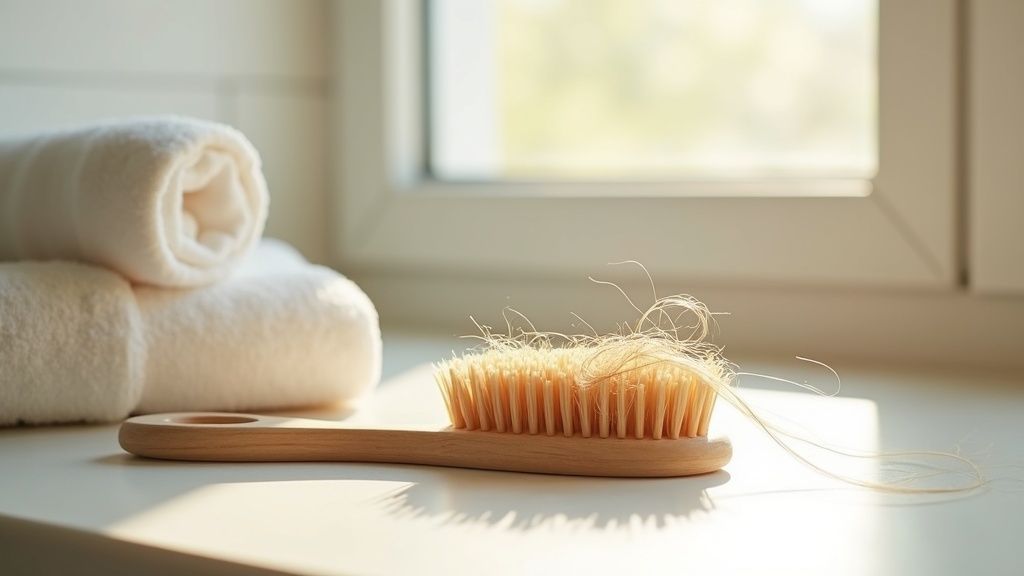
People often describe finding more hair than usual in the shower drain, on a pillow, or caught in a brush. It can also show up as loose strands coming away when running fingers through hair, or a general sense that the hair feels less dense than it did during pregnancy. This shedding is usually spread evenly across the scalp rather than concentrated in a bald patch, and the scalp itself typically looks and feels normal underneath, without redness, scaling or soreness.
Because it can feel alarming in the moment, it can help to have some sense of ordinary variation in day-to-day hair loss; the piece on how much hair loss a day is normal gives context for what counts as typical shedding versus a more marked increase.
When it tends to start and settle
Many people notice the increase in shedding beginning a few months after delivery rather than immediately, since it takes time for the hormonal shift to work its way through the hair growth cycle. From there, the pace of shedding commonly slows over the following months as the cycle rebalances, though the exact timing differs from person to person and cannot be predicted in advance. Some people notice it resolving relatively quickly; others find it takes longer, and factors like sleep, overall health, and individual hair biology all play a role that a general article cannot account for.
It is also worth knowing that hair density during this period can be influenced by more than one thing at once. Sleep disruption, changes in eating patterns, and the general physical and emotional load of early parenting are all forms of stress on the body, and stress is a recognised trigger that can add to or overlap with hormonal shedding. The article on whether stress causes hair loss looks at that connection in more detail.
How this differs from other types of hair loss
Postpartum shedding is diffuse, temporary, and tied to a specific hormonal event, which sets it apart from patterns that involve a receding hairline or thinning concentrated at the crown, of the kind described in the article on how to tell if a receding hairline is changing. It is also different from patterned thinning that runs in families and tends to progress gradually over years rather than resolve within months; the piece on female pattern hair loss explains that pattern and how it is usually described. Genetics play a role in a lot of hair loss generally, which the overview on whether hair loss is hereditary covers, but postpartum shedding itself is a hormonal and cycle-related event rather than a genetic condition.
If you want a broader sense of how different causes of hair loss are classified and where postpartum shedding sits among them, the causes and triggers hub and the types of hair loss hub both give a wider view without focusing on any one cause.
What using this time generally involves
Most general guidance around this kind of shedding focuses on patience and basic care of the hair and scalp rather than any specific treatment, since the shedding is expected to ease as hormone levels stabilise. Gentle handling of wet hair, avoiding tight styles that pull on the scalp while shedding is heavier, and not over-processing hair with chemical treatments during this period are commonly mentioned as sensible, low-risk habits. None of these habits have been shown to change how quickly the underlying hormonal process resolves; they are simply ways of reducing added strain on hair that is already shedding more than usual.
Some people look into topical treatments intended to support hair density, including over-the-counter options applied to the scalp. These products are designed for general thinning and shedding rather than specifically for postpartum hair loss, and using any treatment, over-the-counter or prescription, is worth discussing with a pharmacist or doctor first, particularly while breastfeeding, since not every product is appropriate during that time. This article does not suggest any specific product or treatment path, because what is suitable varies by individual circumstances that a website cannot assess.
When to see a doctor rather than wait it out
Ordinary postpartum shedding is diffuse and doesn’t usually come with scalp symptoms. It is a reason to see a doctor rather than keep researching if shedding is sudden and severe, if it is patchy rather than spread evenly, if the scalp becomes painful, scaly, shiny or scarred-looking, or if hair loss appears alongside other unexplained symptoms such as fatigue, weight changes, or skin changes, since those can point to a different underlying cause, including thyroid changes that are relatively common after pregnancy. Patchy hair loss in particular has its own set of possible causes, covered in the article on alopecia areata and patchy hair loss, and is worth having assessed rather than assumed to be postpartum shedding. Scarring types of hair loss can cause permanent damage to follicles, so getting these signs checked promptly, rather than waiting, has a real cost if left too long.
Frequently asked questions about postpartum hair loss
How long does postpartum hair loss usually last?
Timing varies by person and can’t be predicted precisely, but many people notice shedding easing within several months as hormone levels stabilise. If shedding feels unusually heavy, patchy, or is not settling at all over a longer stretch, it’s reasonable to have it checked by a doctor.
Is postpartum hair loss the same as normal shedding?
It’s a heavier, more concentrated version of ordinary shedding, triggered by the hormonal drop after birth pushing more follicles into their resting phase at once. It’s still considered a temporary, diffuse pattern rather than a separate disease, distinct from patterned or patchy hair loss.
Will my hair go back to how it was before pregnancy?
Many people find their hair density returns to a familiar range over time, but outcomes vary by individual and can’t be guaranteed or predicted from general information. Genetics, age, and other health factors all influence hair over the longer term, separate from the postpartum shedding itself.
Does breastfeeding make postpartum hair loss worse?
Breastfeeding itself isn’t generally described as a direct cause of increased shedding; the shedding is linked to hormone levels shifting after delivery regardless of feeding method. If you’re concerned about hair changes while breastfeeding, it’s worth raising with a doctor or pharmacist.
When should I worry about postpartum hair loss?
It’s worth seeing a doctor if shedding is patchy rather than even, if the scalp looks scarred, scaly or shiny, or if hair loss comes with other unexplained symptoms like fatigue or weight changes, since these can point to a different cause needing assessment.
Balds publishes general educational information about hair loss, not medical advice. We are writers, not doctors or dermatologists. If your hair loss is sudden, patchy, painful, or comes with other unexplained symptoms, see a doctor or a dermatologist — some forms of hair loss can become permanent without early assessment.