Finasteride is a daily prescription pill, FDA-approved for male pattern hair loss, that lowers the hormone DHT. 1 2 It may take at least 3 months to see any change, it only slows loss while you take it, and it is for men only. 3 Side effects to discuss include reduced sexual desire, erection and ejaculation problems, which can occur during and after treatment, and new or worsening depression. 3
Finasteride is one of only two medicines the FDA has approved for male pattern hair loss. 1 It is a prescription pill, and it raises more questions than any other hair loss treatment, mostly about side effects.
This guide sets out what the medical sources say, so the conversation with a prescriber starts from the facts. It is not a recommendation for or against.
How it works
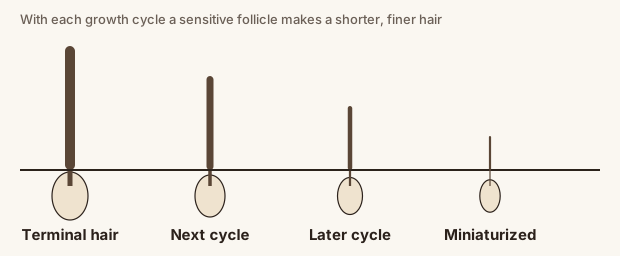
Male pattern hair loss involves the hormone DHT, which is made from testosterone by an enzyme called 5-alpha reductase. 2 DermNet says finasteride blocks the type II form of that enzyme, lowering DHT in the scalp and reducing its effect on hair follicles. 2 It says finasteride lowers DHT in the blood and scalp by up to 70 and 60%, respectively. 2
MedlinePlus says finasteride is used for male pattern hair loss and for an enlarged prostate, and belongs to a class of medicines called 5-alpha reductase inhibitors. 3 Our guide to testosterone, DHT and baldness explains the biology.
How it is taken
MedlinePlus says it is a tablet taken once a day, with or without food, at around the same time each day. 3 Mayo Clinic notes it may not work as well for men over 60. 4 The AAD says it can be taken alone or with minoxidil. 1
How long before you can tell
MedlinePlus says it may take at least 3 months to see any improvement, and that you should expect to see improvement during the first 12 months. 3 The AAD says results, if it helps, start to show in about 6 months. 1 It also says men tend to have better results when they start soon after noticing hair loss. 1
It works only while you take it. MedlinePlus says you will probably lose any hair that grew back within 12 months of stopping. 3 The AAD says hair loss returns once you stop. 1 DermNet adds that DHT levels in the scalp rise again after stopping. 2
Side effects to discuss
This is the part to talk through properly. MedlinePlus lists these. 3
- Sexual side effects. Decreased sexual desire, ejaculation problems and inability to have or keep an erection, which may occur during and after treatment is stopped. It may also decrease fertility. 3
- Breast changes such as increased size, lumps, pain or nipple discharge. 3
- Mood. New or worsening depression, or thoughts of self-harm, are a reason to call a doctor. 3
- Cancer risk. MedlinePlus says finasteride may increase the risk of high-grade prostate cancer or breast cancer, and to talk with your doctor about the risks. 3
The AAD says sexual side effects have been reported to continue after a patient stops taking finasteride, and that because of how serious these side effects can be, a dermatologist will want a full picture before prescribing. 1 Mayo Clinic describes the sexual side effects as rare. 4 Sources differ in tone, so it is worth asking your prescriber how they weigh the risks for you.

Who must not take or handle it
- Women. MedlinePlus says finasteride is only for use in men. 3 The NHS says women should not use it for hair loss. 6
- Pregnancy. Women who are or may become pregnant should not touch broken or crushed tablets, because it may harm the fetus. If contact happens, wash the area with soap and water and call a doctor. 3 4
- Liver disease or prostate cancer. MedlinePlus says to tell your doctor if you have or have had either. 3
Dermatologists sometimes prescribe related medicines to women for female pattern hair loss, off-label and with strict pregnancy precautions. The AAD says this happens, and that women who could become pregnant must use birth control while taking such medicines. 7 That is a specialist decision.
If you want to stop
MedlinePlus says not to stop taking finasteride without talking to your doctor. 3 That is partly practical: hair gained during treatment is likely to be lost within a year of stopping, so it helps to plan rather than stop abruptly. 3 If you are stopping because of a side effect, tell the prescriber what you noticed and when. MedlinePlus says you or your doctor can report a serious side effect to the FDA. 3 Keeping a short diary of any changes, alongside your hair photos, makes that conversation easier.
Questions to raise with a prescriber
- Is my hair loss male pattern hair loss, or could it be something else? 8
- How do you weigh the sexual and mood side effects for someone like me? 1 3
- What should I watch for, and what should I do if I notice it?
- How and when will we judge whether it is working? 3
- Does it affect any tests or other conditions I should know about? 3
- Would minoxidil alone, or a combination, make more sense for me? 1
Our guide to what each option involves puts finasteride alongside the alternatives, including choosing no treatment at all.

- American Academy of Dermatology, “What is male pattern hair loss, and can it be treated?”. aad.org/public/diseases/hair-loss/treatment/male-pattern-hair-loss-treat
- DermNet, “Finasteride”. dermnetnz.org/topics/finasteride
- MedlinePlus (NIH), “Finasteride: MedlinePlus Drug Information”. medlineplus.gov/druginfo/meds/a698016.html
- Mayo Clinic, “Hair loss - Diagnosis and treatment”. mayoclinic.org/diseases-conditions/hair-loss/diagnosis-treatment/drc-203
- DermNet, “Male pattern hair loss (androgenetic alopecia, balding)”. dermnetnz.org/topics/male-pattern-hair-loss
- NHS, “Hair loss”. nhs.uk/symptoms/hair-loss/
- American Academy of Dermatology, “Thinning hair and hair loss: Could it be female pattern hair loss?”. aad.org/public/diseases/hair-loss/types/female-pattern
- American Academy of Dermatology, “Hair loss: Diagnosis and treatment”. aad.org/public/diseases/hair-loss/treatment/diagnosis-treat
- American Academy of Dermatology, “Hair loss: Signs and symptoms”. aad.org/public/diseases/hair-loss/insider/begin
- Mayo Clinic, “Hair loss - Symptoms and causes”. mayoclinic.org/diseases-conditions/hair-loss/symptoms-causes/syc-2037292
General information, not medical advice. This article was drafted with AI assistance and checked against the sources listed above. Nobody at Balds is a doctor. If something here is wrong or out of date, tell us.